

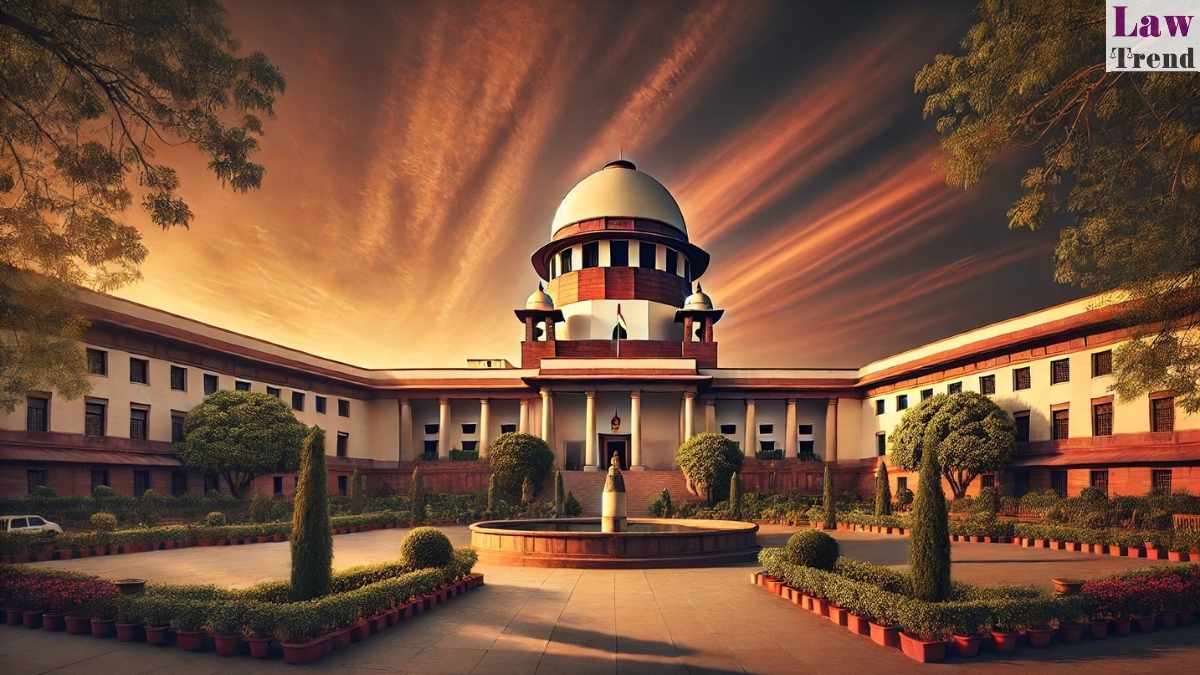
The Supreme Court on Wednesday reaffirmed that states’ legislative power to impose additional sales tax or surcharge calculated as a percentage of the sales tax payable remains governed by its 1974 Constitution Bench ruling in S Kodar vs State of Kerala. A seven-judge Constitution Bench unanimously declined to reconsider the issue, holding that the reference made nearly 27 years ago had become academic following changes in taxation laws.
A Bench headed by Chief Justice of India Surya Kant held that the question no longer required adjudication because the statutory provisions involved had either been amended or replaced, particularly after the introduction of the Goods and Services Tax (GST) regime in 2017.
The Constitution Bench also comprised Justices K V Viswanathan, S V N Bhatti, Joymalya Bagchi, N V Anjaria, Arun Palli and V Mohana.
Chief Justice Surya Kant delivered the judgment on behalf of himself and five other judges, while Justice K V Viswanathan authored a separate concurring opinion.
1974 Constitution Bench Ruling Remains Applicable
The Supreme Court clarified that its five-judge Constitution Bench decision in S Kodar vs State of Kerala continued to determine the legislative competence of states to impose additional sales tax.
The 1974 ruling had established that an additional tax or surcharge calculated as a percentage of the sales tax payable constituted an increase in the sales tax rate rather than a tax on the income of dealers.
The seven-judge Bench reiterated that such a levy fell within Entry 54 of List II of the Seventh Schedule to the Constitution, as the provision stood at the relevant time. The entry empowered state legislatures to impose taxes on the sale or purchase of goods.
The Court accordingly held that questions concerning the competence of state legislatures to impose such surcharges would continue to be governed by the principles laid down in S Kodar.
Why the Seven-Judge Bench Declined to Reconsider the Issue
The Constitution Bench found that the legal controversy had lost its practical significance because of subsequent amendments to taxation statutes and the implementation of GST.
It concluded that the referred question no longer survived for adjudication by a seven-judge Bench.
The Court therefore disposed of the reference without undertaking a fresh examination of the constitutional issue.
Challenge to Additional Tax Under Orissa Sales Tax Act
The reference originated from a dispute over Section 5A of the Orissa Sales Tax Act, 1947, which imposed additional sales tax at different rates depending on dealers’ annual turnover.
Under the provision, dealers with annual turnover between Rs 10 lakh and Rs 1 crore were subject to an additional tax of 10 per cent. The rate increased to 15 per cent for dealers whose turnover exceeded Rs 1 crore.
The appellants challenged the constitutional validity of the levy on the ground of legislative competence.
They questioned whether the additional tax could be imposed under Entry 54 of List II, which authorised states to tax sales and purchases of goods, or whether the levy effectively amounted to a tax on income under Entry 82 of List I, a subject within Parliament’s legislative jurisdiction.
The dispute also involved differing interpretations of earlier Supreme Court judgments concerning the nature of additional sales tax.
In S Kodar, the five-judge Bench had rejected the contention that such a levy constituted a tax on dealers’ income, holding instead that it represented an enhancement of the sales tax rate.
Solicitor General Cited Introduction of GST
During the hearing on September 22, Solicitor General Tushar Mehta submitted that the constitutional controversy had largely become academic after the GST regime came into force in 2017.
He also informed the Court that relatively few disputes connected with the issue remained pending.
Accepting that the reference no longer called for a fresh constitutional determination, the Supreme Court left the legal position established in the 1974 judgment undisturbed.
The detailed judgment is awaited.