

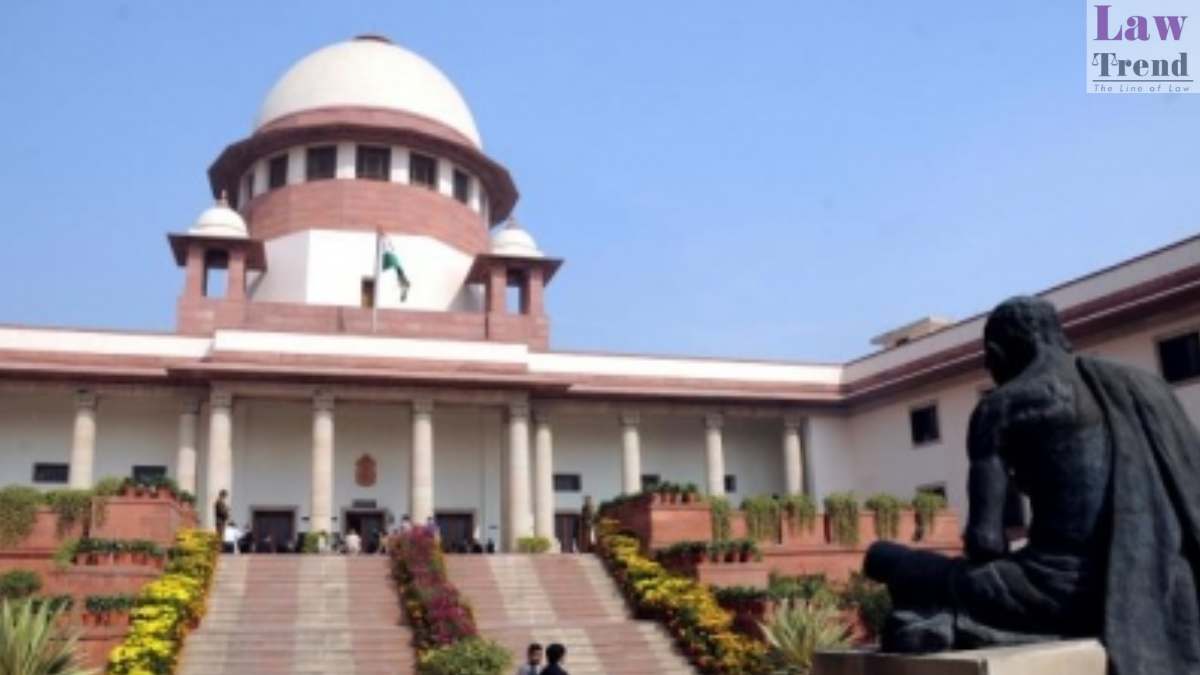
The Supreme Court has directed the Centre to establish a special cell to oversee the implementation of the Child Labour (Prohibition and Regulation) Amendment Act, 2016, while emphasising the need for strict compliance with statutory safeguards against child labour.
A bench of Justices S.V.N. Bhatti and N.V. Anjaria instructed the Ministry of Women and Child Development to continuously monitor enforcement of the amended legislation and issue necessary directions to implementing agencies through the chief secretaries of the respective states.
The Court passed the directions while disposing of a petition filed in 2009 by NGO Health For Millions, which had challenged provisions permitting children to work in certain hazardous activities under the earlier legal framework.
Supreme Court Calls for Strict Enforcement
The bench observed that although the legislative amendments had substantially addressed the petitioner’s original grievances, ensuring their effective implementation remained essential.
It directed the authorities to constitute a dedicated monitoring cell and coordinate with state enforcement agencies to protect the rights of children and adolescents.
The Court further held that the respondents were responsible for ensuring complete and strict compliance with the Child and Adolescent Labour (Prohibition and Regulation) Act, 1986, including the changes introduced through Amendment Act No. 35 of 2016.
While declining to examine the original reliefs sought in the petition, the bench made it clear that the amended statutory provisions must be fully implemented.
Challenge to Beedi-Rolling Exception
The petition, instituted in 2009, questioned the constitutional validity of the proviso to Section 3 of the Child Labour (Prohibition and Regulation) Act, 1986.
The challenged provision permitted children to engage in beedi rolling, a hazardous process, in workshops as part of family labour and in government-aided or government-funded schools.
The petitioner also sought directions requiring the Centre to provide educational facilities and two midday meals to children engaged in such work.
Advocates Prashant Bhushan and Pranav Sachdeva represented the petitioner organisation.
Centre Says 2016 Amendment Addressed Grievances
During the proceedings, counsel appearing for the Centre submitted that the amendments to the principal legislation had substantially resolved the issues raised in the petition. Consequently, the government argued that the matter no longer required judicial consideration.
The Child Labour (Prohibition and Regulation) Amendment Act, 2016, enacted as Act No. 35 of 2016, came into force on September 1, 2016.
The amendment introduced a comprehensive prohibition on employing children below 14 years of age across occupations and processes.
Taking note of these legislative changes, the Supreme Court concluded that the original prayers no longer survived for consideration.
However, the bench stressed that the statutory amendments must receive full effect through active monitoring and enforcement.
Accordingly, the Court directed the Ministry of Women and Child Development to establish a special cell, maintain oversight of implementation and communicate necessary instructions to enforcement authorities through the respective state chief secretaries.


