

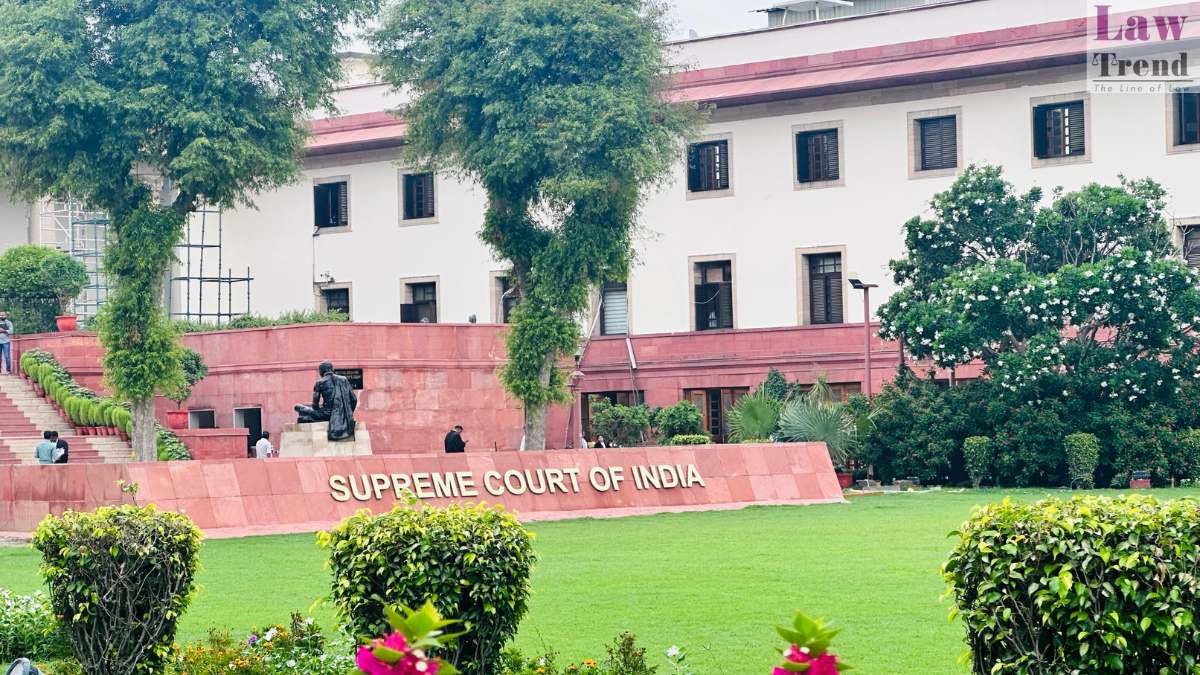
The Supreme Court on Friday directed the central and state governments to establish a dedicated mechanism to pay compensation to victims of road accidents caused by stray cattle.
A two-judge bench comprising Justice Sanjay Karol and Justice N Kotiswar Singh issued a series of directives aimed at fixing responsibility on livestock owners and ensuring strict implementation of cattle management laws across the country. The bench ruled that compensation frameworks must cover accidents involving both pedestrians and motor vehicles.
Mandatory Tagging And Shelter Management
To improve livestock tracking, the top court mandated the tagging of all animals, noting that digital identification would support long-term health monitoring, vaccination programs, and routine veterinary check-ups.
Addressing the issue of abandoned livestock, the court observed that owners frequently release animals once they no longer serve an economic purpose. The bench held that owners must remain responsible for their livestock and ensure their safe transfer to government-recognized animal shelters. Shelter authorities must issue official receipts upon transfer and update the central tagging database accordingly.
To oversee these processes, the court ordered authorities to appoint a designated nodal officer within every municipal corporation or department to supervise tagging, record digitization, and shelter operations.
Strict Enforcement Of State Cattle Laws
The apex court instructed all states with existing cattle legislation to enforce their statutory provisions immediately in letter and spirit. Competent authorities were directed to carry out necessary legislative amendments or enact relevant rules to operationalize the compensation mechanism for bovine-related road accidents.
The bench added that livestock owners must be held accountable for keeping track of their animals and ensuring they return to their designated shelters at the end of each day.
Background Of The Appeal
The Supreme Court issued these directions while hearing an appeal filed by a woman seeking compensation following her husband’s fatal road accident. Her husband died from a head injury after being struck by a stray bull while walking on a road.
A single-judge bench of the Punjab and Haryana High Court had initially awarded the widow Rs 29.32 lakh in compensation, applying principles under the Motor Vehicles Act, 1988, based on the victim’s age and income. However, a division bench of the high court later quashed the compensation order, ruling that disputed questions of fact could not be adjudicated under writ jurisdiction under Article 226. The widow subsequently challenged the division bench’s ruling before the Supreme Court.




