

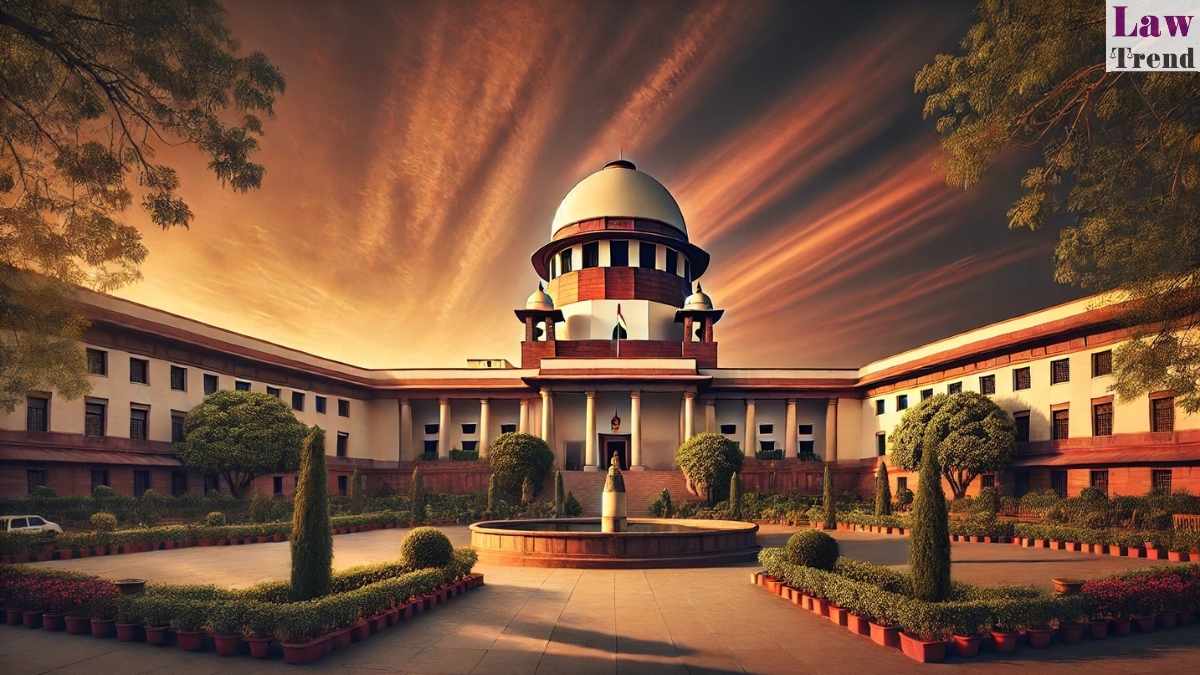
The Supreme Court has ruled that banks and non-banking financial companies cannot resort to force, stealth, or intimidation to recover financed vehicles from defaulting borrowers, reiterating that loan enforcement must comply strictly with the rule of law.
A two-judge bench comprising Justice P.S. Narasimha and Justice Alok Aradhe held that recovery mechanisms cannot bypass due process or subject borrowers to arbitrary actions. The court criticized the weak enforcement of existing safeguards, observing that regulatory measures framed by the Reserve Bank of India to curb aggressive recovery practices have largely remained on paper without concrete implementation.
As part of the ruling, the top court awarded compensation to a commercial truck owner whose vehicle was forcibly driven away in the middle of the night, declaring the seizure an infringement of his constitutional rights. The bench also ordered the Reserve Bank of India to introduce effective measures to ensure financial institutions strictly observe regulatory standards.
Lenders Must Balance Recovery With Borrower Rights
Addressing the legal scope of repossession, Justice Aradhe noted that while a financier’s entitlement to take possession of a vehicle stems from a private contract, such authority functions without initial judicial oversight and must be exercised with extreme caution. The court observed that hypothecation agreements make it commercially viable for financial firms to extend credit to individuals of modest means. However, the bench warned that unregulated repossession powers risk being treated as a license to confiscate property by force or during the dead of night, turning a mechanism intended to foster financial inclusion into an instrument of oppression.
The judges stressed that lending institutions must strike a fair balance between their commercial recovery needs and a borrower’s right to fair notice and procedural fairness before they are stripped of the asset that sustains their livelihood.
Midnight Seizure in Ayodhya
The judgment arose from an appeal by a commercial truck operator, identified in the ruling as Sharma, who secured financing from Cholamandalam Investment and Finance Company Ltd.
Following repayment defaults, the lender initially seized the truck after issuing a notice. The vehicle was subsequently returned when the borrower paid a lump sum and committed to regularizing the account. After subsequent defaults occurred, the company again initiated repossession and eventually sold the vehicle.
The borrower contested the legality of the second seizure, stating that on April 9, 2023, around 1:00 a.m., four unidentified individuals broke the steering lock of his truck while it was parked outside a godown in Ayodhya following a goods delivery. He stated that the vehicle was taken without any advance notice, and the company later demanded that he clear the remaining loan balance after deducting the auction proceeds.
The Chief Judicial Magistrate Court in Ayodhya and the Allahabad High Court had previously rejected the borrower’s petitions, prompting the appeal to the Supreme Court.
Contractual Terms Violate Regulatory Norms
Upon examining the case, the Supreme Court determined that the lender failed to issue a mandatory seven-day pre-repossession notice. The bench observed that the underlying loan agreement granted the financier absolute and unilateral authority over whether to provide notice and how the subsequent sale would be conducted.
The court held that such one-sided clauses violate both the Indian Contract Act of 1872 and statutory regulatory standards. Describing the midnight destruction of the steering lock as bearing the hallmarks of unlawful intimidation, the bench emphasized that such conduct directly defies judicial precedents.
The court referenced the Reserve Bank of India’s Fair Practices Code for Lenders, issued on May 5, 2003, which prohibits institutions from harassing borrowers, contacting them at unreasonable hours, or using strong-arm tactics. The judges also cited the Supreme Court’s February 26, 2007, ruling in Manager, ICICI Bank Ltd v. Prakash Kaur and Others, which established that financial institutions in a country governed by law cannot hire musclemen to recover assets by force.




