

State Cannot Deny Promotion Citing Lack of Regularisation After Confirming Employee’s Service and Granting Earlier Promotion: Allahabad High Court
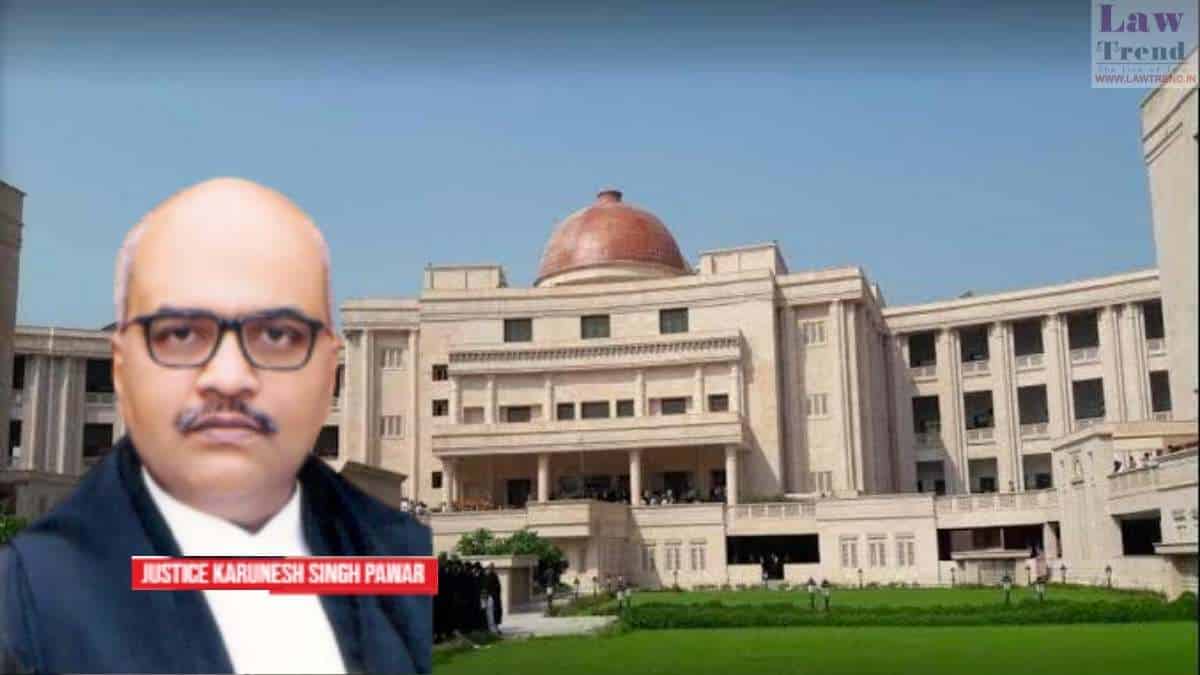

The High Court of Judicature at Allahabad (Lucknow Bench) has held that once an employee’s services are confirmed, regularization is implicit, and the lack of a formal regularization order cannot be used by the state to deny promotional avenues. Setting aside an order that rejected the petitioner’s representation for promotion, the court observed that the state cannot benefit from its own administrative lapses to the detriment of an employee who has rendered nearly four decades of service.

The single-judge bench of Justice Karunesh Singh Pawar directed the state authorities to consider the petitioner, Deva Nand Srivastava, for promotion to the post of Assistant Consolidation Officer (ACO) from the date his juniors were promoted, along with all consequential benefits including seniority.

Background of the Case

The petitioner, Deva Nand Srivastava, was initially appointed as a Consolidation Lekhpal on September 11, 1986, against a substantive regular vacancy by the Settlement Officer of Consolidation, Saharanpur. Although he was appointed to a substantive post, the term “officiating” (sthanapann) was transcribed in his appointment letter.

Upon completing three years of continuous service, the petitioner’s services were confirmed on the post of Consolidation Lekhpal with effect from March 1, 1990, under Rule 16 of the Uttar Pradesh Lekhpal Service Rules, 1978. Having served without any break, he was promoted to the post of Consolidator on October 1, 2008, under the Uttar Pradesh Consolidators Service Rules, 1978. His services on this promotional post were confirmed on May 14, 2012.

In the final seniority list of Consolidators published on May 31, 2022, the petitioner was placed at Serial No. 48. Under the Uttar Pradesh Revenue Consolidation Service Rules, 1992, the next promotional post is that of Assistant Consolidation Officer (ACO).

Owing to delays in promotions within the department, the association of consolidators (Pradeshik Chakbandikarta Sangh) moved the High Court in 2023. Consequently, several consolidators junior to the petitioner were promoted to the post of ACO on December 19, 2024. However, the petitioner was superseded.

The petitioner approached the High Court in a previous writ petition, which directed the authorities to decide his representation. On October 9, 2025, the Consolidation Commissioner (Respondent No. 3) rejected the petitioner’s representation on the ground that his initial appointment was on an “officiating” basis and his services had not been formally regularized on the post of Chakbandi Lekhpal, making him ineligible for promotion to ACO. Aggrieved by this, the petitioner filed the present writ petition.

READ ALSO  Can Accused be Convicted For Murder in Absence of Recovery of Weapon Used? Answers Supreme Court

Arguments of the Parties

Submissions on behalf of the Petitioner:

The counsel for the petitioner contended that despite being fully eligible and holding seniority at Serial No. 48, the petitioner was bypassed while multiple juniors (such as those at Serial Nos. 97, 132, 252, and others) were promoted.

It was argued that:

  • The petitioner holds a lien over the substantive post of Consolidator after being duly confirmed.
  • Under the decision taken in a high-level departmental meeting on January 16, 2024, the services of employees appointed on an officiating/ad-hoc basis against sanctioned posts were “deemed to be regularized” from the date of their confirmation.
  • A report dated March 4, 2024, from the Settlement Officer of Consolidation, Saharanpur, verified that the petitioner was indeed appointed against a vacant, sanctioned, and regular post.
  • Denying promotion to the petitioner based on the department’s failure to issue a formal regularization order constitutes hostile discrimination, violating Articles 14 and 16 of the Constitution of India.

Submissions on behalf of the Respondents:

The Additional Chief Standing Counsel opposing the petition submitted that:

  • The petitioner was appointed on a “substitute” basis and could not be considered regularized unless a specific order was passed under the U.P. Regularization of Ad-hoc Appointments (On Posts within the Purview of the Public Service Commission) Rules, 1979.
  • A four-member committee was constituted on November 19, 2024, to hear such candidates, but the petitioner failed to produce any formal record or document demonstrating his regularization.
  • The Departmental Promotion Committee (DPC) met on December 16, 2024, and found the petitioner ineligible for promotion to ACO because his feeder-cadre appointment was in a substitute capacity and had not been regularized.

Court’s Analysis and Observations

The court thoroughly reviewed the service records and analyzed the meaning of the terminology used in the appointment letter, alongside established legal precedents.

On the use of the term “Officiating” (Sthanapann):

The court observed that the respondent-department had already admitted in reports that the use of the word “officiating” in the petitioner’s initial appointment letter was inadvertent, and that the appointment was made against a substantive vacancy.

To interpret the term, the court relied on the judgment in Ram Het Tewari vs. State of U.P. and others (2005), which dealt with an identical controversy. In that case, the court had clarified that “officiating” generally means holding a temporary post in addition to a permanent post that an incumbent retains. However, where an individual is appointed afresh to a post (like the petitioner was to the post of Lekhpal), the usage of Sthanapann must be understood as “ad hoc” rather than strictly “officiating”.

On Confirmation and the Deemed Regularization Rule:

The court emphasized that the petitioner’s services as a Lekhpal and subsequently as a Consolidator were formally and unconditionally confirmed.

Relying on the Division Bench rulings in State of U.P. and others vs. Pyare Lal and State of U.P. and 4 others vs. Gokil Ram, as well as Syed Mohammed Jaki vs. State of U.P. and others (2025), the court observed:

READ ALSO  Compensation Under MV Act to Exclude Pay and Allowances Received as Compassionate Assistance by Dependents of Deceased Government Employee: Supreme Court

“In light of the law laid down by this Court in Pyare Lal, Gokil, and Syed Mohd. Jakil (supra), it is well settled that regularisation is implicit in confirmation. Once an employee’s services are confirmed, and such confirmation is not under challenge on grounds of illegality, the same attains finality.”

Furthermore, the court highlighted that in the departmental meeting on January 16, 2024, it was resolved that if appointments did not exceed the sanctioned strength, such employees “shall be deemed to be regularized from the date of confirmation on their post.” Since reports confirmed the petitioner worked on a sanctioned regular post, he met this criterion.

On Administrative Lapses and the State’s Inaction:

The court strongly criticized the department’s attempt to deny promotion on account of its own failure to issue formal orders. The court stated:

“The administrative lapse on the part of the respondents in not issuing appropriate regularisation orders cannot be permitted to operate to the prejudice of the petitioner at the fag end of his career. On the one hand, the respondents failed to regularise the services of the petitioner, and on the other hand, they seek to deny him further promotion on the ground that his services were not regularised. The respondents cannot be permitted to take advantage of their own inaction to the detriment of the petitioner.”

READ ALSO  Allahabad HC Expresses Concern Over Opening of Schools During Amidst COVID19

The court invoked the Latin maxim commodum ex injuria sua nemo habere debet (no party can take undue advantage of his own wrong), as established by the Supreme Court in Kusheshwar Prasad Singh vs. State of Bihar and others (2007) and Union of India v. Major General Madan Lal Yadav (1996).

Additionally, the court cited the Supreme Court decision in Vinod Kumar and others vs. Union of India and others (2024), reiterating that where an employee has rendered long, continuous service and has been promoted without any dispute during their tenure, “procedural technicalities cannot be invoked to defeat the substantive rights of employees.”

The Decision

Finding the grounds of the rejection order dated October 9, 2025, to be “wholly untenable and liable to be set aside,” the High Court allowed the writ petition.

The court issued the following directions:

  1. A writ of certiorari was issued, quashing the impugned rejection order dated October 9, 2025.
  2. A writ of mandamus was issued, directing the respondents to consider the petitioner’s case for promotion to the post of Assistant Consolidation Officer (ACO) with effect from the date his juniors were promoted.
  3. The promotion must include all consequential benefits, including seniority.
  4. The respondents must complete this exercise within three months from the date of production of a certified copy of the court’s order.

Case Details

  • Case Title: Deva Nand Srivastava Versus State Of U.P Thru. Addl. Chief Secy./ Prin. Secy. Deptt. Of Revenue, Lko. And 2 Others
  • Case No.: WRITA No. 12815 of 2025 (Neutral Citation: 2026:AHC-LKO:33582)
  • Bench: Justice Karunesh Singh Pawar
  • Date: May 11, 2026
  • Counsels for the Petitioner: Shri Abhineet Jaiswal, Ms. Shreya Jaiswal
  • Counsels for the Respondents: Shri Ram Pratap Singh (Additional Chief Standing Counsel), Chief Standing Counsel (C.S.C.)

Law Trend
Law Trendhttps://lawtrend.in/
Legal News Website Providing Latest Judgments of Supreme Court and High Court

Related Articles

Latest Articles

