

Star Witness Testimony Fails ‘Sterling Quality’ Standard: Allahabad High Court Dismisses Victim’s Appeal Against Acquittal
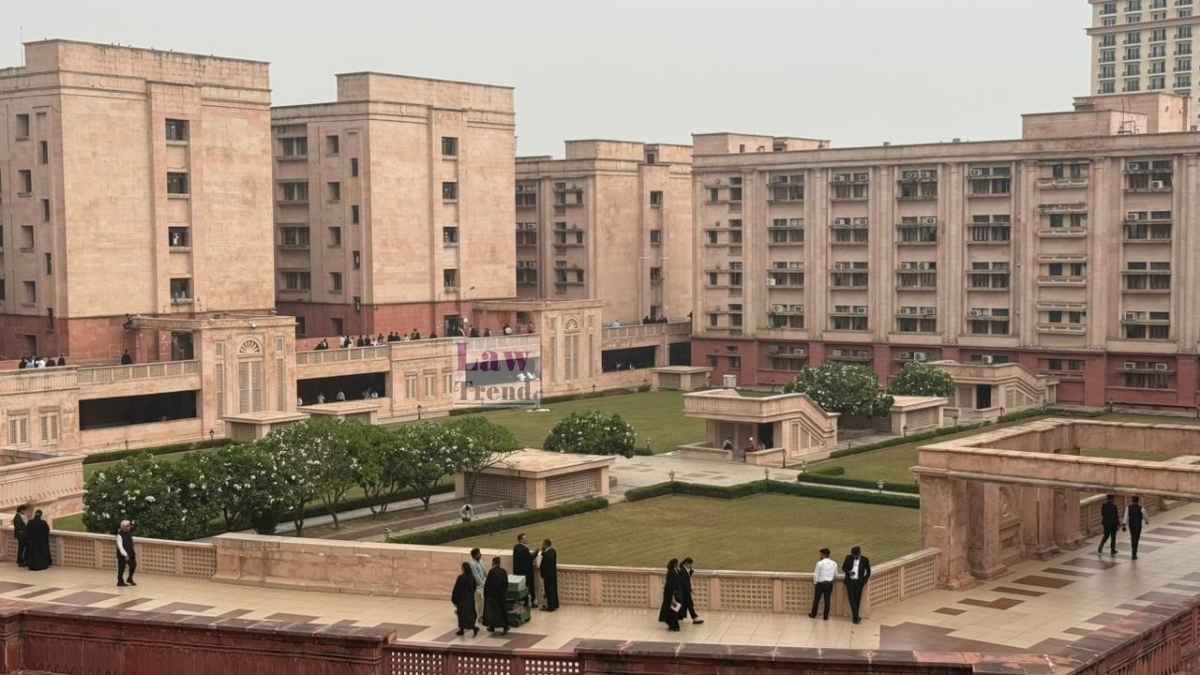

The High Court of Judicature at Allahabad, Lucknow Bench, has dismissed a criminal appeal challenging the acquittal of an accused charged with wrongful confinement, kidnapping, and rape. The Division Bench, comprising Justice Abdul Moin and Justice Pramod Kumar Srivastava, upheld the March 26, 2026, verdict of the Additional Session Judge, F.T.C. First, Ambedkar Nagar, which cleared the accused of all charges.

The High Court ruled that the prosecution had failed to establish its case beyond a reasonable doubt, finding that the victim’s testimony was not of a “sterling quality” due to material contradictions, a lack of public alarm during extended interstate travel, and an absence of corroborating medical evidence.

Background of the Case

The case originated from an incident on January 23, 2023. According to the prosecution’s initial narrative, the victim was at her home when she was called over by her neighbor, Indrawati. Upon arrival, the victim met Suman, the aunt of the accused, Amit Shahani. The two women requested the victim to accompany them to a nearby forest, stating Suman had an upset stomach.

At approximately 3:00 PM, near the forest path, the accused, Amit Shahani, alongside one Sujeet Kumar and two unidentified individuals, emerged from a Bolero car. Indrawati and Suman allegedly stated, “See, we have brought her,” after which the victim was grabbed and forced into the vehicle. When the victim attempted to scream, Sujeet Kumar allegedly pressed a pistol to her chest and threatened to kill her and her family, forcing her to remain silent.

The victim was taken to Akbarpur Railway Station, where she was boarded onto an 8:00 PM train to Delhi. On January 24, 2023, she was taken from Delhi to Kaithal, Chandigarh, by bus. There, she was kept in a room where she was joined by Vijay Kumar (alias Havaldar), the uncle of the accused. After Sujeet and Vijay left, Amit Shahani allegedly remained and raped her that night. The victim stated she was locked in the room during the day and subjected to further sexual assaults in the evenings.

On January 31, 2023, she was allegedly beaten and forced to sign English documents. On February 10, 2023, she was taken to another room where a forced marriage ceremony was performed with Amit Shahani, which was photographed and videotaped.

On February 14, 2023, while Amit Shahani was asleep, the victim escaped the room, latched it from the outside, and used his mobile phone to contact her family. Assisted by a local ragpicker, she boarded a tempo to Sector 22, where she was met by a friend of her brother, Ketan Kumar. Her brother arrived from Bangalore by plane that night, and they returned home on February 15, 2023. Following medical treatment for her deteriorating health, she lodged an FIR at Police Station Zalalpur, District Ambedkar Nagar. Following an investigation, a charge-sheet was submitted solely against Amit Shahani under Sections 342, 366, 376, and 506 of the Indian Penal Code (IPC).

READ ALSO  The Court Must Not Treat Government Agencies Differently While Deciding Applications for Condonation of Delay: Delhi HC

Arguments of the Parties

Appellant’s Case

The appellant-victim challenged the trial court’s acquittal, asserting that:

  1. The trial court failed to appreciate the facts, circumstances, and direct evidence of the victim in the right perspective.
  2. There were no material contradictions or discrepancies in the depositions of the prosecution witnesses.
  3. The prosecution had successfully established the charges against the accused-respondent through the victim’s testimony and corroborative independent witnesses.
  4. The trial court’s finding of acquittal was perverse and liable to be set aside.

Defense and State

The State was represented by the learned Additional Government Advocate (A.G.A.). The accused denied all allegations during his statement recorded under Section 313 of the CrPC, pleading complete innocence. At the defense stage, the accused submitted a photocopy of an order dated February 6, 2023, from the High Court of Punjab and Haryana in CRWP-1139/2023 (Upasana & Ors. vs. State of Punjab & Ors.) and eight photographs. However, the trial court rejected these photocopies and unproved photographs as inadmissible in evidence.

The Court’s Analysis and Legal Precedents

To determine the validity of the acquittal, the High Court analyzed the jurisprudence governing the uncorroborated testimony of a prosecutrix in rape cases, discussing several key Supreme Court precedents.

Applicable Legal Standards

The Court first referenced the Supreme Court’s ruling in Radhu v. State of M.P., (2007) 12 SCC 57, which observed:

“6. It is now well settled that a finding of guilt in a case of rape, can be based on the uncorroborated evidence of the prosecutrix. The very nature of offence makes it difficult to get direct corroborating evidence… If the victim of rape states on oath that she was forcibly subjected to sexual intercourse, her statement will normally be accepted… unless the material on record requires drawing of an inference that there was consent or that the entire incident was improbable or imaginary.”

However, the Court also pointed to Raju v. State of M.P., (2008) 15 SCC 133, which cautioned that while great weight must be attached to the victim’s statement, there is no automatic presumption that her testimony is always correct without embellishment, and it must be evaluated on par with an injured witness rather than accepted blindly as the “gospel truth.”

READ ALSO  SC Reminds High Courts: Delay in Delivery of Judgment Violates Article 21 of Constitution

Scrutiny of Witness Testimony and Contradictions

The High Court systematically dismantled the reliability of the prosecution’s witnesses:

  • PW-2 (Sikandar, the victim’s brother): The Court noted that Sikandar was in Pune at the time of the incident. His deposition was based entirely on information received from his father and sister, rendering his testimony hearsay. The Court held it did not have “testimonial value in the eyes of law.”
  • PW-3 (Sati Prasad): This witness resiled from his statement to the Investigating Officer, testifying instead that he heard the victim had gone of her own accord, thereby failing to support the prosecution.
  • PW-1 (The Victim): As the star witness, her testimony was subjected to rigorous analysis. The Court observed major contradictions between her statements. Specifically, during her journey via car, train, and bus across multiple states, she raised no public alarm. The Court noted:
    “…at no point of time she raised any alarm to attract the attention of the public; she did not utter any single word.”
    The Court highlighted that the victim remained silent at Akbarpur Railway Station and during a halt at a public dhaba between Delhi and Chandigarh despite the presence of the public. Furthermore, her claims of raising hue and cry were made for the first time during cross-examination and were entirely absent from her statement recorded under Section 164 of the CrPC.

Age and Consent Analysis

Based on the medical evidence of Dr. P.N. Yadav (PW-9), an X-ray examination revealed that the victim’s right wrist epiphyses were fused, placing her age between 17 and 18 years. Allowing for the standard two-year margin of variance in radiological age determination, the Court concluded that the victim was over 18 years old and thus not a minor at the time of the incident.

READ ALSO  No Prior Sanction U/s 17A of PC Act Required Where FIR Registered After Recovery Made From Public Servant: HP HC

The Bench observed that her voluntary departure from her home in the afternoon without informing her parents, coupled with her subsequent conduct, suggested a pre-existing relationship with the accused rather than an abduction by a stranger.

Absence of Medical Corroboration

The medical examination conducted by Dr. Sarita Prasad (PW-4) revealed no external injuries on the victim’s private parts or body. The hymen was ruptured and healed. The Investigating Officer, Sant Kumar Singh (PW-7), admitted in his deposition that the rape allegation was not corroborated by the medical findings.

The ‘Sterling Witness’ Test

Evaluating the victim’s credibility, the High Court cited the benchmark established in Rai Sandeep v. State (NCT of Delhi), (2012) 8 SCC 21, defining a “sterling witness” as:

“…of a very high quality and calibre whose version should, therefore, be unassailable. The court considering the version of such witness should be in a position to accept it for its face value without any hesitation… There should not be any prevarication in the version of such a witness. The witness should be in a position to withstand the cross-examination of any length…”

The Bench ruled that the victim’s testimony completely failed this test due to significant variations regarding the manner of occurrence and the involvement of the accused.

Decision of the Court

The High Court held that the trial court’s decision to acquit Amit Shahani was a probable, logical, and well-reasoned view based on the evidence of record. Finding no illegality, infirmity, or perversity in the impugned judgment, the Division Bench dismissed the appeal. No order was made as to costs.

Case Details

  • Case Title: Informant/Complainant (Victim X) Versus State of U.P. Thru. Prin. Secy. Home Lko. and another
  • Case Number: Criminal Appeal U/S 372 Cr.P.C. No. 64 of 2026
  • Bench: Justice Abdul Moin and Justice Pramod Kumar Srivastava
  • Date: May 21, 2026

Law Trend
Law Trendhttps://lawtrend.in/
Legal News Website Providing Latest Judgments of Supreme Court and High Court

Related Articles

Latest Articles

