

Shortfall In EMD Does Not Vitiate Auction Sale If 25% Deposit Rule Is Complied With: Supreme Court
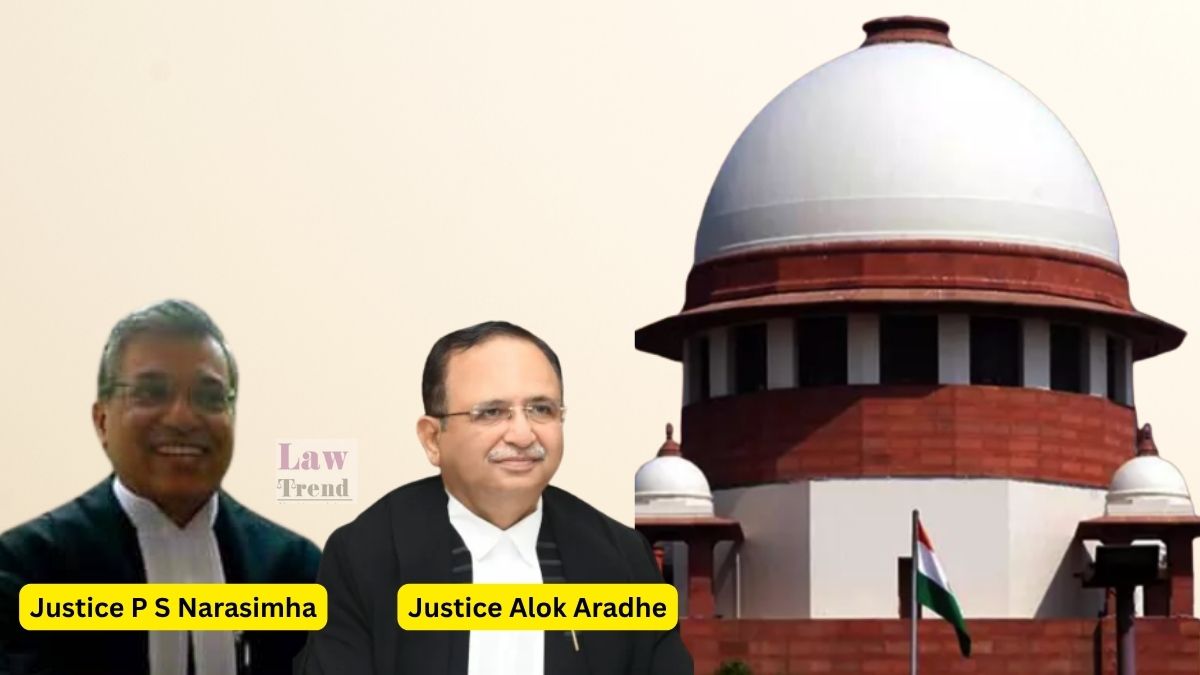

The Supreme Court of India, in a bench comprising Justice P. S. Narasimha and Justice Alok Aradhe, has held that a minor anterior shortfall in the deposit of Earnest Money Deposit (EMD) specified in an auction notice does not invalidate a auction sale under the SARFAESI Act, provided the successful bidder complies with the statutory requirement of paying 25% of the total sale consideration on the day of the auction. Setting aside the decisions of the Madras High Court and the Debts Recovery Appellate Tribunal (DRAT), the court upheld the auction sale conducted by United Bank of India while directing the bank to refund the surplus sale proceeds of Rs. 1,33,94,054 to the borrower along with interest at 7% per annum.

Background of the Case

The dispute arose out of a cash-credit facility extended by United Bank of India (which merged with Punjab National Bank in 2020) to M/s. Airtech Projects Engineers Pvt. Ltd. (the borrower). As of July 31, 2008, the borrower defaulted with outstanding dues of Rs. 88,52,741 against a sanctioned limit of Rs. 85 lakhs, leading the bank to classify the account as a Non-Performing Asset (NPA).

On August 1, 2008, the bank issued a demand notice under Section 13(2) of the Securitisation and Reconstruction of Financial Assets and Enforcement of Security Interest Act, 2002 (SARFAESI Act). The bank subsequently valued the secured asset—a land measuring approximately 4,900 square feet with a two-story building at Door No. 32, McNichols Road, Chetpet, Chennai—and issued a possession-cum-sale notice.

After initial proceedings before the Debts Recovery Tribunal (DRT) and the Madras High Court regarding procedural challenges, the bank issued a fresh possession-cum-sale notice on March 18, 2009, scheduling an e-auction for April 24, 2009. Clause 7 of the notice specified that bidders must submit their offers by April 23, 2009, accompanied by an EMD of Rs. 21,50,000 via demand draft or pay order, stipulating that “The offer without earnest money deposit will be rejected.”

On April 23, 2009, the auction purchasers—Mrs. Lakshmi Mohan (now represented by her legal representatives, including her son Mr. M. Premkumar)—submitted their bid accompanied by an EMD of Rs. 21,15,000, which reflected a shortfall of Rs. 35,000 from the stipulated amount. At the auction on April 24, 2009, the auction purchasers emerged as the highest bidders with an offer of Rs. 2,17,40,000. On the very same day, they deposited an additional sum of Rs. 33,20,000, bringing their total deposit to Rs. 54,35,000, which constituted 25% of the total bid amount.

READ ALSO  Unsuccessful Party in Arbitration Entitled to Seek Interim Measures Under Section 9 Post-Award: Supreme Court

Although the DRT dismissed the borrower’s Securitisation Application (SA) on October 1, 2009, the DRAT subsequently allowed the borrower’s appeal, holding that the auction suffered from non-compliance with Rule 8(5) of the Security Interest (Enforcement) Rules, 2002, and the express terms of the auction notice. After a round of remand, the DRAT reaffirmed its order on August 31, 2012, and the Madras High Court subsequently dismissed the writ petitions filed by the auction purchasers and the bank on March 22, 2013, leading to the present appeals before the Supreme Court.

Arguments of the Parties

Senior Counsel Mr. Niranjan Reddy, appearing for the auction purchasers, argued that depositing earnest money alongside a bid is neither a statutorily mandatory condition nor an essential eligibility criterion. He pointed out that the purchasers had fully complied with Rule 9(3) of the Security Interest (Enforcement) Rules, 2002 by depositing 25% of the total sale price on the day of the auction. He further highlighted that the only other competing bidder had committed an identical shortfall of Rs. 35,000, demonstrating that no prejudice was suffered by the borrower or any other party due to this minor technical irregularity.

Senior Counsel Mr. Dhruv Mehta, representing the bank, argued that the requirement to deposit EMD was incorporated solely for the bank’s benefit to filter out non-serious bidders. He submitted that acceptance of a non-compliant bid could at best be challenged by a rival bidder, and since the only other bidder was similarly situated, no grievance could be sustained. He also stated that the bank remained ready and willing to refund the surplus sale proceeds to the borrower.

Senior Counsel Mr. Jayanth Bhushan, appearing for the borrower, contended that in the absence of the prescribed EMD, no valid bid existed in the eyes of the law. He submitted that the EMD requirement was a mandatory condition from which the bank had no authority to deviate. Additionally, he asserted that the balance 75% sale consideration was deposited after a delay of nearly five months, beyond the 15-day timeframe prescribed under the rules.

READ ALSO  Second Revision for Juvenile Bail Maintainable if Circumstances Change; Supreme Court Grants Bail Citing Rehabilitation

Court’s Analysis

Authoring the judgment, Justice Alok Aradhe analyzed the distinction between essential conditions of eligibility and ancillary conditions in tender notices. The court reaffirmed the established legal principle that “requirements in a tender notice can be classified into following two categories: (i) those which lay down the essential condition of eligibility; and (ii) the others which are merely ancillary or subsidiary with the main object to be achieved by the condition.”

The court noted that while essential conditions must be strictly enforced, minor relaxations or non-conformities in non-statutory or ancillary conditions do not vitiate the process if they do not cause substantial prejudice or injustice to any party.

Applying these principles to the facts of the case, the bench held that Clause 7 of the auction notice requiring an EMD of Rs. 21,50,000 was non-statutory in nature and aimed primarily at filtering out non-serious bidders. The court observed that both participating bidders had deposited Rs. 21,15,000, and the bank had entertained both bids.

Crucially, the Supreme Court emphasized that the auction purchasers satisfied the statutory mandate under Rule 9(3) of the Rules by depositing 25% of the total bid amount (inclusive of the EMD) on the date of the auction itself. The bench observed:

READ ALSO  Supreme Court to Address Conflict Between Judicial Decisions and Legislative Authority in Election Commissioner Appointments

“Therefore, any anterior shortfall in deposit of EMD pales into insignificance, the moment the 25% of the sale price was deposited.”

Regarding the borrower’s contention concerning the delayed payment of the balance 75% sale consideration, the court noted that the bank had issued a letter on June 4, 2009, extending the time for payment in view of ongoing litigation initiated by the borrower. Once the borrower’s application was dismissed by the DRT on October 1, 2009, the auction purchasers immediately paid the remaining balance on October 5, 2009.

Finally, addressing the surplus proceeds, the court observed that after appropriating its dues, the bank retained a surplus of Rs. 1,33,94,054. The bank had failed to place these funds in an interest-bearing account while they remained uncollected due to pending litigation. The court ruled that the borrower could not be penalized for the bank’s omission and was entitled to interest on the surplus amount.

Decision of the Court

The Supreme Court set aside the Madras High Court’s judgment dated March 22, 2013, as well as the DRAT order dated June 20, 2011.

The court allowed Civil Appeal Nos. 9228-9231 of 2013 (filed by the auction purchasers) and Civil Appeal @ SLP (C) Diary No. 31322 of 2018 (filed by the bank), while disposing of Civil Appeals @ SLP (C) Nos. 1441-1446 of 2014 (filed by the borrower).

The bank was directed to refund the surplus amount of Rs. 1,33,94,054 to the borrower along with interest at the rate of 7% per annum from March 23, 2010 (the date when the surplus amount was placed in a non-interest-bearing account) until the date of actual payment.

Law Trend
Law Trendhttps://lawtrend.in/
Legal News Website Providing Latest Judgments of Supreme Court and High Court

Related Articles

Latest Articles

