

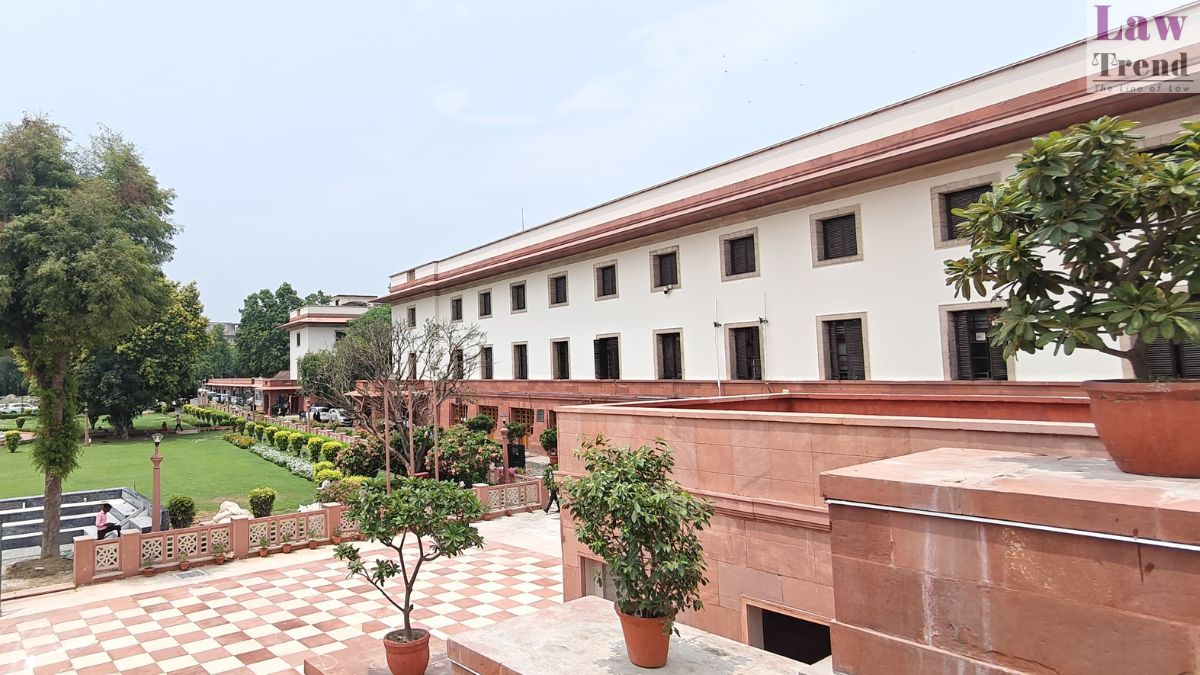
The Supreme Court has directed the Delhi Police and other authorities to strengthen preventive policing across the national capital, ordering increased beat patrolling, stricter verification of public transport drivers and assistants, and improved surveillance to prevent crimes against women.
A bench of Justices J B Pardiwala and K Vinod Chandran stressed that ensuring public safety requires authorities to identify and address vulnerable locations before criminal incidents occur, rather than relying solely on arrests and prosecution after an offence.
In its October 5 order, made available on Thursday, the court also called for effective integration of vehicle tracking devices with the police emergency response system and action against unauthorised liquor shops and establishments.
The bench emphasised that preventive policing must become a regular institutional practice instead of depending on the initiative of individual officers.
Supreme Court Seeks Report on Police Control Rooms
The court directed the Delhi Police Commissioner and the Chief Secretary to submit a joint report detailing the existing infrastructure for real-time monitoring of police patrolling and CCTV surveillance.
The report must clarify whether dedicated command centres or control rooms, described as war rooms, are operational in Delhi. If such facilities exist, the authorities must specify their number and the geographical areas covered by each.
The bench also sought information about existing arrangements for coordination, communication and emergency deployment when command centres receive information requiring police intervention.
The court highlighted the need for continuous surveillance and quick response mechanisms, observing that crime prevention and detection are as important as investigating offences and ensuring timely prosecution.
It also asked the Delhi Police to establish a 24-hour monitoring cell to maintain surveillance in vulnerable areas, particularly to ensure women’s safety during late-night hours.
Neglected Public Spaces Must Be Addressed Before Crimes Occur
The Supreme Court expressed concern that inadequate lighting, insufficient police patrolling and gaps in surveillance could create conditions that facilitate criminal activity.
According to the bench, authorities should not wait for an actual crime before correcting deficiencies that can be identified through routine monitoring.
The court observed that the maintenance of public spaces, visible police presence and timely action on reported problems are essential elements of crime prevention.
Such measures, it said, could improve public confidence while discouraging potential offenders by demonstrating that public spaces remain under effective surveillance.
Justice Pardiwala also expressed concern about perceptions that women were unsafe in certain vulnerable parts of Delhi. He emphasised the need to prevent offences by ensuring that administrative and policing deficiencies do not provide opportunities for crimes.
The judge called for strong preventive measures capable of creating fear of consequences among potential offenders.
Citizen Participation in Crime Prevention
The bench also encouraged the Delhi Police and local administration to consider holding regular meetings with residents to identify safety concerns.
It noted that citizens are frequently the first to notice unsafe conditions such as poorly illuminated roads, abandoned vehicles, unauthorised establishments, deteriorating buildings and recurring disorderly activities.
The court suggested that these meetings should be supervised by designated officers who can receive public complaints and monitor subsequent action.
It stressed that public participation could help authorities detect problems at an early stage and prevent unsafe conditions from developing into serious security threats.
Proceedings Initiated After Three Serious Criminal Incidents
The Supreme Court is monitoring women’s safety measures in Delhi after taking suo motu cognisance on September 28 of three incidents involving alleged sexual violence.
One incident concerned the alleged rape of a minor aboard a sleeper bus in August while the vehicle travelled approximately 47 kilometres from Greater Noida to Kashmere Gate in Old Delhi.
Another involved the alleged gangrape of a 17-year-old girl at Astha Kunj Park in South Delhi by three men who allegedly impersonated police personnel.
The third concerned an alleged gangrape and murder reported in Northwest Delhi last month.
Following these incidents, the court initiated proceedings to examine broader institutional shortcomings that may have contributed to the offences.
The bench has repeatedly emphasised that effective policing must focus on stopping crimes before they occur, alongside identifying offenders and ensuring punishment through the criminal justice system.
The matter will be heard next on November 16.




