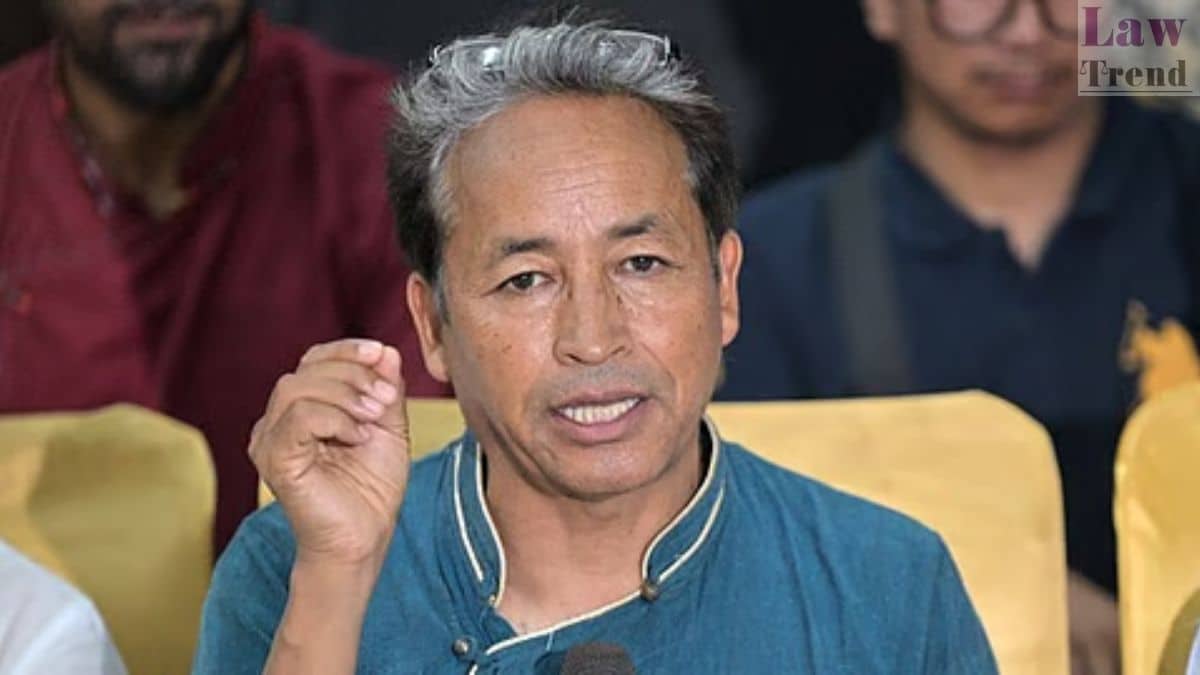
The Supreme Court on Monday heard a petition challenging the detention of Ladakhi climate activist Sonam Wangchuk under the National Security Act (NSA), with his wife Gitanjali J Angmo alleging serious procedural lapses and misuse of authority by the administration.
A bench of Justices Aravind Kumar and Prasanna B Varale heard senior advocate Kapil Sibal, who appeared for Angmo, submit that the detention was based on irrelevant material and reflected “non-application of mind” by the Leh district magistrate (DM). The matter will continue on January 13.
Sibal told the court that the detention order was effectively a “copy-paste” of a prior recommendation made by the Senior Superintendent of Police (SSP), Ladakh. “The grounds of detention have no independent application of mind. Material relied on must have a proximate link with the order, but here irrelevant factors were cited,” Sibal argued.
The petition also pointed out that four videos—cited as key material justifying the detention—had not been shared with Wangchuk, thereby denying him a fair opportunity to challenge the grounds before the Advisory Board or the government. “This violates his fundamental right to make an effective representation,” Sibal said.
Angmo had earlier told the court that her husband’s speech delivered in Leh prior to his detention did not incite violence, but was intended to prevent it. She claimed that the authorities manipulated facts to paint Wangchuk as a provocateur.
She also highlighted that Wangchuk had strongly condemned the September 24, 2025 violence in Leh—during which four people were killed and 90 injured in protests over demands for statehood and Sixth Schedule protection for Ladakh. “He said it was the saddest day of his life,” she told the court.
Wangchuk was arrested two days later, on September 26, and booked under the NSA.
In a previous affidavit filed before the apex court, the Leh district magistrate denied any wrongdoing, asserting that Wangchuk was involved in activities “prejudicial to the security of the State, maintenance of public order and essential services.”
The DM maintained that the grounds of detention were duly communicated to Wangchuk and rejected allegations of procedural impropriety or mistreatment.
The NSA permits preventive detention for up to 12 months to stop individuals from acting in ways deemed harmful to India’s defence, public order, or essential services. While the law allows detention without formal charges or trial, it requires adherence to strict procedural safeguards.
The petition contends that these safeguards were flouted in Wangchuk’s case.
The Supreme Court did not pass any interim relief on Monday, but indicated that it will continue hearing the matter on Saturday. The outcome could have far-reaching implications on the use of preventive detention laws against civil society actors, particularly in sensitive regions like Ladakh.
Wangchuk, a Ramon Magsaysay award-winning educationist and environmentalist, is known globally for his sustainable development initiatives in the Himalayan region. His detention has sparked widespread concern among activists and rights groups.