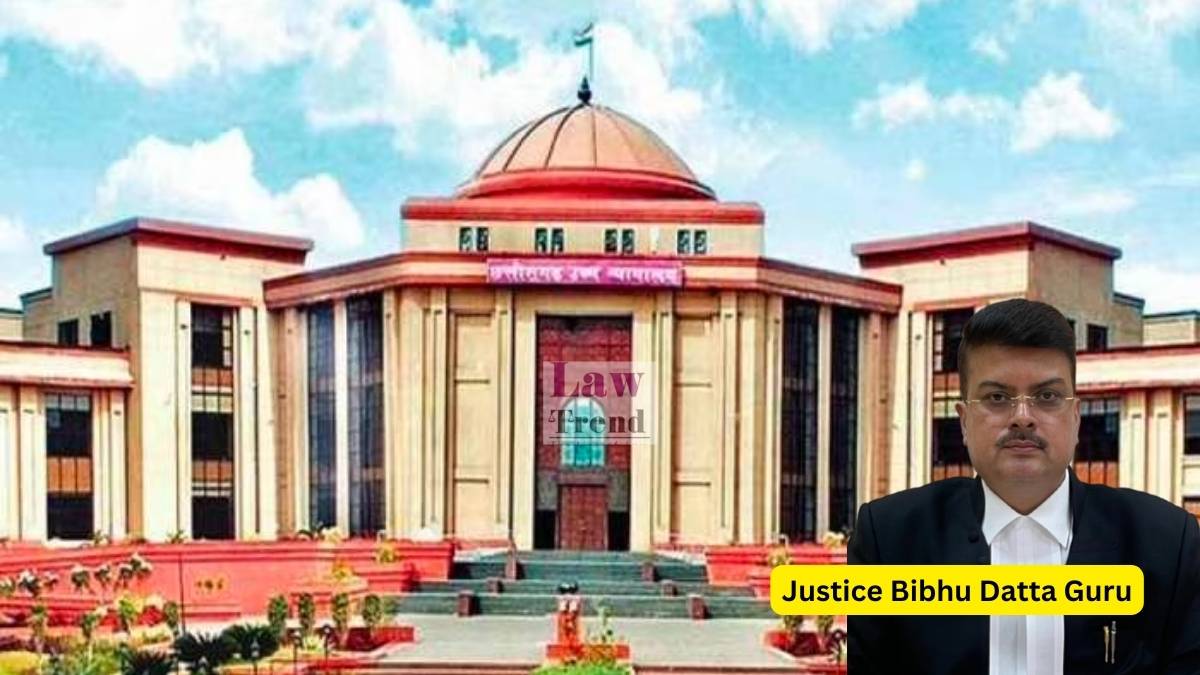
The High Court of Chhattisgarh, in a judgment delivered by Justice Bibhu Datta Guru, has held that police constables transferred from one district to another upon their own voluntary request cannot retain their original recruitment seniority in the new district. Deciding a batch of writ petitions challenging the departmental promotion process, the Court held that under Rule 16A of the Chhattisgarh Police Executive Force, Constable (Recruitment and Conditions of Service) Rules, 2007, request-transferred employees must be placed at the bottom of the seniority list of the transferee district from the date of their transfer order. Consequently, the High Court quashed the seniority/gradation list and consequential fit list prepared after February 13, 2026, for promotions to the post of Head Constable, directing state authorities to redraw the lists strictly in line with statutory rules.
Background Of The Case
The dispute arose from a series of writ petitions filed by police constables, including Lav Kumar Patre and others serving in District Korba, who had rendered approximately 16 to 17 years of service. The petitioners were aggrieved that they were overlooked for promotion to the rank of Head Constable during the Departmental Promotion Committee (DPC) exercise for 2026.
The primary grievance of the petitioners was that the department placed several constables transferred from other districts into the District Korba gradation list based on their original initial appointment dates. These transferred officers, many of whom came on their own personal requests, were placed above local constables who had been in the district cadre longer. Objections raised against the provisional gradation list were rejected by the authorities through an order dated May 4, 2026. The petitioners pointed out that an earlier Standard Operating Procedure (SOP) dated August 6, 2021, used for past lists, had already been quashed by the High Court in an earlier ruling with liberty to frame rules under Section 51(2) of the Chhattisgarh Police Act, 2007, and Article 309 of the Constitution. Subsequently, the State notified the amended Rule 16A on February 13, 2026, specifically governing promotion procedures and seniority determination.
Arguments Before The Court
Counsel for the petitioners argued that the post of Constable belongs to a district cadre. They asserted that when an employee seeks a voluntary transfer to another district cadre, statutory rules dictate that they forfeit their cadre seniority and join at the bottom. The petitioners relied on the Supreme Court judgment in Direct Recruit Class II Engineering Officers’ Association v. State of Maharashtra (1990), contending that seniority must be reckoned according to the applicable statutory scheme and not administrative arrangements contrary to it. Citing Santosh Kumar v. State of A.P. (2003) and Amarendra Kumar Mohapatra v. State of Orissa (2014), they submitted that administrative decisions cannot override statutory rules.
Conversely, the State counsel opposed the petitions, contending that the department acted strictly in accordance with statutory norms by considering initial appointment dates. The State submitted that private respondents were appointed earlier than the petitioners and maintained uninterrupted service and lien within the same State Police Service. Therefore, the State argued, their original appointment dates could not be wiped out merely due to inter-district transfer.
Counsel appearing for the private respondents supported the State’s stance, arguing that inter-district transfer does not extinguish length of service or original seniority within the unified State Police Service. However, one respondent (Respondent No. 63) broke rank with other private respondents and supported the petitioners, seeking strict implementation of amended Rule 16A for the 2026 promotion process.
Court’s Analysis And Legal Findings
Examining the statutory framework, the High Court emphasized that the Rules of 2007 were framed under the proviso to Article 309 of the Constitution and were explicitly amended on February 13, 2026, inserting Rule 16A.
Rule 16A(1) explicitly mandates:
“The posts of constable and head constable are of the district cadre. In case of transfer of constable and head constable from one District/Unit to another District/Unit from administrative point of view, seniority shall be determined as per the provision contained in rule 12 ‘Seniority’ of Chhattisgarh Civil Services (General Conditions of Service) Rules, 1961. However, where such transfer is made on the request of employee, he shall be placed at the bottom of the seniority list of the concerned District/Unit from the date of transfer order.”
Analyzing the distinction between administrative transfers and request transfers, Justice Bibhu Datta Guru observed that while administrative transfers preserve continuous length of service for seniority, voluntary transfers carry distinct legal consequences.
The Court observed:
“where a Government servant is so transferred on his own request, the transferred employee will have to forego his seniority till the date of transfer and will be placed at the bottom below the junior most employee in the category in the new cadre or department.”
Elaborating on the legal rationale, the Court noted:
“This is because a Government Servant getting transferred to another unit or department for his personal considerations, cannot be permitted to disturb the seniority of the employees in the department to which he is transferred, by claiming that his service in the department from which he has been transferred, should be taken into account.”
The Court further highlighted the impact on cadre expectations, remarking:
“This is also because a person appointed to a particular post in a cadre, should know the strength of the cadre and prospects of promotion on the basis of the seniority list prepared for the cadre and any addition from outside would disturb such prospects.”
To support these principles, the High Court referred to settled Supreme Court precedents in Dwijen Chandra Sarkar v. Union of India (1999), K.P. Sudhakaran v. State of Kerala (2006), and Secretary to Government, Department of Health and Family Welfare v. K.C. Devaki (2025).
The Court firmly rejected the State’s defense, ruling that “A statutory rule which governs seniority cannot be displaced by an administrative interpretation or by relying upon the original date of appointment of an employee.”
Decision Of The Court
The High Court allowed the batch of writ petitions, holding that the gradation and consequential fit lists prepared after February 13, 2026, could not be sustained to the extent they ignored the statutory mandate of Rule 16A regarding request-transferred employees.
The Court set aside the impugned seniority/gradation list and consequential fit list. It directed the respondent authorities to undertake a fresh exercise to determine seniority in strict adherence to Rule 16A of the Rules, 2007, redraw the lists accordingly, and subsequently conduct the promotional process. The Court clarified that this decision does not amount to an automatic promotion for any petitioner, as individual eligibility, suitability, and merit must be assessed as per relevant rules once the corrected seniority list is published.
Case Title: Tareshwar Nath Keshri vs. State of Chhattisgarh & Ors. (and connected matters)
Case No.: WPS No. 4339 of 2026 (Lead Case: WPS No. 4364 of 2026)
Bench: Justice Bibhu Datta Guru
Date: August 11, 2026