

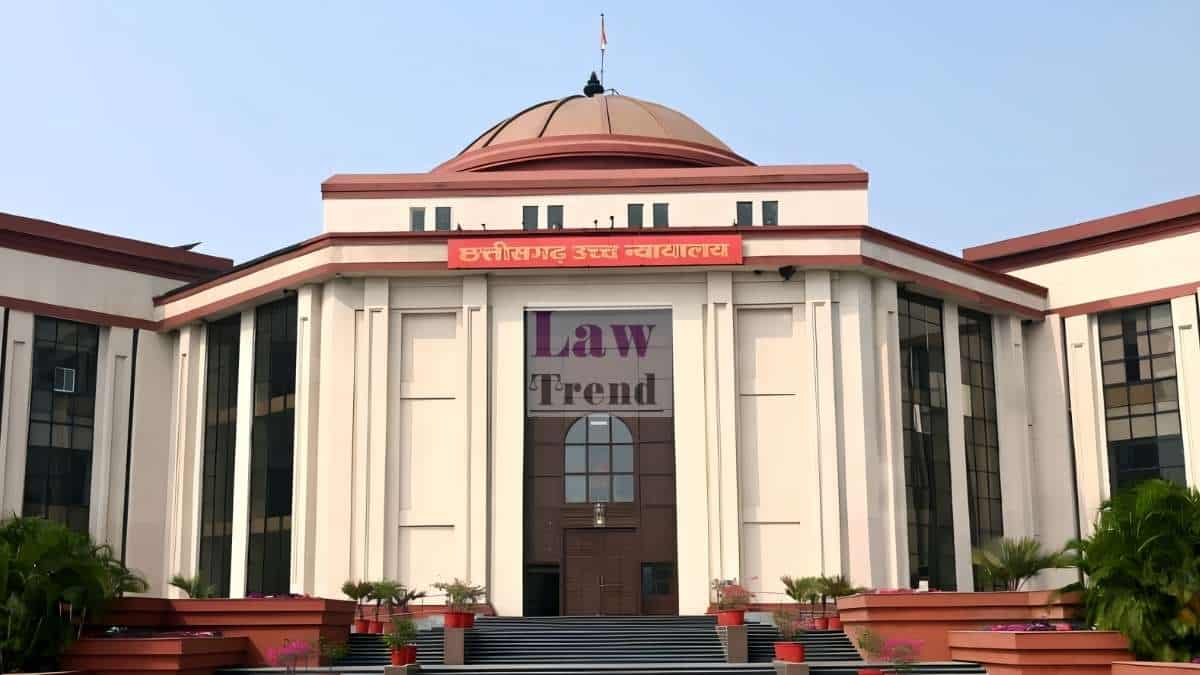
The Chhattisgarh High Court has set aside the conviction of an education department accountant in a decade-old bribery case, ruling that the mere recovery of tainted cash cannot establish guilt under anti-corruption law without concrete evidence of a bribe demand.
Delivering the judgment on September 18, a single-judge bench of Justice Naresh Kumar Chandravanshi overturned a 2017 trial court decision that had sentenced 41-year-old Murali Prasad Choudhary to prison under the Prevention of Corruption Act, 1988. The court held that the demand for illegal gratification is the foundation of the offence, and an accused cannot be convicted on recovery alone unless that demand is proven beyond reasonable doubt.
Choudhary, who was posted at the District Education Officer’s (DEO) office in Surajpur, had appealed against the special court’s sentencing.
Complainant And Key Witnesses Turn Hostile
In reviewing the trial records, the High Court observed that none of the prosecution witnesses substantiated the allegation that Choudhary had solicited money.
The primary witness, Mohit Ram Rajwade, completely repudiated the prosecution’s claims during his testimony. Rajwade, the president and manager of the Maa Saraswati Shiksha Samiti, testified before the court that Choudhary had never demanded a bribe from him.
Instead, Rajwade stated that an individual identified as Dr. Pratap had informed him that securing institutional recognition for a school required opening a fixed deposit account with a bank. The complainant deposed that he had handed over Rs 9,000 directly to Dr. Pratap for that purpose.
Rajwade further revealed that police and vigilance authorities had obtained his signatures on official documents and seizure memos at a rest house without explaining or reading out their contents to him. Another prosecution witness, Kunwar Sai, also turned hostile during the proceedings.
Rival Arguments Before The Bench
Appearing for Choudhary, advocate Ashutosh Trivedi argued that statutory provisions require the prosecution to prove both the demand and the acceptance of illegal gratification. Trivedi contended that with the complainant and a crucial witness turning hostile, the foundational charge of a bribe demand fell apart completely.
Opposing the appeal, Deputy Advocate General D. R. Minj submitted that the tainted currency notes were directly seized from the left pocket of Choudhary’s trousers during a coordinated operation. Minj maintained that the physical recovery of the money was corroborated by both independent witnesses and law enforcement officers, warranting the trial court’s guilty verdict.
The High Court rejected the state’s contention, ruling that physical recovery alone loses legal significance when the core requirement of establishing an unlawful demand remains unproven.
Origins Of The 2014 Anti-Corruption Trap
The case originated in June 2014 when Rajwade approached the Surajpur DEO office seeking official recognition for a school administered by his educational society.
According to the initial prosecution narrative, Choudhary allegedly sought a Rs 15,000 payoff on June 20, 2014, demanding an immediate payment of Rs 5,000, of which Rs 4,900 was allegedly delivered.
Rajwade lodged a formal written complaint with the Anti-Corruption Bureau (ACB) in Bilaspur on June 21, 2014. During the verification phase, the bureau instructed Rajwade to record his conversations with the official, during which investigators claimed the bribe figure was scaled down to Rs 8,000.
Acting on the recordings and complaint, the ACB staged a trap on June 30, 2014. Investigators alleged that Choudhary accepted the Rs 8,000 sum, counted the currency, and placed the notes in his trouser pocket before being apprehended. Following a chargesheet and trial, the special court found Choudhary guilty in 2017, a finding now fully quashed by the High Court.




