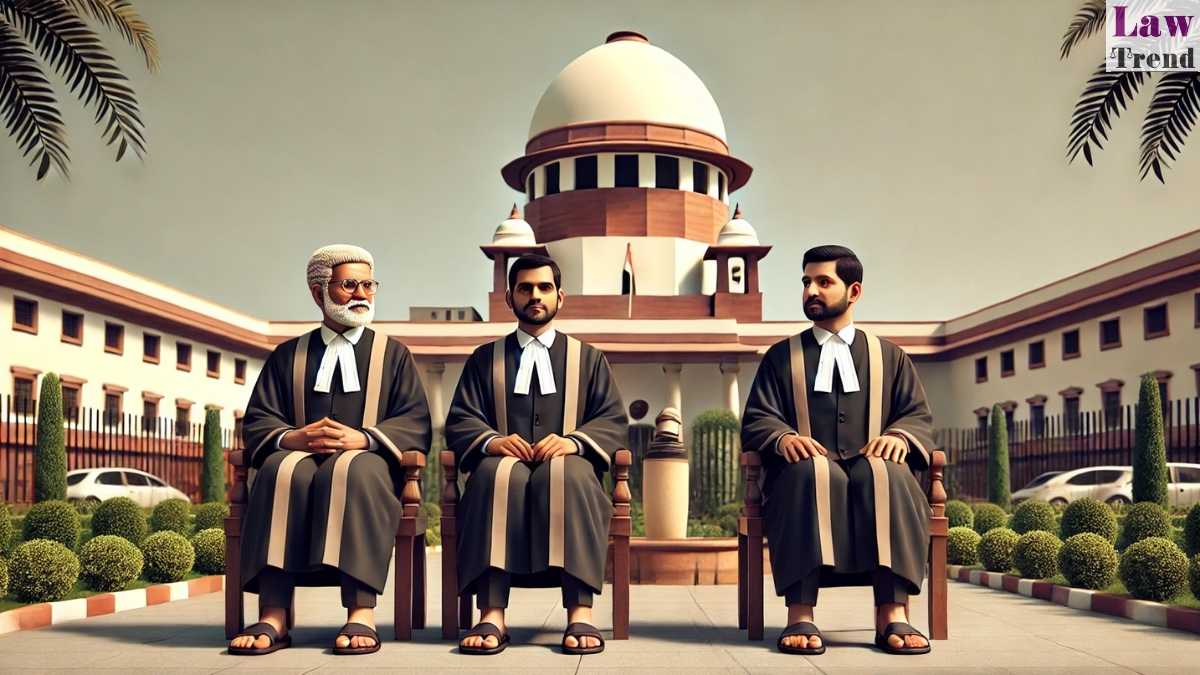
The Supreme Court on Friday witnessed a notable divergence of opinion among its judges during a hearing concerning the mandatory three-year bar practice requirement for candidates seeking entry into the Civil Judge (Junior Division) cadre. While some members of the Bench emphasized the necessity of practical experience to counter the influence of “coaching centers,” others raised concerns about losing meritorious young graduates to a rigid eligibility rule.
The Bench, comprising Chief Justice of India (CJI) Surya Kant and Justices K. Vinod Chandran and Augustine George Masih, was deliberating on the implementation modalities of a May 20, 2025, ruling that restored the practice requirement. To ensure no candidate is unfairly excluded during the transition, the Court directed all High Courts and States to extend application deadlines for currently advertised judicial posts to April 30, 2026.
The Amicus Proposals: Staggered Entry and Exemptions
Amicus Curiae Senior Advocate Siddharth Bhatnagar presented four structured suggestions to navigate the transition:
- Uniform Retention: Maintaining the three-year rule without any modifications.
- Special Accommodations: Allowing women and Persons with Disabilities (PwD) to appear for exams without the initial three-year practice, provided they complete the remaining practice period after clearing the exam but before formal training. Alternatively, reducing their requirement to two years.
- Phase-in Approach: A staggered implementation starting with zero years required in 2026, increasing annually until the full three-year mandate is reached in 2029.
- Accessibility Focus: Specific recommendations for PwD candidates, including lower qualifying benchmarks, age relaxation, and better operationalization of the RPwD Act.
A Bench Divided: Experience vs. Meritorious Freshers
The hearing highlighted a philosophical split on the bench. Justice K. Vinod Chandran, who was part of the original 2025 judgment restoring the rule, staunchly defended the requirement.
“I have been a Chief Justice. I have been a senior judge. The entire thing is about coaching centres. We have interviewed the judges,” Justice Chandran remarked, pushing back against arguments that the rule deters top graduates from premier institutions like NLSIU Bangalore. He noted that many successful judges took the “hard road” of practice before joining the bench.
In contrast, CJI Surya Kant expressed concern over the quality of the long-term judicial pool. “Today, if you don’t pick up meritorious people, then God knows what people will you have for another 20-40 years,” the CJI observed.
The CJI questioned the qualitative value of “passive courtroom presence” over three years and floated a potential compromise: “After one year practice, one year can also be a training year and then probation starts. That can also be the view.”
High Courts Weigh In
The Amicus informed the Court that seven of the twelve High Courts that filed affidavits—including Delhi, Punjab and Haryana, and J&K and Ladakh—supported the uniform retention of the three-year rule.
The Delhi High Court committee cautioned that creating exemptions for one category would lead to a “slippage” of similar claims from others. Meanwhile, the J&K High Court committee argued that the rule is a matter of “eligibility” rather than “suitability” and should not be diluted. Only the Tripura High Court committee suggested dropping the rule entirely for specific categories.
Background and Next Steps
The requirement for three years of practice at the Bar was originally removed in 2002 following the Shetty Commission’s recommendations. However, the ruling in All India Judges Association v. Union of India on May 20, 2025, restored the condition.
Senior Advocate Pinky Anand, representing aspirants, argued that the requirement bears little relationship to actual adjudicatory skills and pushes the average age of entry to twenty-nine.
The Supreme Court has scheduled the matter for further hearing next week to finalize the modalities.