

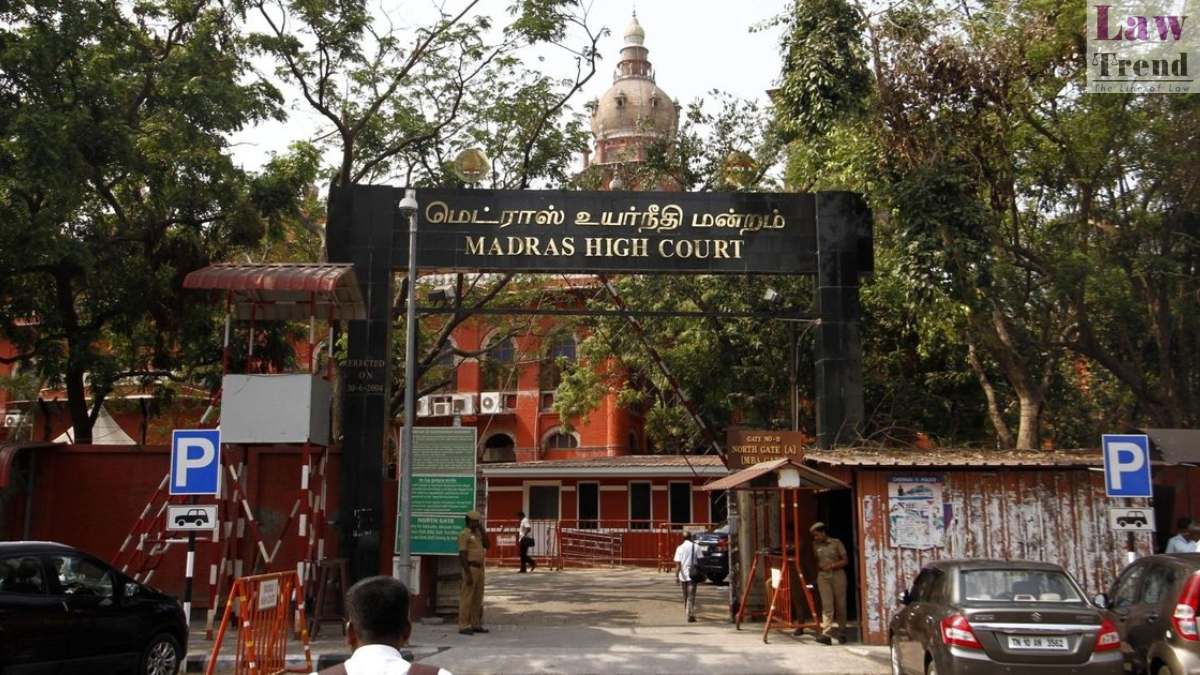
The Madras High Court has ordered the creation of a Special Investigation Team and a fresh post-mortem examination by an expert panel to investigate the death of a 24-year-old woman in Tamil Nadu’s Sivagangai district, following allegations of police negligence and serious inconsistencies in the initial autopsy.
Justice L Victoria Gowri instructed the Director of Medical Education and Research to constitute a multidisciplinary medical board within 24 hours. The panel—comprising senior forensic medicine professors, a forensic pathologist, a radiologist, an obstetrician-gynaecologist, and a forensic science expert—will conduct a new autopsy. To protect dignity in death, the court directed that the body, currently preserved at the Government Medical College Hospital mortuary in Pudukkottai, be released to the family for final rites immediately after the examination and sample collection, without waiting for the board’s final report.
The court transferred the case from local police to a Special Investigation Team led by an officer of Superintendent of Police rank or higher from the Crime Branch-Criminal Investigation Department or another specialized unit unconnected with Sivagangai district. The team will take custody of all forensic and digital evidence, locate the woman’s personal belongings—including her mobile phone, laptop, jewellery, diary, and marriage articles—and examine CCTV footage, final phone calls, medical pregnancy records, and allegations that the room where she died was locked from the outside.
Forensic Discrepancies and Petitions
The court’s ruling followed a writ petition filed by the woman’s mother, who alleged dowry harassment involving a demand for an additional 5.5 sovereigns of gold and raised concerns over the circumstances of her daughter’s death. The woman, who married on January 25 and was reportedly four months pregnant, was found hanging in her matrimonial home on June 17, less than five months after her wedding.
The family refused to accept the initial post-mortem findings, leading to an independent forensic review by Dr S Angayarkanni, an associate professor of forensic medicine at KAP Viswanatham Government Medical College in Tiruchirappalli. After evaluating the written autopsy report alongside 101 video clips of the procedure, Dr Angayarkanni noted multiple discrepancies between the written records and the video evidence. The variations related to autopsy timing, clothing examination, neck dissection, ligature mark documentation, skull structure analysis, biological sample preservation, and pregnancy-related findings.
Court Observations on Scientific Investigation
Highlighting the critical role of medical evidence in criminal justice, the court stated that the human body serves as a primary and highly reliable witness in cases of suspicious death, describing a post-mortem as a solemn medico-legal procedure rather than a routine administrative task. The judge noted that the role of the court is to ensure that the process of discovering the truth remains scientifically sound, legally robust, and publicly credible.
Clarifying that the order does not presume guilt or determine whether evidence was deliberately altered, the court emphasized that the immediate necessity was to preserve forensic material and establish the facts through an independent, scientifically conducted investigation under judicial oversight.


