

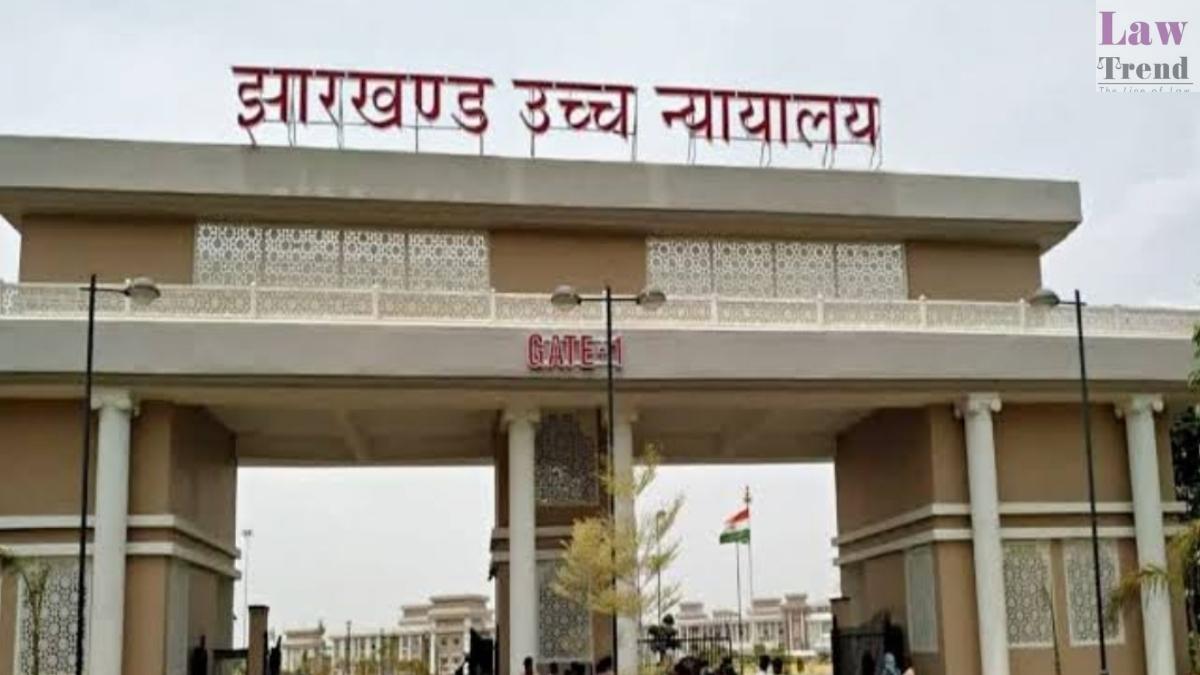
The Jharkhand High Court has ordered the state pollution control board to institute mandatory unannounced inspections and continuous emission surveillance on two manufacturing plants in Ramgarh, observing that ecological degradation inevitably spills beyond territorial boundaries.
Disposing of a public interest litigation on September 14, a division bench comprising Chief Justice MS Sonak and Justice Rajesh Shankar instructed regulators to maintain strict oversight on Bihar Foundry and Casting Limited and Dayal Steel Limited to guarantee uninterrupted adherence to statutory air and water discharge standards.
Framework for Regulatory Enforcement
Under the court order, the Jharkhand State Pollution Control Board must inspect both industrial facilities twice each year, stipulating that at least one of these visits must take place without prior notice.
The bench also directed authorities to implement continuous emission tracking for the two operations. Should recorded pollution levels surpass legal thresholds for more than 48 consecutive hours, the board is required to issue an immediate show-cause notice to the non-compliant unit.
Additionally, regulatory officials have been granted three months to carry out fresh testing of local water bodies and deliver a comprehensive assessment to the Deputy Commissioner of Ramgarh. The board must also establish a centralized dossier tracking the validity, expiration, and renewal status of all mandatory environmental clearances held by the two companies.
Transboundary Impact of Ecological Damage
In their ruling, the judges underscored that environmental degradation never remains confined to its point of origin. The bench observed that industrial pollutants and degraded waterways do not halt at administrative or district borders, meaning downstream and peripheral populations often shoulder the burden of contamination they played no role in producing.
The court noted that when environmental enforcement falters locally, the fallout quickly widens into a regional threat. Consequently, the judges affirmed that disputes of this nature cannot be treated as private conflicts between individual complainants and factory owners, as they directly impinge on the public right to a clean living environment and regional ecological balance.
Industrial Coexistence and Mixed Zoning
Addressing the operational setting of Ramgarh, the court recognized that heavy industrial units function in close proximity to residential quarters, educational institutions, government offices, and a local jail. The bench observed that such close coexistence naturally produces environmental friction.
However, the judges clarified that while the presence of nearby schools and civic institutions deprives industrial units of any immunity, it does not serve as automatic proof of statutory violations whenever local health complaints arise.
Compliance Review and Legal Arguments
The directives followed a review of regulatory documentation submitted by the state pollution authority. While the court recorded satisfaction with the plants’ current air pollution compliance, it noted a marginal exceedance in water discharge metrics that justified further official scrutiny.
The proceedings originated from a petition filed in 2024 by a Patna native residing in Ramgarh. Legal counsel for the petitioner, Shivam Utkarsh Sahay and Komal Tiwary, argued that round-the-clock emissions of toxic smoke, industrial dust, and gases from factory stacks were blanketing adjacent neighbourhoods. They further maintained that remedial steps taken by the companies were fleeting and required ongoing judicial intervention.
In response, state advocates Sahbaj Akhtar, Richa Sanchita, and Risheeta Singh told the bench that both manufacturing facilities possess all required environmental approvals and operate fully within existing legal and statutory frameworks.




