

Interception Orders Invalid Without Pre-Existing Authorization and Proof of Public Emergency: Chhattisgarh High Court
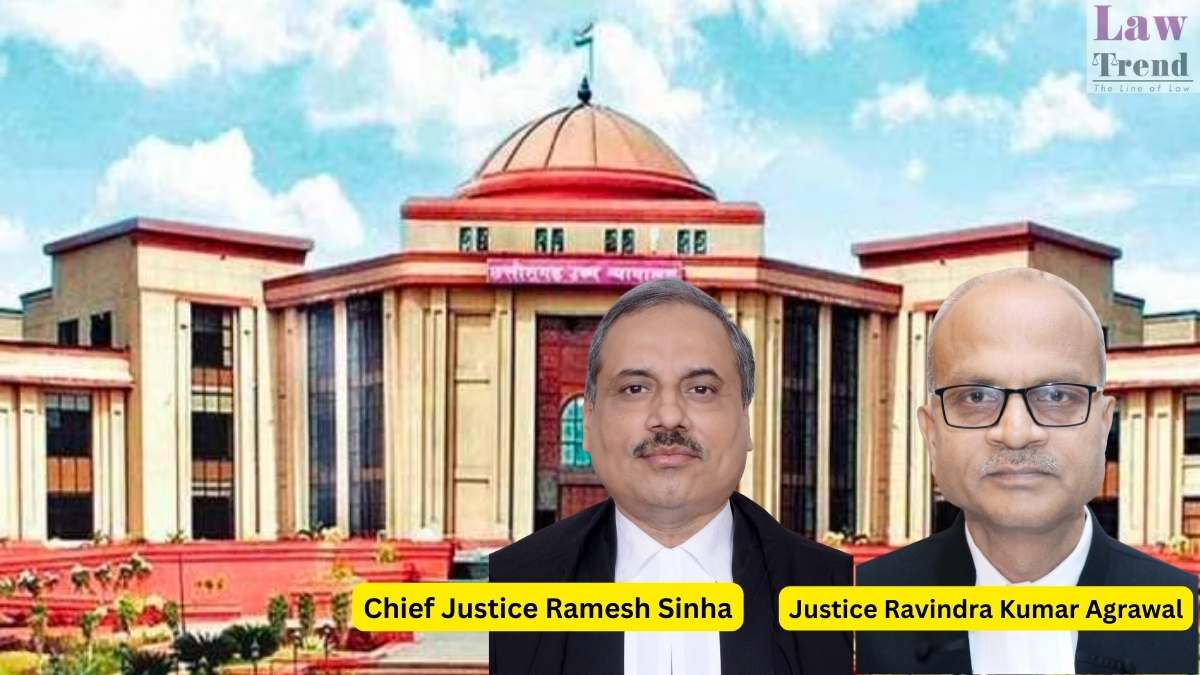

In a significant ruling on statutory safeguards and constitutional privacy rights, the High Court of Chhattisgarh, comprising Chief Justice Ramesh Sinha and Justice Ravindra Kumar Agrawal, has held that telephone interception orders issued without prerequisite jurisdictional facts and confirmed retroactively are legally unsustainable. Setting aside the phone tapping authorization orders issued against Shri Ravi Shankar Ji Maharaj, Chairman of Shri Rawatpura Sarkar Institute of Medical Sciences and Research (SRISMR), the High Court directed that copies of the intercepted messages be destroyed. However, the Division Bench declined to quash the criminal proceedings, FIR, and charge-sheet pending against the petitioner, directing the trial court to proceed on the basis of other legally admissible evidence.

Background of the Case

The matter arises out of FIR No. RC 2182025A0014 registered on June 30, 2025, by the Central Bureau of Investigation (CBI/AC-III, New Delhi) under Section 61(2) of the Bharatiya Nyaya Sanhita (BNS), 2023, Sections 7, 7A, 8, 9, 10, and 12 of the Prevention of Corruption Act, 1988 (as amended in 2018), and Sections 66 and 72-A of the Information Technology Act, 2000.

The CBI registered the FIR based on source information alleging a large-scale conspiracy involving officials of the Ministry of Health & Family Welfare, members of the National Medical Commission (NMC), intermediaries, and private medical colleges across the country. The alleged conspiracy aimed at leaking inspection details and securing favorable reports through bribes, ghost faculty, fake patients, and AEBAS tampering across 35 institutions. The petitioner was named as accused A-04 in his capacity as Chairman of SRISMR, Raipur, Chhattisgarh.

The prosecution’s case against the petitioner relied substantially on intercepted telephonic conversations obtained pursuant to an authorization order dated June 28, 2025, issued by the CBI Director, and subsequent confirmation by the Ministry of Home Affairs (MHA) on July 4, 2025. The petitioner initially filed a petition under Section 528 of the Bharatiya Nagarik Suraksha Sanhita (BNSS), 2023, seeking to quash the FIR, Charge-sheet No. 18/2025, summoning order dated February 25, 2026, and entire proceedings in Criminal Case No. CBI/11/2025 pending before the Special Judge (Prevention of Corruption Act), Raipur. Subsequent applications were filed to incorporate additional grounds specifically challenging the interception authorization orders under Section 20(2) of the Telecommunications Act, 2023, and the Telecommunications (Procedure and Safeguards for Lawful Interception of Messages) Rules, 2024.

Arguments of the Parties

Senior Advocate Mr. Manu Sharma, appearing for the petitioner, restricted the relief during hearings strictly to the legality of the interception authorization dated June 28, 2025, the MHA confirmation order dated July 4, 2025, and the Review Committee proceedings dated September 15, 2025, while expressing willingness to face trial on other independent material.

READ ALSO  क्या सीआरपीसी की धारा 91(1) के तहत अपेक्षित दस्तावेज पेश करने के लिए सम्मन किसी ऐसे व्यक्ति को जारी किया जा सकता है जिस पर किसी अपराध का आरोप लगाया गया हो और जांच जारी हो? छत्तीसगढ़ हाईकोर्ट ने बताया

He submitted that an affidavit filed by the Secretary, Department of Telecommunications, explicitly stated that the MHA confirmation order dated July 4, 2025, pertained to a duration from June 1, 2025, to July 31, 2025. Counsel argued that an authorization issued for the first time on June 28, 2025, could not be confirmed retrospectively for a period starting June 1, 2025—twenty-seven days prior to the existence of the initial order. He further contended that Section 20(2) of the Telecommunications Act, 2023, is pari materia with Section 5(2) of the Indian Telegraph Act, 1885, requiring mandatory jurisdictional preconditions of a “public emergency” or “interest of public safety,” which were completely absent in the CBI Director’s interception order. In support of his arguments, he relied on judgments including Hukam Chand Shyam Lal v. Union of India, People’s Union for Civil Liberties (PUCL) v. Union of India, K.S. Puttaswamy v. Union of India, K.L.D. Nagasree v. Government of India, Vinit Kumar v. CBI, Jatinder Pal Singh v. CBI, Dr. S.M. Mannan v. CBI, and P. Kishore v. Secretary to Government of India.

Standing Counsel Mr. Vaibhav A. Goverdhan, representing the CBI, contended that interception was lawfully initiated under emergency powers in exercise of Section 20(2) of the Telecommunications Act, 2023, and formed only one component of a nationwide corruption investigation. He stated that the prosecution was supported by independent documentary evidence, digital records, financial transactions, and witness statements. Relying on State of Haryana v. Bhajan Lal, Neeharika Infrastructure Pvt. Ltd. v. State of Maharashtra, and CBI v. Arvind Khanna, he argued that extraordinary jurisdiction to quash proceedings should be exercised sparingly and questions of evidence admissibility should be left to the trial court.

READ ALSO  Bargaining Power is Vested With the Employer; Employee Can Challenge the Conditions of Employment: SC

Deputy Solicitor General Mr. Ramakant Mishra, appearing for the Union of India, submitted that the interception authorization dated June 28, 2025, complied strictly with Section 20(2) of the Telecommunications Act, 2023. He argued that the reference to June 1, 2025, to July 31, 2025, in the Secretary’s affidavit merely reflected the administrative review cycle adopted by the Ministry when forwarding orders to the Review Committee, and did not imply retrospective phone tapping. He added that the Review Committee on September 15, 2025, examined the order and recorded its satisfaction, invoking the presumption of validity of official acts under Section 114 Illustration (e) of the Indian Evidence Act, 1872 / Bharatiya Sakshya Adhiniyam, 2023.

Court’s Analysis

Examining the statutory framework and constitutional jurisprudence, the High Court emphasized that telephone interception constitutes a serious invasion of the fundamental right to privacy guaranteed under Article 21 of the Constitution. Referring to settled law, the Bench noted that statutory preconditions must be strictly satisfied before exercising such extraordinary executive power.

Citing the Supreme Court’s ruling in PUCL v. Union of India, the Court observed:

“Section 5(2) of the Act permits the interception of messages in accordance with the provisions of the said section. Occurrence of any public emergency or in the interest of public safety are the sine qua non for the application of the provisions of Section 5(2) of the Act. Unless a public emergency has occurred or the interest of public safety demands, the authorities have no jurisdiction to exercise the powers under the said section.”

The Court scrutinized the CBI Director’s interception order dated June 28, 2025, and noted that it failed to record either the occurrence of a public emergency or the existence of a public safety interest. Instead, the order merely repeated statutory terms mechanically, demonstrating a lack of application of mind.

Addressing the issue of retrospective confirmation by the Ministry of Home Affairs, the Bench held:

“The confirmation contemplated under Rule 3(3)(b) is confirmatory in character; it cannot create jurisdiction retrospectively nor enlarge the scope of an authorisation already granted.”

The Bench stressed that the procedural safeguards under the Telecommunications Act, 2023, and the Rules of 2024 perform the same constitutional function previously discharged under the Telegraph Act and Rules, adhering to the principle in State of Uttar Pradesh v. Singhara Singh that when law requires a thing to be done in a particular manner, it must be done in that manner alone.

READ ALSO  बिना जांच के बर्खास्तगी संवैधानिक सुरक्षा का उल्लंघन: छत्तीसगढ़ हाईकोर्ट ने स्टेनोग्राफर को बहाल किया

The Court affirmed:

“The existence of a lawful authorisation by the Competent Authority is a jurisdictional fact. Unless such jurisdictional fact exists on the relevant date, neither the Ministry of Home Affairs nor the Review Committee can retrospectively validate interception for an anterior period. Acceptance of such a proposition would defeat the entire object of the statutory safeguards and render the procedural protections illusory.”

The Court further held that the Review Committee’s supervisory endorsement on September 15, 2025, could not cure a foundational jurisdictional defect.

The Decision

The High Court allowed the challenge against the interception proceedings, issuing the following orders:

  1. The interception authorization dated June 28, 2025, issued under Section 20(2) of the Telecommunications Act, 2023, the consequential MHA confirmation order dated July 4, 2025, and the Review Committee proceedings dated September 15, 2025, insofar as they relate to the petitioner, are set aside.
  2. Copies of the intercepted messages obtained pursuant to the invalid orders are directed to be destroyed, provided there is no legal impediment.
  3. The prayer for quashing FIR No. RC 2182025A0014 dated June 30, 2025, Charge-sheet No. 18/2025 dated August 28, 2025, summoning order dated February 25, 2026, and the pending criminal proceedings is declined.
  4. The Special Judge (Prevention of Corruption Act), Raipur, is directed to proceed with the trial strictly in accordance with law on the basis of other legally admissible material on record, uninfluenced by the interception proceedings set aside by this judgment.
  5. The petitioner is directed to fully cooperate with the trial court and appear on all fixed dates.

Case Title: Shri Ravi Shankar Ji Maharaj v. Central Bureau of Investigation & Ors.
Case No.: CRMP No. 1504 of 2026
Bench: Chief Justice Ramesh Sinha and Justice Ravindra Kumar Agrawal
Date: 03.08.2026

Law Trend
Law Trendhttps://lawtrend.in/
Legal News Website Providing Latest Judgments of Supreme Court and High Court

Related Articles

Latest Articles

