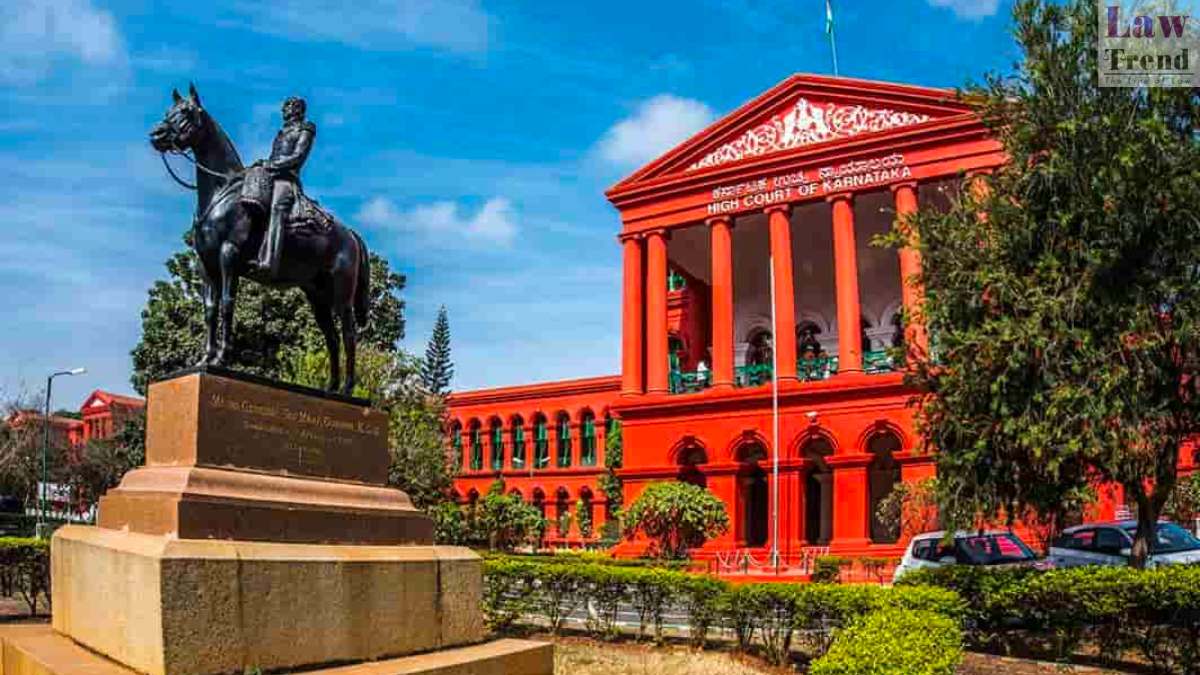
The Karnataka High Court, in a scathing oral observation on Friday, remarked that Indian society is “one of the most racist societies in the world.” The observation came from the Single Judge Bench of Justice M.I. Arun during the hearing of a petition filed by news anchor Sudhir Chaudhary, seeking to quash an FIR registered against him for allegedly promoting enmity between groups through a news programme on the ‘Swavalambi Sarathi Scheme’.
The High Court was hearing a Criminal Petition filed by Sudhir Chaudhary (Petitioner) and Aaj Tak, challenging the FIR registered by the Seshadripuram Police Station. The complaint, lodged by the Karnataka Minorities Development Corporation, alleged that a news report aired on the channel falsely claimed that a government subsidy scheme was available exclusively to minorities, thereby depriving Hindus.
While hearing arguments on whether the show constituted hate speech under Section 153A of the IPC, Justice M.I. Arun engaged in a deeper sociological discourse, attributing communal friction to the inherent “racist” mindset of Indian society and the lack of scientific temperament.
The hearing witnessed strong remarks from the Bench regarding the root causes of division in India. Justice Arun observed that the problem lies not just with the media or politics, but with the society itself.
“We Are the Most Racist Society”
Rebutting the notion that racism is a western concept, the Court observed that Indians are deeply divided by community lines, treating different communities as different species.
“The problem with Indian society—all communities included—is we don’t understand that there is only one animal species called Homo sapiens. We are one of the most racist societies in the world. We accuse others of racism, apartheid, and all that. But the truth is we are no less. We feel each community is an animal species by itself, and there has to be discrimination based on community. This is our mentality.”
On “Neo-Colonialism” and Corporate Slavery
Drawing a sharp parallel between the colonial era and modern corporate influence, Justice Arun remarked that the lack of “Indianness” is pushing the country towards a new form of slavery.
“A few thousand British security guards—East India Company security guards—colonised us because we never had the concept of ‘Indianness’. The moment we got the concept of Indianness, the British went out. Now this is the era of neo-colonisation, through companies and other corporate sectors. That’s because again, we are going back to our old habits where we refuse to look at a human being as a human being.”
Politics Reflects Society: “Leaders We Deserve”
When the discussion turned to political polarization, the Court noted that political parties merely mirror the electorate’s biases. The Judge pointed out that candidate selection is driven by caste and community equations because that is what voters prioritize.
“Community of the candidate, most of the time, weighs more than fifty per cent than other things when a seat is given… Tell me, which political party says, ‘I believe in Article 14, 19 (1)(a) and 21’ and contests elections? We say leaders are corrupt, but the truth is that in a democracy, people get the leaders they deserve.”
The Court emphasized that societal progress comes from “rationality and scientific temperament,” not religious ideologies.
The controversy stems from a show titled “Black and White” aired in September 2023.
- The Scheme: The ‘Swavalambi Sarathi Scheme’ provides a 50% subsidy (up to ₹3 Lakh) for unemployed youth to purchase commercial vehicles.
- The Allegation: The complaint stated that Chaudhary’s report portrayed the scheme as being “only for minorities” (Muslims, Christians, etc.), suggesting that poor Hindus were ineligible. The prosecution argued this was “misinformation” intended to incite communal disharmony.
- The Defense: The petitioner argued that the report was a critical analysis of a specific notification issued by the Minorities Development Corporation and did not negate the existence of other similar schemes for other castes.
A key legal point discussed during the hearing was the distinction between false news and inflammatory analysis.
- State’s Submission: The State Counsel argued that the show “demonised” a particular community and incited hatred, justifying the investigation under Section 153A IPC.
- Court’s Query: Justice Arun placed the burden on the State to prove specific factual falsehoods. The Court distinguished between an “analysis of appeasement” (which is protected speech) and “patent falsehoods.”
The Court remarked:
“If the news report speaks falsehood, then in that event, the petition is liable to be dismissed. But if the news report is an analysis of the policy… saying that the policy appeases one section… it may be inflammatory, but the question is whether it is the truth or falsehood. If it is falsehood, show the court what is the falsehood.”
The High Court observed that while the respondents claim the content is inflammatory, they must specifically demonstrate the “falsehood” in the statements made by the channel.
- Interim Relief: The Court continued the interim protection granted earlier, restraining the police from taking coercive action against Sudhir Chaudhary and the channel.
- Next Hearing: The matter has been listed for further arguments on January 13, 2026.