

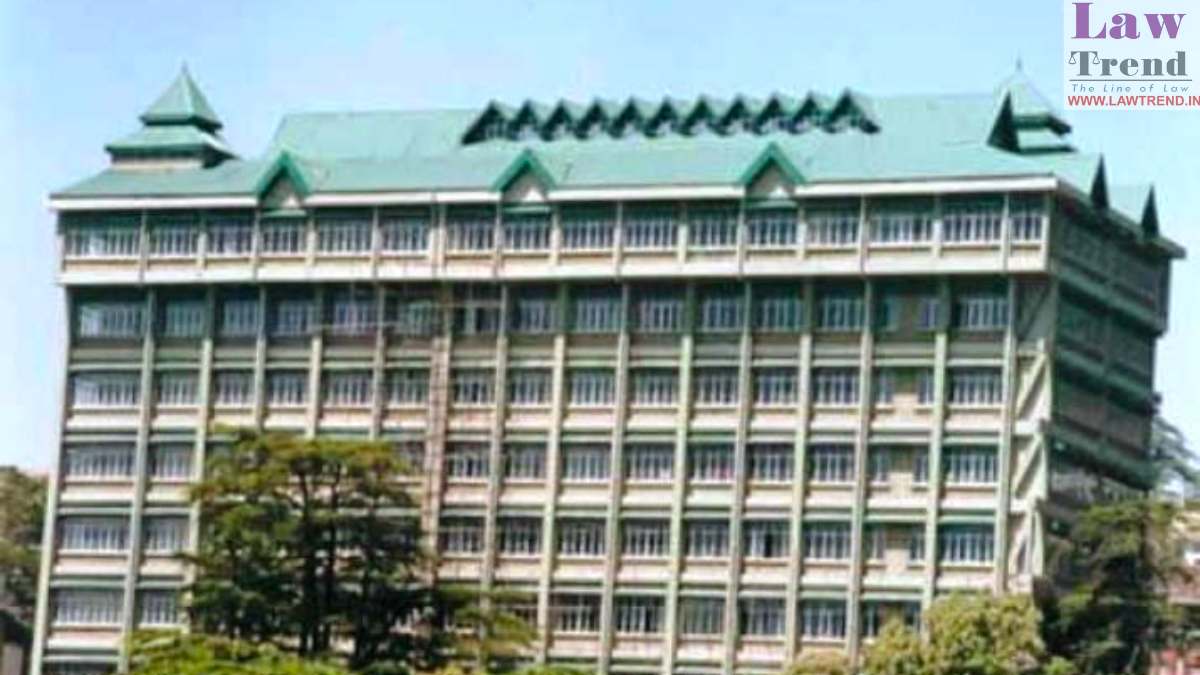
The Himachal Pradesh High Court has strongly criticized the Manali Municipal Council for transporting untreated wet waste over 300 kilometers to Ambala in Haryana, observing that the practice only adds to environmental pollution along the National Highway.
Hearing three collective matters concerning the unscientific disposal of solid and legacy waste, a division bench comprising Chief Justice Gurmeet Singh Sandhawalia and Justice Bipin Chander Negi directed the Executive Officer of the Manali Municipal Council and an authorized representative of the private waste management firm to appear in person at the next hearing on July 8, 2026. The directions follow revelations of severe environmental violations, including the discharge of untreated leachate into the Beas River and the failure of the authorities to deposit over Rs 2.98 crore in environmental compensation.
The proceedings arise from three consolidated cases concerning the unscientific treatment and disposal of legacy and solid waste at Rangri, situated approximately 3 kilometers from Manali.
Key issues came to light following an inspection report by the Himachal Pradesh State Pollution Control Board (HPSPCB) dated April 13. The inspection highlighted critical operational deficiencies at the Rangri waste management facility, which is managed jointly by the Manali Municipal Council and a Haryana-based private contractor, M/s Suntan Life Pvt Ltd.
According to the inspection report, the Rangri plant received heavily mixed waste from various hotspots, which generated a foul smell in the locality due to the absence of proper odor and fly control systems. The report revealed that of the 78,464 tonnes of legacy waste accumulated at the site, the private company had processed only 32,778.46 tonnes up to January 2026. Furthermore, nearly 85 percent of the waste arriving at the plant was mixed, with a mere 15 percent being segregated at the source.
Explanations of the Parties
In defense of the waste transportation practice, an official from M/s Suntan Life Pvt Ltd explained that wet waste is converted into compost at Manali over a period of one month and is then transported to Ambala. The representative stated:
“We transport the waste in the shape of compost from Manali to Ambala in Haryana because we don’t have the screening capacity to make the waste into the size of 6mm, which is ideal for agricultural purposes. The wet waste in the shape of compost is not transported everyday. It took around one month to convert the waste into compost and then transport it to Ambala. In Ambala and its nearby areas, the demand of the processed compost for agricultural purposes is very large.”
During the court proceedings, the counsel representing the Manali Municipal Council and the private contractor sought additional time from the bench to file a detailed status report outlining proposed measures to mitigate the legacy waste burden.
The Court’s Analysis and Observations
The Division Bench expressed strong displeasure at the logistical arrangement of moving waste across state lines, noting its adverse impact on the surrounding environment. Detailing this, the Bench observed:
“We do not appreciate the action as such of Municipal Council, Manali for carrying of the wet waste to Ambala, which is apparently over 300 kms away. Therefore, carrying wet waste to Ambala would further pollute the whole highway.”
The High Court further observed that the civic body was in clear violation of statutory waste management standards, remarking:
“The Municipal Corporation Manali had not achieved 100 per cent source segregation from the concerned area as per the Solid Waste Management Rules, 2016, and wet waste was lying in open area without any treatment and generating leachate and one pit which was provided for leachate, is not functional. It is submitted that the unit is sending the wet waste to the bio-gas plant at Jatwar… Manali has not provided wet waste treatment plant.”
Jatwar, where the wet waste is being dispatched, is a village located under the Naraingarh subdivision in the Ambala district of Haryana, approximately 319 kilometers away from Manali.
The court also took judicial notice of the fact that untreated leachate and waste were being dumped near the Gau Sadan close to the Beas River, with the leachate flowing directly into the waterbody. The inspection confirmed that the leachate collection pits remained empty and that the bio-mining process was being carried out unscientifically, in violation of prescribed guidelines.
Decision of the Court
As a consequence of the established environmental violations, the Manali Municipal Council has been penalized with substantial environmental compensation. This includes:
- Rs 15.30 lakh for discharging untreated leachate into the Beas River.
- Rs 2,83,07,591 (approximately Rs 2.83 crore) for the unscientific disposal of solid waste at the designated sites.
The court noted that neither the Executive Officer of the Municipal Council nor the representatives of M/s Suntan Life Pvt Ltd had deposited the required compensation, despite receiving a formal communication to do so via video conference on February 26, 2026.
Consequently, the High Court directed the Executive Officer of the Manali Municipal Council and an authorized representative of the private firm to remain personally present in court for the next scheduled hearing.
The matter is listed for further hearing on July 8, 2026.




