

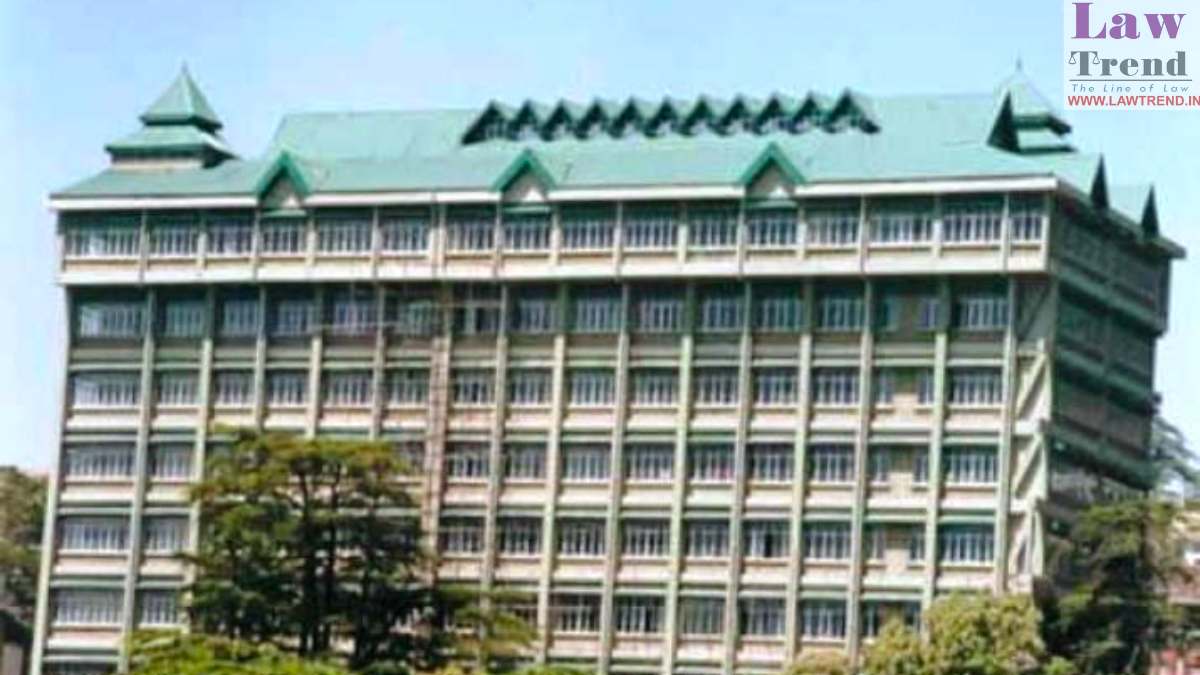
The Himachal Pradesh High Court has refused to interfere with the transfer of a former Army personnel employed in the Sainik Welfare Department, holding that an employee who accepts civil employment in the state must be prepared to serve at different locations.
Justice Jyotsna Rewal Dua dismissed the petition filed by a junior office assistant (IT) challenging his transfer from Chamba to Hamirpur. The Court noted that the petitioner had already spent more than nine years at Chamba despite holding a state-cadre post.
In its October 8, 2026 order, the Court found no sufficient reason to grant relief merely because the employee had family responsibilities and elderly parents suffering from age-related ailments.
Employee Sought Retention at Chamba on Family Grounds
The petitioner had challenged an October 3, 2026 order transferring him from the Zila Sainik Welfare Office, Chamba, to the corresponding office in Hamirpur.
Represented by advocate Anjali Soni Verma, he submitted that he was the only male member of his family and needed to remain at Chamba to look after his elderly parents, who were experiencing health problems associated with their age.
He also relied on his previous service in the Indian Army, where he had served for 18 years and nine months before taking up civilian employment.
The petitioner joined the Sainik Welfare Department on May 22, 2017, as a junior office assistant (IT) on a contractual basis against a post reserved for ex-servicemen. His appointment was followed by regularisation of service on October 1, 2020.
Throughout this period, he continued working at Chamba.
Court Notes Benefits of Previous Military Service
The petitioner argued that his military background had already been recognised by the government when he secured employment under the ex-servicemen category. His salary had also been protected after entering civil service.
The High Court acknowledged that he had received the benefit of his earlier military service, including pay protection.
However, Justice Dua observed that the petitioner belonged to the state cadre and had remained at the same posting for over nine years.
The Court held that accepting employment under the state government also required him to discharge duties at other stations.
Justice Dua stated that the circumstances presented before the Court did not justify exercising judicial discretion in the petitioner’s favour.
Finding no grounds to interfere with the transfer order, the High Court dismissed the petition and declined to allow the petitioner to continue at Chamba.




