

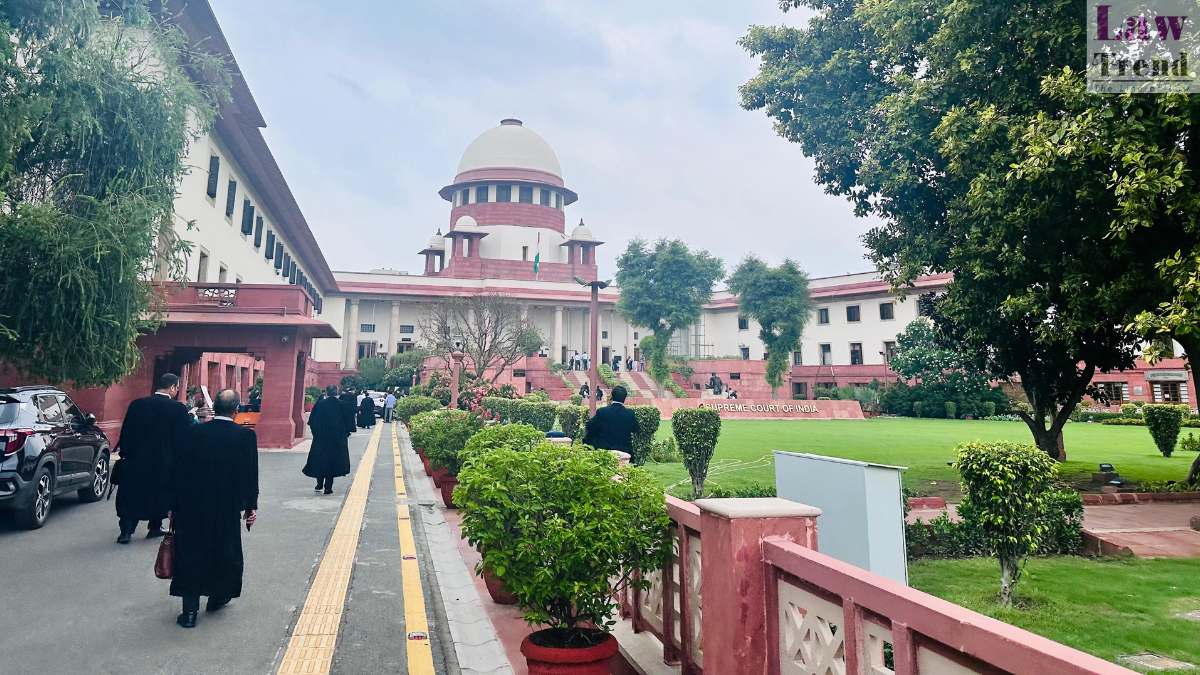
In a stern reality check for the banking sector, the Supreme Court of India has flagged a “troubling trend” in how financial institutions disburse loans. The apex court observed that while banks appear highly “casual” when sanctioning massive loans to large corporate entities, they subject ordinary citizens seeking small personal loans to “stringent conditions” and “borderline harassment.”
The bench, comprising Justices Ahsanuddin Amanullah and R Mahadevan, made these sharp observations on May 19 during the hearing of a special leave petition (SLP) filed by Haryana-based firm M/s Bhaskar International Private Limited against the State Bank of India (SBI).
While the court ultimately dismissed the corporate borrower’s plea to block SBI from taking possession of its properties, the judges used the platform to call out systemic disparities in the Indian banking landscape.
‘We Cannot Shut Our Eyes’: Court Flags SBI’s Negligence
The case before the Supreme Court exposed what the bench characterized as a glaring lapse in due diligence by India’s largest public sector lender.
Bhaskar International Private Limited had availed a loan facility of ₹8.09 crore from SBI in 2019. However, the company failed to repay even its very first installment. Within roughly five to six months of the loan being granted, SBI was forced to classify the account as a non-performing asset (NPA) on July 29, 2019.
“We cannot shut our eyes to the conduct of the SBI,” the bench stated, pointing to clear “negligence” on the part of the bank and its officials. The court noted that the immediate default was a “clear indicator that a proper assessment was not made of the capacity of the borrower(s)-petitioners to repay the loan by the concerned officials of SBI.”
While expressing its strong displeasure, the court chose not to issue direct punitive orders against the bank’s officials in this specific instance, noting it would leave such actions “for a more fit case where specific orders may be called for.”
A Call for Fairer Procedures and Pro-Poor Policies
The Supreme Court clarified that it was not advocating for a dilution of credit security standards, noting that loan norms are “best left to the Reserve Bank of India and the bank(s) concerned.”
However, the bench strongly advocated for a more humane approach toward everyday borrowers:
- Simpler Processes: The court insisted that loan application and recovery procedures “can certainly be made easier and fairer for loan-seekers.”
- Pro-Poor Grading: The bench emphasized that concession and incentive policies must be “suitably framed/graded to give the maximum benefit to the persons who are at the lowest rung of the social/financial strata.”
The Legal Battle: ‘Too Little, Too Late’
The legal battle trace back to SBI’s recovery efforts under the SARFAESI (Securitisation and Reconstruction of Financial Assets and Enforcement of Security Interest) Act.
After the account turned NPA, SBI secured an order from the District Magistrate of Yamuna Nagar on May 29, 2024, to take physical possession of the secured assets. When that order was not executed, SBI approached the Punjab and Haryana High Court, which on January 16, 2025, directed local authorities to facilitate the takeover within two months.
Appearing for the defaulting company, Senior Advocate Nachiketa Joshi argued that the NPA classification was faulty. He claimed the company was ready to repay the entire principal amount and could revive its operations if granted limited time and assistance, calling SBI’s aggressive takeover attempt “arbitrary and premature.”
SBI’s counsel, Senior Advocate Archana Pathak Dave, fiercely countered the argument. She pointed out that the company had taken a commercial loan but defaulted from day one without paying “even a single farthing.” She also informed the court that the borrowers had already sought relief from the Debts Recovery Tribunal-II (DRT) in Chandigarh without success.
The Supreme Court agreed entirely with the bank on the merits of the default, dismissing the borrower’s late-stage repayment offer.
“Immediately or soon thereafter, after availing a loan of Rs 8,09,00,000/-, defaulting on the very first instalment and ever since, not repaying even a single farthing… cannot be glossed over,” the bench remarked. It characterized the company’s 2025 offer to settle the principal amount—nearly six years after the loan was granted—as “too little too late.”
Temporary Relief Granted
Though the Supreme Court dismissed the company’s main petition, it granted a final, brief window of protection. To allow the borrowers to properly pursue their pending applications before the DRT, the court ordered that the status quo on the properties be maintained for two weeks, until June 2, 2026.
The court explicitly clarified that this temporary relief would not impact the merits of the ongoing case for either party before the DRT or any other appellate forum.




