

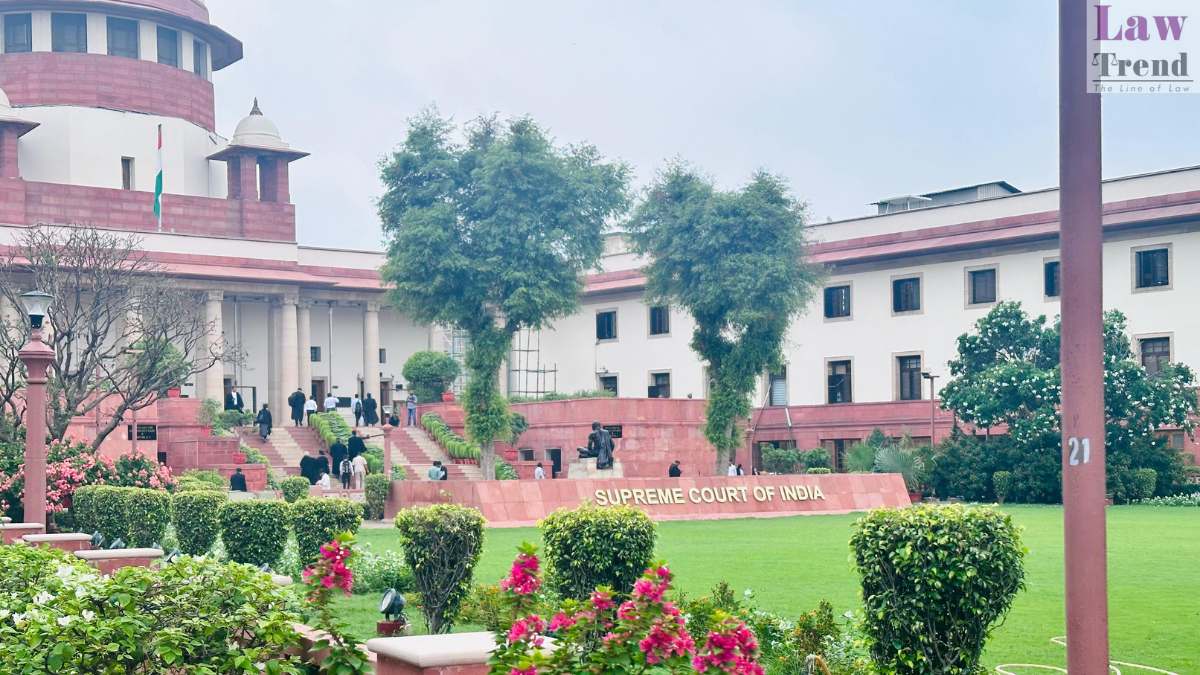
In a stern warning against the growing menace of narcotics, the Supreme Court of India on Tuesday declared that drug dealers must be dealt with an iron fist, observing that they are systematically destroying generations of the country’s youth.
A three-judge bench comprising Justices Vikram Nath, Sheel Nagu, and V Mohana delivered the strong message while dismissing the bail petition of an accused arrested in June 2022 under the Narcotic Drugs and Psychotropic Substances (NDPS) Act, 1985.
“People dealing with drugs will have to be dealt with a very firm hand,” Justice Nath remarked during the proceedings. “They are destroying the lives of youths of this country generation after generation.”
With this observation, the top court upheld a February ruling by the Madras High Court, which had rejected the accused’s sixth consecutive attempt to secure bail.
The June 2022 Arrest and Confession
The case traces back to June 11, 2022, when police officers spotted the petitioner and two other individuals holding a bag. Upon noticing the police presence, the trio attempted to flee the scene.
According to the prosecution, law enforcement officers intercepted them and recovered 21 MDMA-ecstasy tablets weighing approximately 10.15 grams from the bag. Following his apprehension, the petitioner and another co-accused confessed to their involvement, providing information that subsequently led to the arrest of the third accomplice who had initially managed to escape.
The Legal Tug-of-War Over Custody and Trial Delays
Before the Supreme Court’s dismissal, the petitioner’s legal counsel raised several procedural objections in an attempt to secure his release.
A primary argument centered on the handling of the seized drugs. The defense contended that while the MDMA tablets were confiscated on June 11, 2022, they were not produced before the Special Court in Chennai until nearly a month later, on July 5, 2022. During this interim period, the defense argued, the police kept the contraband in their custody without obtaining the necessary approval from the trial court.
Furthermore, the petitioner’s counsel pointed out significant delays in the judicial process. They noted that the Madras High Court had previously issued a directive in November 2024 ordering the trial court to conclude the proceedings within six months. Despite this directive, the trial remains unfinished. The defense also argued for parity, highlighting that the co-accused in the case had already been granted bail.
‘Commercial Quantity’ Limits Relief
The state’s prosecution strongly opposed the bail plea, emphasizing the gravity of the offence. The state’s counsel argued that the 10.15 grams of MDMA-ecstasy seized from the suspects fell under the classification of a “commercial quantity” under Indian narcotics laws, which imposes much stricter standards for bail.
The Madras High Court had previously agreed with the prosecution’s stance and dismissed the petition—marking the sixth time the accused was denied bail. By rejecting the latest appeal, the Supreme Court has reaffirmed the judiciary’s uncompromising stance on commercial-scale drug trafficking.




