

The Allahabad High Court has held that a departmental inquiry cannot become a tool of oppression against an employee who has devoted his working life to the employer, particularly when the proceedings result in the forfeiture of his entire pension and retirement benefits without cogent evidence establishing misconduct.
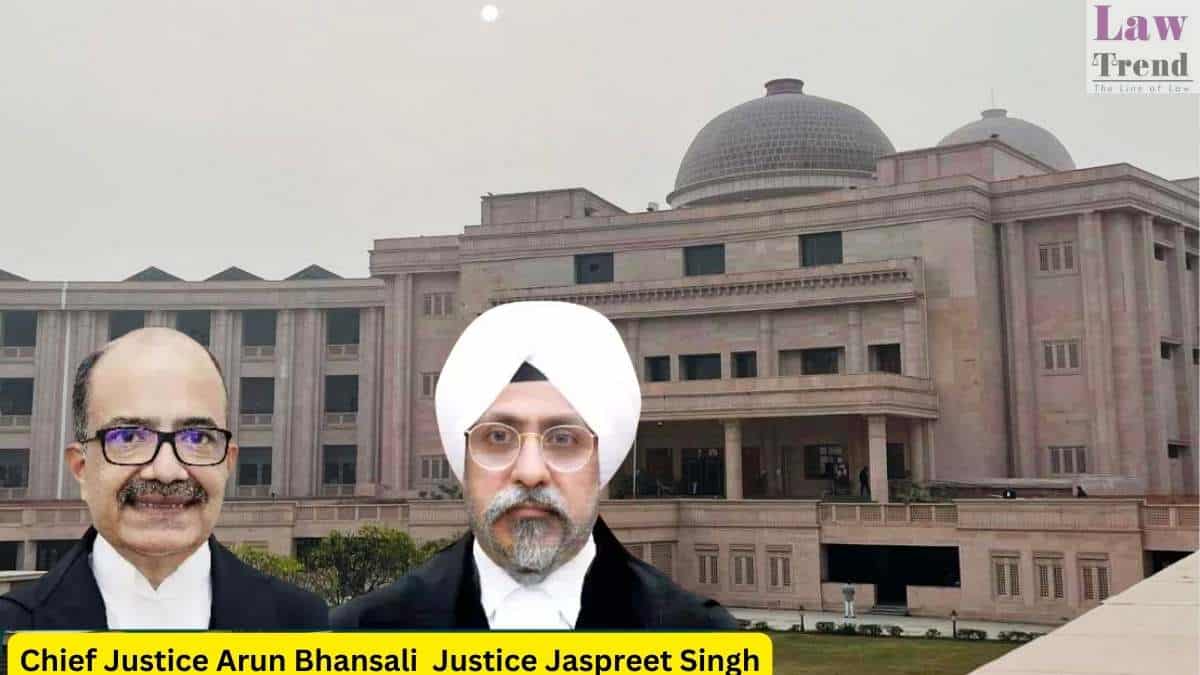
A Division Bench of Chief Justice Arun Bhansali and Justice Jaspreet Singh dismissed an appeal filed by Uttar Pradesh Power Corporation Limited (UPPCL) against an order directing restoration of the full pension and retirement benefits of a former Superintending Engineer, Rakesh Kumar.
In its judgement dated November 17, 2026, the Court found that the departmental inquiry had failed to establish the charges through reliable evidence and that the punishment of forfeiting 100% of the employee’s pension was unjustified.
The Bench upheld the Single Judge’s September 14, 2026 order directing restoration of the pension and payment of retirement dues within four months, along with interest at 6% per annum from the 30th day after retirement until actual payment.
Department Must Prove Charges Even When Employee Fails to Effectively Contest Them
The Court rejected UPPCL’s argument that the charges should be treated as proved because the retired employee had not effectively denied them or produced sufficient evidence in his defence.
The Bench held that the responsibility to establish allegations through cogent evidence remains with the employer conducting the disciplinary proceedings.
“Even if at all the respondent did not choose to effectively contest the inquiry, yet the employer who initiated the inquiry is bound to ensure that the charges levelled are established with cogent evidence, but having failed to do so, it cannot penalize the employee.”
The Court further observed that although judicial interference in departmental inquiries is ordinarily limited, such proceedings cannot be allowed to operate oppressively against employees approaching the later years of their lives.
“A domestic inquiry cannot be permitted to be used as a tool of oppression for an employee who has given his entire active life to his employer and in his twilight years he is made to suffer, forfeiting his entire pension and retiral dues.”
Inquiry Initiated After Retirement
Rakesh Kumar joined service as an Assistant Engineer in 1985 and retired on March 31, 2021, after completing his service with a clean record.
On November 17, 2021, nearly eight months after his retirement, the department served him with a charge-sheet containing five allegations relating to his tenure as Superintending Engineer in Noida.
The Inquiry Officer submitted a report on December 20, 2021, finding four charges proved and one partially proved. The officer recommended recovery from the employee’s retirement benefits and forfeiture of his pension, observing that the allegations would have warranted termination had he remained in service.
A punishment order dated January 10, 2022, resulted in forfeiture of his entire pension and post-retirement benefits. The departmental appellate authority upheld the punishment on March 4, 2023.
Kumar challenged both orders before the High Court. On September 14, 2026, the Single Judge allowed his writ petition, set aside the disciplinary punishment and directed restoration of his pension with interest.
UPPCL subsequently challenged that decision before the Division Bench.
Inquiry Findings Unsupported by Documentary Evidence
Appearing for UPPCL, Advocate Manish Jauhari argued that the charges were serious and supported by documentary material. He contended that the department had complied with the procedural requirements and that the Single Judge had wrongly interfered with the disciplinary findings.
He also questioned the direction to pay interest at 6% per annum on the retirement benefits.
Senior Advocate Gaurav Mehrotra, assisted by Advocates Akber Ahmad and Shhreiya Agarwal, represented the retired employee.
The respondent argued that the Inquiry Officer had failed to establish any of the allegations through proper consideration of evidence. He submitted that the disciplinary findings reflected non-application of mind and that the appellate authority had ignored fundamental defects in the inquiry.
After examining the record, the Division Bench found that the inquiry report declared the charges proved without identifying the documentary evidence relied upon to establish each allegation.
The Court particularly examined Charges 3 and 4, which concerned alleged irregularities in electricity infrastructure works and financial losses to the corporation.
Charge 4 alleged that the corporation suffered a loss of ₹23.97 lakh because the prescribed amount for constructing a 33 kV bay had not been recovered from a consumer.
The Bench found that the Inquiry Officer had relied upon findings concerning Charge 3, which was only partially proved, to establish Charge 4, even though the two allegations were independent.
It observed that the inquiry report did not properly consider the evidence relating to either charge.
The Court also found that Charges 1, 2 and 5 had been treated as proved in a similarly unsatisfactory manner.
Financial Loss Must Be Established Before Forfeiting Pension
The Division Bench emphasised that a punishment involving forfeiture of an employee’s entire pension required serious examination of the evidence and could not rest on a casual assessment.
It found that neither the inquiry report nor the punishment order adequately established how the respondent was responsible for causing financial loss to the department or the extent of such loss.
The Court observed that the material relied upon consisted largely of estimates and vague assertions that had not been properly proved or connected to the allegations.
“In absence of any such finding and merely on the basis of surmises the punishment order was passed which is not justifiable.”
The Bench also noted that the department had initiated the inquiry after the employee’s retirement in relation to events that had occurred more than four years before his superannuation.
Examining the disciplinary decision, the Court found that the punishment order merely reproduced the charges, the employee’s response and the Inquiry Officer’s findings without independent application of mind.
The appellate authority had similarly affirmed the punishment without properly considering the objections raised against the inquiry process.
UPPCL Appeal Dismissed, Pension Restoration Upheld
The Division Bench concluded that the allegations against the retired employee had not been legally proved and that the Single Judge’s decision contained no error requiring appellate interference.
It consequently dismissed UPPCL’s appeal and upheld the order setting aside the forfeiture of the employee’s pension and retirement benefits.
The Court also condoned a delay of 21 days in filing the appeal after considering the explanation offered by UPPCL. However, it found no merit in the appeal itself.
No order as to costs was passed.
Case Details
Case Title: U.P. Power Corporation Ltd. & Ors. v. Rakesh Kumar
Case Number: Special Appeal Defective No. 704 of 2026
Bench: Chief Justice Arun Bhansali and Justice Jaspreet Singh
Judgement Date: November 17, 2026


