

Department Liable for Interest on Delayed VAT Refund; ‘Actual Refund’ Means Payment, Not Just Passing Order: Andhra Pradesh High Court

In a significant ruling concerning the rights of taxpayers to receive timely refunds, the Andhra Pradesh High Court has held that the Commercial Tax Department is liable to pay interest on delayed refunds if the amount is not actually credited to the dealer within the statutory period of 90 days. The Court clarified that mere passing of a refund order within the time limit is insufficient compliance with the law if the “actual refund” is delayed.

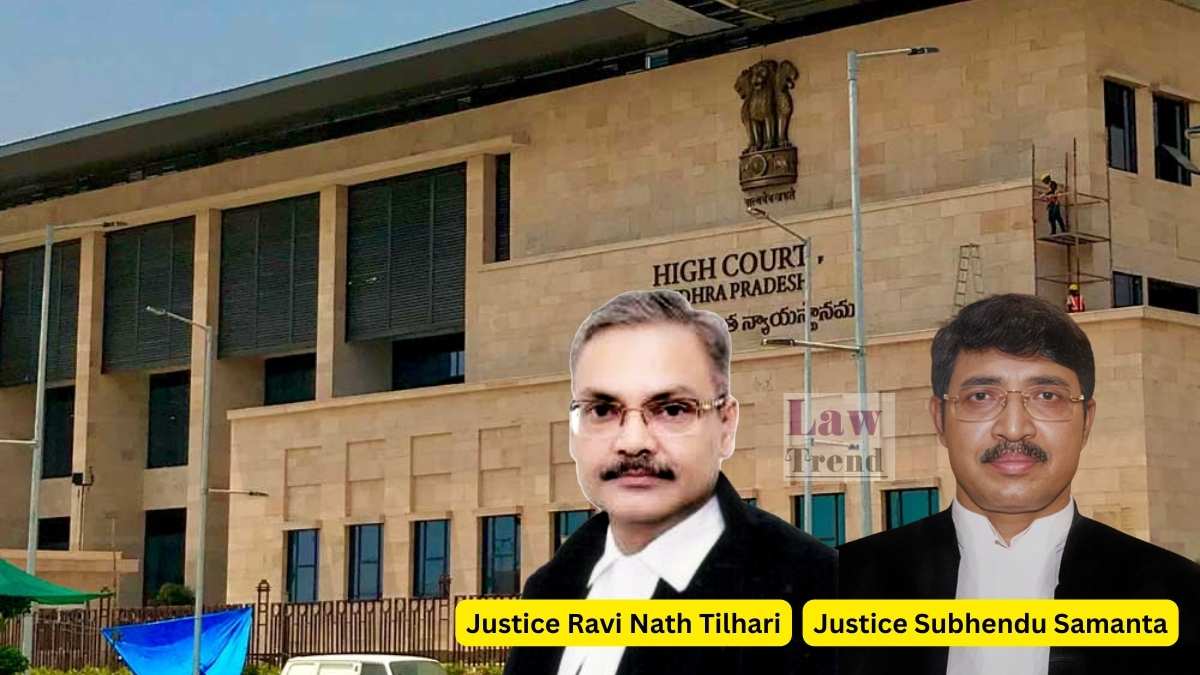
The Division Bench of Justice Ravi Nath Tilhari and Justice Subhendu Samanta allowed the writ petition filed by M/s. JBD Educationals Pvt. Ltd., directing the State to pay interest for the period of delay in refunding the excess tax amount.

Background of the Case

The petitioner, M/s. JBD Educationals Pvt. Ltd., filed a writ petition seeking a direction to the respondents to pay interest on a belated refund amount of Rs. 1,27,34,194. The refund claim for the tax period from April 2013 to March 2016 was approved by the Joint Commissioner (CT), Audit and Refunds, vide an order dated June 19, 2020.

However, the actual refund amount was credited to the petitioner only on March 31, 2022. Consequently, the petitioner claimed interest for the delay beyond the statutory period of 90 days under Section 38 of the Andhra Pradesh Value Added Tax (APVAT) Act, 2005, read with Rule 35(8) of the APVAT Rules, 2005.

The Department rejected the claim for interest vide an endorsement dated June 23, 2023. The rejection was based on two grounds:

  1. There was no delay on the part of the Departmental Authorities as the refund order was passed within time, but the bill was kept pending due to problems with the Comprehensive Financial Management System (CFMS).
  2. The period of limitation stood extended by the Supreme Court’s order in Suo Motu WP(C) No. 03/2020 due to the COVID-19 pandemic, implying that the period from March 15, 2020, to February 28, 2022, should be excluded.
READ ALSO  AP High Court Quashes 2022 Seniority List of District Judges, Upholds Roster System Over Date of Appointment Order

Arguments of the Parties

Petitioner’s Submissions: Sri C. Sanjeeva Rao, counsel for the petitioner, argued that mere passing of a refund order within the statutory period of 90 days is not sufficient compliance with Section 38 of the APVAT Act. He contended that liability for interest arises if the amount is not “actually refunded” within the stipulated time. He relied on the High Court’s earlier decision in M/s. Venkateswara Electricals v. The State of Andhra Pradesh. Furthermore, he argued that the respondents could not claim the benefit of the Supreme Court’s order regarding the extension of limitation, as it does not apply to the statutory duty of authorities to refund tax.

Respondent’s Submissions: Sri Mannam Venkata Krishna Rao, Government Pleader for Commercial Tax, defended the Department’s stance. He submitted that the refund order was passed within the statutory 90 days and the bill was sent to the Treasury on June 26, 2020. He argued that the Department had no control over the credit of the amount due to CFMS problems and, therefore, should not be liable for interest.

Court’s Analysis and Observations

The Court examined Section 38 of the APVAT Act and Rule 35(8)(c) of the APVAT Rules, 2005. The Rule explicitly states that if the dealer has produced accounts, interest shall be payable “from the date after the expiry of the ninety days till the date of actual refund.”

Meaning of “Actual Refund”

The Bench rejected the Department’s contention that passing the order within 90 days absolved them of liability. The Court observed:

READ ALSO  Person Cannot Be Vexed Twice for the Same Proved Charge or with Two Punishments: AP HC

“We are of the view that mere passing of the order within the period of 90 days would not be sufficient to avoid liability for payment of interest under Section 38 of the APVAT Act and Rule 35(8) of the APVAT Rules, 2005. The amount if not refunded actually within 90 days period from the date of claim made in a case covered by clause(c), there would be liability for payment of interest.”

Citing the Supreme Court judgment in Shree Bajarang Jute Mills Ltd., Guntur vs. State of Andhra Pradesh, the Court emphasized that “actually” implies physical delivery or realization, not merely symbolic acts.

“The expression used in Rule 35(8)(c) of APVAT Rules, 2005 is till the ‘date of actual refund’ and not till the date of passing of order of refund beyond 90 days… The date of actual refund in the present case, is 31.03.2022, which is beyond the statutory period.”

Strict Interpretation of Taxing Statutes

Referring to the Supreme Court’s decision in State of Maharashtra vs. Shri Vileparle Kelvani Mandal and Commissioner of Customs vs. Dilip Kumar and Company, the High Court reiterated that taxing statutes must be interpreted literally.

“In a taxing statute, it is the plain language of the provision that has to be preferred, where language is plain and is capable of one definite meaning… It is the bounden duty and obligation of the court to interpret the statute as it is.”

READ ALSO  In Absence of Pleading, After Initiation of Insolvency Proceeding, Any Promise Made to Pay Debt Cannot Be Treated to Have Cured the Fault of Limitation in a Preexisting Action: SC

Rejection of Technical Excuses and COVID-19 Limitation Plea

The Court dismissed the argument regarding CFMS technical issues, stating:

“The statute does not permit any reason as an excuse, for non-payment, within the statutory period. Such period is also not subject to extension on any ground.”

Regarding the reliance on the Supreme Court’s Suo Motu order extending limitation due to COVID-19, the Bench relied on the coordinate Bench judgment in M/s. Punjab Carbonic (P) Ltd v. The Commercial Tax Officer, which held that the extension of limitation applies to filings by litigants and does not grant immunity to statutory authorities from performing their duties, such as refunding tax.

“The extension of the limitation period due to Covid, would not be available to an authority acting under any statute… It has to be within the statutory period, without any extension of limitation period.”

Decision

The High Court allowed the writ petition and quashed the endorsement dated June 23, 2023. The Court issued a Writ of Mandamus directing the respondents to pay interest on the belated refund amount as per Section 38 of the Act read with Rule 35(8) of the APVAT Rules, 2005, calculated until the date of actual refund.

Case Details:

  • Case Title: M/s. JBD Educationals Pvt. Ltd vs. The State of Andhra Pradesh and Others
  • Case Number: Writ Petition No. 5898 of 2024
  • Bench: Justice Ravi Nath Tilhari and Justice Subhendu Samanta
  • Counsel for Petitioner: Sri C. Sanjeeva Rao
  • Counsel for Respondents: Sri Mannam Venkata Krishna Rao, GP for Commercial Tax

Law Trend
Law Trendhttps://lawtrend.in/
Legal News Website Providing Latest Judgments of Supreme Court and High Court

Related Articles

Latest Articles

