

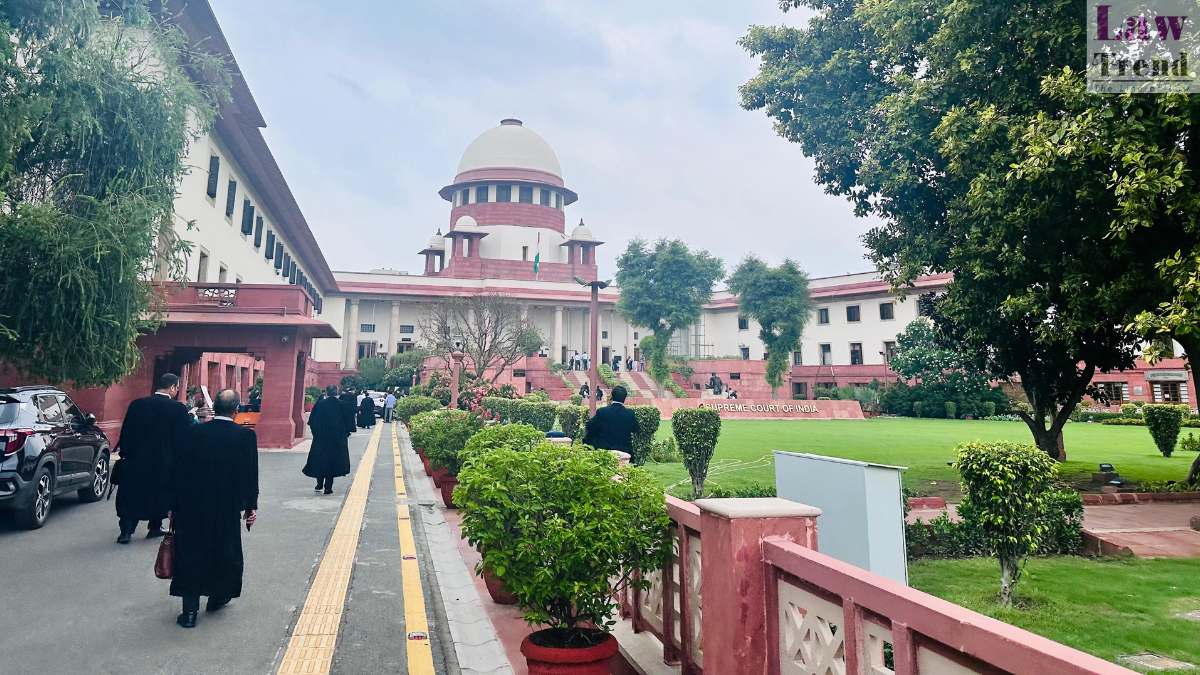
The Supreme Court of India, in a significant judgment emphasizing the constitutional mandate of non-discrimination, has set aside an order of the Division Bench of the Madhya Pradesh High Court that had denied a cooperative society employee promotion despite his peers receiving similar benefits. The Court held that the Registrar of Cooperative Societies acted arbitrarily by refusing to grant a relaxation in educational qualifications to the appellant while extending the same to similarly situated employees.
Legal Issue
The primary legal question concerned whether the Registrar of Cooperative Societies could validly reject a recommendation for promotion-linked educational relaxation for an employee when such relaxation was permitted under the rules and had been granted to other employees with similar or lesser experience. The Supreme Court examined the intersection of administrative discretion and the fundamental rights to equality under Articles 14 and 16 of the Constitution of India.
Background of the Case
The appellant, Kamal Prasad Dubey, was appointed as Sahayak Samiti Sevak in 1987 on a permanent basis at the Primary Agriculture Credit Cooperative Society, Nayagaon. At the time of his appointment, he held a Higher Secondary qualification, which was the prescribed educational requirement for the post of Society Manager under the rules prevailing then.
In August 2013, new service rules were introduced, raising the qualification for the post of Society Manager to graduation. However, a proviso to Rule 19-A of the 2013 Rules empowered the Registrar to grant relaxations in educational qualifications based on an employee’s “special experience, competence, or seniority.”
Given the appellant’s 28 years of unblemished service, the Society’s Board of Directors passed a resolution in 2015 recommending him for promotion with the necessary relaxation. This was ratified by the General Body. However, the Registrar rejected the proposal on June 7, 2016, in a “cryptic” order without assigning specific reasons.
The appellant challenged this before a Single Judge of the Madhya Pradesh High Court, who allowed the petition on grounds of parity, noting that two other employees—Sushil Kumar Tripathi and Ram Swaroop Pandey—with the same qualification had been granted relaxation and promoted. However, the Division Bench later reversed this decision, leading to the present appeal.
Analysis of the Court
The Bench comprising Justice Prashant Kumar Mishra and Justice N.V. Anjaria scrutinized the actions of the Registrar and the reasoning of the Division Bench. The Court opened its judgment with the observation: “Discrimination is the other name of injustice.”
Key points of the Court’s analysis included:
- Arbitrariness and Lack of Reason: The Court noted that the Registrar’s order dated June 7, 2016, rejected the proposal “without assigning any reason and in a cryptic manner.”
- The Principle of Parity: The Court found it “conspicuous” that during the same period, two other employees with the same Higher Secondary qualification were approved for promotion. One of them, Ram Swaroop Pandey, had 20 years of experience compared to the appellant’s 28 years. The Court observed, “The Registrar, in approving two other employees for promotion and negativing and discarding the case of the appellant though all the three cases were attended by similar circumstances, acted arbitrarily.”
- Validity of Relaxation: The Court clarified that this was not a case of “negative equality” (seeking parity with an illegal act), as the rules specifically provided for relaxation. “The case of the appellant is not one that the appellant seeks parity and equality for promotion with ineligibles… the appellant is also otherwise qualified and eligible, by extending the provision for relaxation.”
- Contradictory Reasoning by High Court: The Supreme Court pointed out a contradiction in the Division Bench’s judgment, which had simultaneously held that the discretion to grant relaxation rested with the Board of Directors, yet concluded the Registrar was right to decline it because the appellant lacked the degree.
The Decision
The Supreme Court held that the denial of equal treatment to the appellant violated the tenets of Articles 14 and 16 of the Constitution. The Court further noted that in 2019, the rules were again amended to lower the requirement back to Higher Secondary with a computer diploma—a qualification the appellant had since acquired.
Setting aside the Division Bench’s orders dated November 11, 2019, and December 17, 2019, the Court allowed the appeals. The Court reinstated the findings of the Single Judge, ensuring the appellant’s promotion and protection against demotion.
Case Title: Kamal Prasad Dubey v. The State of Madhya Pradesh and Others
Case No.: Civil Appeal Nos. ___ of 2026 (Arising out of SLP (C) Nos. 13578-13579 of 2020)
Bench: Justice Prashant Kumar Mishra and Justice N.V. Anjaria
Date: April 10, 2026




