

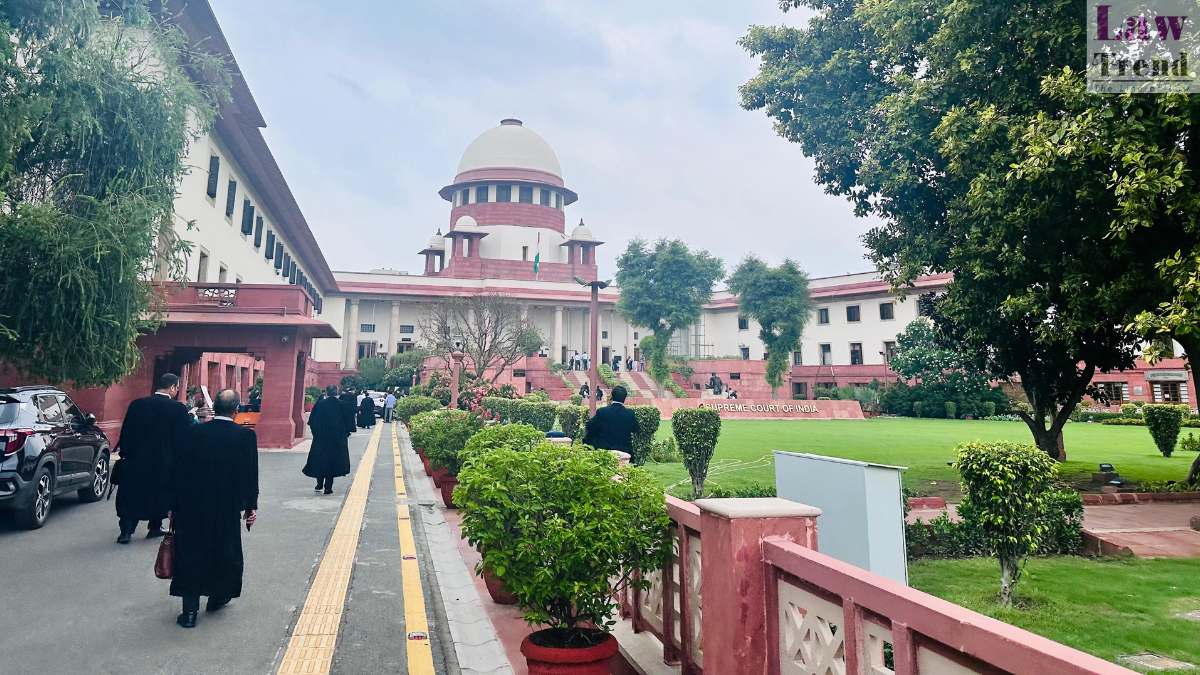
The Delhi Police has informed the Supreme Court in a counter-affidavit that facial recognition technology deployed during last month’s student demonstrations at Jantar Mantar was used exclusively to detect individuals with prior records of serious crimes, denying claims of mass surveillance or indiscriminate profiling.
The court submission, filed late Monday evening, clarified that a Special Investigation Team established by the Police Commissioner will limit its inquiry strictly to 2,873 individuals flagged for past involvement in severe criminal cases. Police assured the court that demonstrators without existing criminal records will not be subjected to any investigation.
The affidavit was presented during ongoing Supreme Court proceedings addressing petitions that allege excessive use of police force at the protest site.
Facial Recognition Operations And Verification Process
According to the police submission, the facial recognition system does not automatically generate or store personal profiles of peaceful demonstrators. Instead, the technology scans crowds specifically against existing databases of individuals previously charged with serious crimes, excluding minor offenders such as traffic violators.
Police explained that automated facial recognition serves merely as an initial identification tool. Once the system flags a potential match, officers conduct mandatory physical verification at the location before initiating any police action.
Charges associated with the flagged individuals include murder, attempted murder, dacoity, robbery, rape, offences under the Protection of Children from Sexual Offences (POCSO) Act, crimes against women, kidnapping, snatching, and violations of the Arms Act and Narcotic Drugs and Psychotropic Substances Act.
Identification Breakdown And Criminal Activity Record
Mobile facial recognition units deployed at the venue identified 2,873 individuals whose facial data matched official police records. Among those identified, 2,402 matches were retrieved from the Crime Kundli database, while 471 were matched against dossier records.
The filing noted that 92 of the identified individuals have been named in more than 10 criminal cases, with 47 classified as history-sheeters. Police maintained that utilizing the technology helped isolate potential offenders and maintain public safety during the gathering.
Crime records cited in the affidavit showed that between July 20 and July 26, local police stations registered seven motor vehicle thefts, 67 general theft cases, and 123 lost property reports in the immediate vicinity of Jantar Mantar, which police cited as evidence of criminal infiltration during the protest.
Dismissal Of Data Collection Allegations
The Delhi Police strongly rejected claims that biometrics were collected indiscriminately from protesters, that individuals were summoned using Aadhaar details, or that personal data was transferred to private companies. Police described these assertions as false narratives created with ulterior motives, emphasizing that biometric records of serious offenders are maintained securely with national crime record repositories in accordance with statutory rules.
The submission added that the events at Jantar Mantar were documented through intelligence reports, deployment directives, wireless communications, daily log entries, CCTV footage, body-worn camera recordings, official videography, medical evaluations, and property damage reports. Police stated that footage depicting attacks on security personnel and destruction of public property has been secured for investigation.




