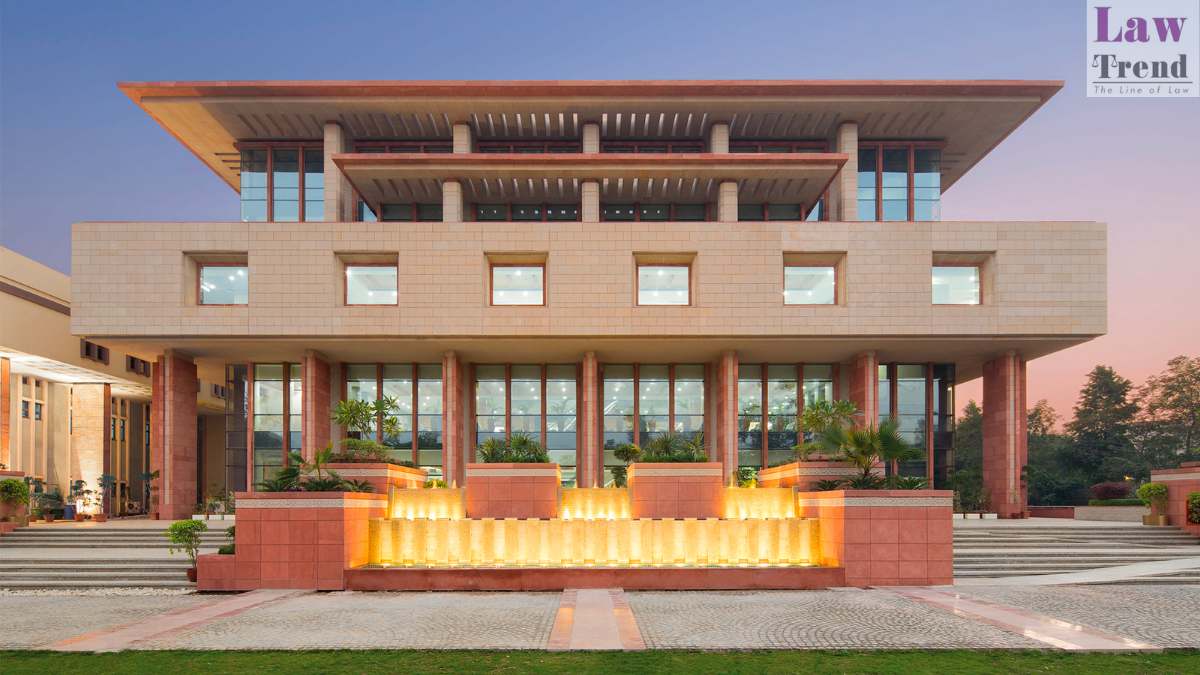
With the national capital grappling with extreme air pollution, the Delhi High Court on Monday advised lawyers and parties-in-person to avail the hybrid mode of hearing through video conferencing in matters listed before it.
Delhi remained enveloped in a dense layer of smog, with the Air Quality Index (AQI) touching 498, placing it at the upper end of the ‘severe’ category. In a circular issued by the Registrar General, the High Court said that, in view of the prevailing weather conditions, members of the Bar and parties-in-person may, if convenient, appear through the hybrid mode in cases listed before the court.
The High Court currently functions in a hybrid format, allowing proceedings to be conducted through both physical and virtual modes.
The advisory from the Delhi High Court comes a day after Chief Justice of India Surya Kant issued a similar appeal for matters listed before the Supreme Court. On Sunday, the apex court administration circulated a notice stating that, given the prevailing weather conditions, lawyers and parties-in-person were advised to use the hybrid mode of appearance wherever feasible.
Data from air quality monitoring stations across Delhi painted a grim picture. On Monday, air quality was recorded in the ‘severe’ category at 38 monitoring stations, while two stations reported ‘very poor’ levels. Jahangirpuri emerged as the most polluted area, registering an AQI of 498, the highest among the city’s 40 monitoring stations.
According to the Central Pollution Control Board (CPCB), an AQI between 0 and 50 is classified as ‘good’, 51–100 as ‘satisfactory’, 101–200 as ‘moderate’, 201–300 as ‘poor’, 301–400 as ‘very poor’, and 401–500 as ‘severe’.
The capital had already witnessed a sharp deterioration in air quality on Sunday, when the AQI climbed to 461. This marked Delhi’s most polluted day of the winter season and the second-worst air quality recorded in December, attributed to weak wind conditions and low temperatures that trapped pollutants close to the surface.
Health experts have repeatedly cautioned that prolonged exposure to such hazardous air poses serious risks, particularly for children, the elderly, and those with respiratory or cardiovascular conditions.