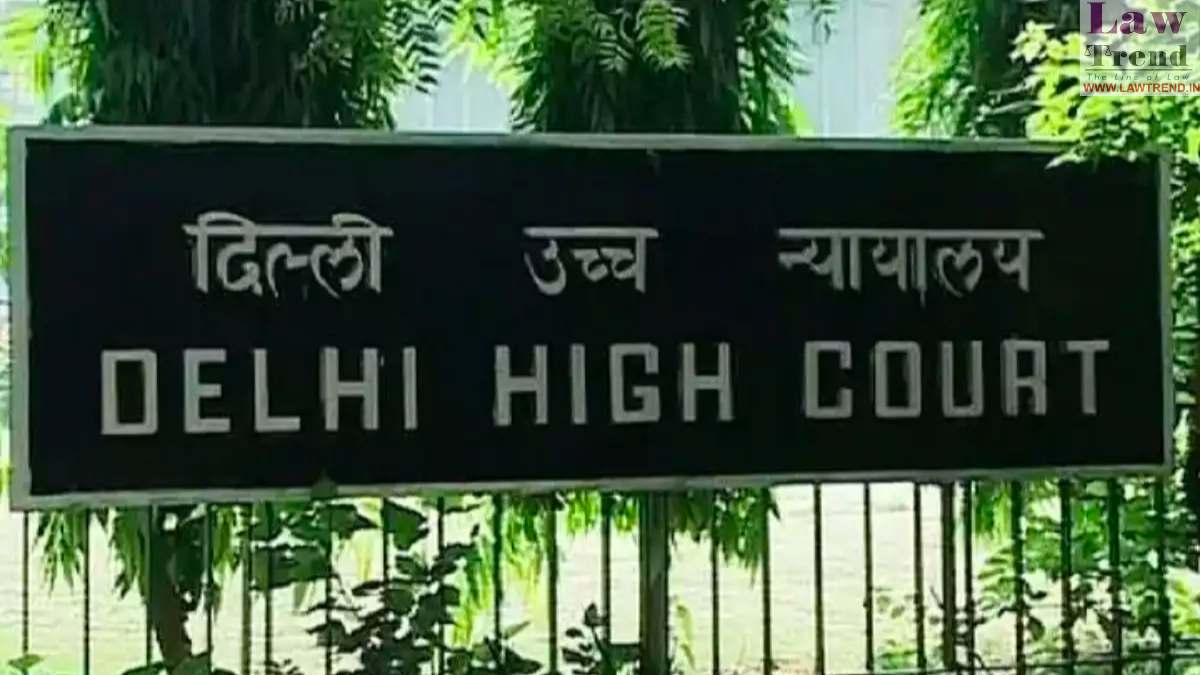
Delhi HC Upholds “Simpliciter” Termination of Probationary Constable for Habitual Absence; Sets Aside Tribunal Order

The High Court of Delhi has set aside an order of the Central Administrative Tribunal (CAT) and upheld the termination of a probationary Delhi Police Constable, ruling that a discharge based on “overall unsuitability” during training does not amount to a punitive measure requiring a departmental inquiry under Article 311(2) of the Constitution.

The Division Bench comprising Justice Navin Chawla and Justice Madhu Jain observed that the respondent’s frequent unauthorized absence served merely as the “motive” for assessing his suitability and not the “foundation” for punishment.

Case Background

The case arose from a petition filed by the Government of NCT of Delhi (Govt. of NCTD & Ors. vs. Devender Singh), challenging the Tribunal’s order dated May 23, 2023. The Tribunal had previously directed the reinstatement of the respondent, Devender Singh, with notional consequential benefits.

Devender Singh was provisionally selected as a Constable (Executive) in the Delhi Police and joined training on October 4, 2012. During his training at the Police Training School, Wazirabad, he was reported absent without permission on five occasions between October 2012 and January 2013. Consequently, on January 11, 2013, the Deputy Commissioner of Police/Vice Principal, Police Training College, terminated his services under Rule 5(1) of the Central Civil Services (Temporary Service) Rules, 1965.

READ ALSO  “सेल्फी सिस्टम प्रौद्योगिकी का उपहार, जनता को सरकारी योजनाओं से परिचित कराता है”: केंद्र ने हाई कोर्ट को बताया

Singh’s statutory appeal was rejected by the Commissioner of Police on May 22, 2013. He subsequently approached the Tribunal, which set aside the termination, prompting the Government to move the High Court.

Arguments of the Parties

The Petitioners (Government of NCTD) argued that the termination was a “termination simpliciter” justified by the respondent’s failure to maintain discipline during probation. Mr. Vinay Yadav, Standing Counsel for the petitioners, submitted that the respondent was a “habitual absentee” and found “unfit” for the force. He contended that the termination order was devoid of stigma and that the Appellate Authority’s subsequent reasoning did not convert the administrative action into a punitive one.

The Respondent (Devender Singh), represented by Advocate Mr. Sachin Chauhan, argued that the termination was punitive in nature. He pointed out that the Appellate Authority’s order characterized his absence as “serious misconduct calling for exemplary punishment.” The respondent contended that since the termination was founded on allegations of misconduct, a regular departmental inquiry was mandatory under Article 311(2) of the Constitution. He further argued that his absence was due to medical illness and had been regularized, making the termination disproportionate.

READ ALSO  SC Explains Criminal Liability of Transferee Company For Acts of Transferor Company After Amalgamation

Court’s Analysis

The High Court focused on whether the termination under Rule 5(1) of the CCS (Temporary Service) Rules was a “simpliciter” discharge or a punitive order disguised as one.

The Bench referred to the distinction between “motive” and “foundation” in termination cases. Citing the precedent set in Govt. of NCT of Delhi & Anr. v. Dalbir Singh (2023) and the Supreme Court’s decision in State of Punjab & Ors. v. Sukhwinder Singh (2005), the Court observed:

“If for the determination of suitability of the probationer for the post in question… an inquiry is held and it is on the basis of that inquiry that a decision is taken to terminate his service, the order will not be punitive in nature. But, if there are allegations of misconduct and an inquiry is held to find out the truth of that misconduct… the order would be punitive in nature.”

The Court examined the termination order dated January 11, 2013, noting it was “innocuous and simpliciter in nature,” merely stating that services were terminated forthwith with pay in lieu of notice.

Addressing the respondent’s claim that the Appellate Authority’s use of the term “misconduct” made the order stigmatic, the Court held:

READ ALSO  Delhi HC Advises Medha Patkar to Approach Sessions Court for Deferring Fine Payment in Defamation Case

“The reasoning recorded by the Appellate Authority in its Order dated 22.05.2013, while rejecting the respondent’s representation, was merely explanatory in nature and cannot alter or override the character of the original termination order.”

The Bench firmly rejected the “merger” theory proposed by the Tribunal, stating that the original order was based on unsuitability, and the appellate order merely reiterated the facts.

“The instances of absence were merely the reason for forming an opinion regarding his unsuitability, not the foundation for imposing punishment.”

Decision

The High Court held that the termination did not cast any stigma and was not founded on an allegation of misconduct, thereby not attracting the protection of Article 311(2).

The Bench concluded:

“Consequently, the Impugned Order dated 23.05.2023 passed by the learned Tribunal in O.A. No. 660/2017 cannot be sustained and is hereby set aside. The order of termination dated 11.01.2013 passed by the Disciplinary Authority shall stands affirmed.”

The writ petition was disposed of with no order as to costs.

Law Trend
Law Trendhttps://lawtrend.in/
Legal News Website Providing Latest Judgments of Supreme Court and High Court

Related Articles

Latest Articles