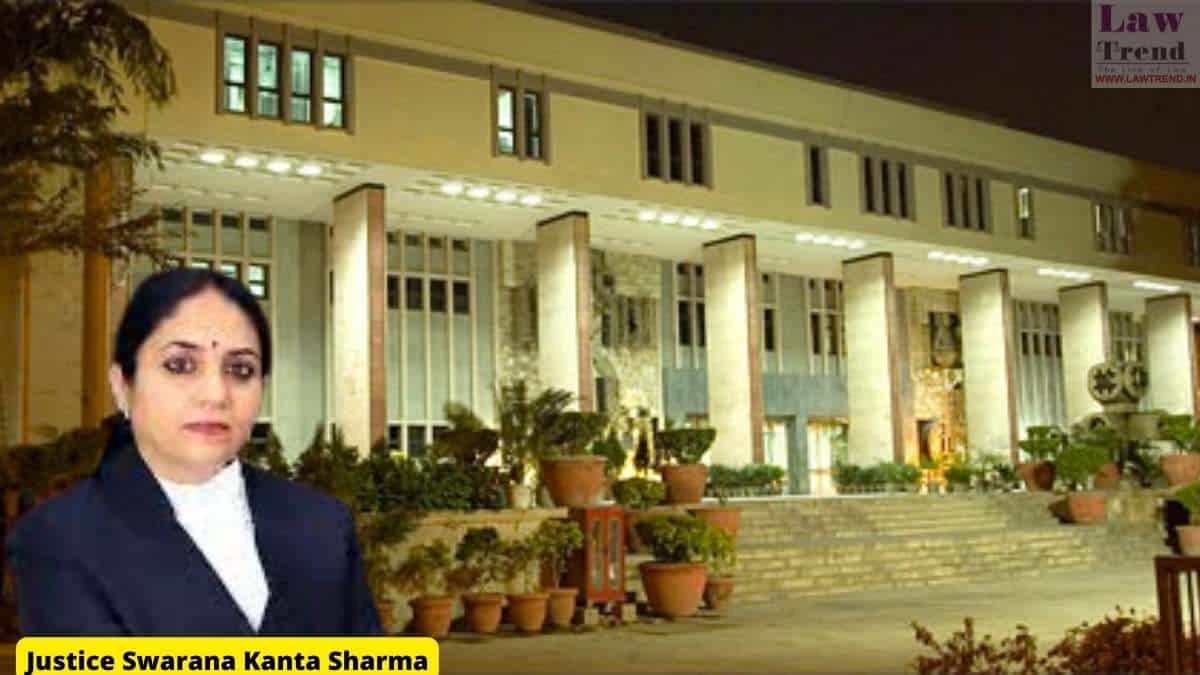
The Delhi High Court on Monday said it would pass an order staying the adverse observations made by a trial court against the Central Bureau of Investigation (CBI) and its investigating officer while discharging former Delhi Chief Minister Arvind Kejriwal and 22 others in the now-scrapped 2021–22 Delhi excise policy case. The court also issued notice on the CBI’s appeal challenging the trial court’s February 27 verdict.
A bench of Justice Swarana Kanta Sharma indicated that it would also direct the trial court to defer proceedings in the connected money-laundering case being investigated by the Enforcement Directorate (ED) until the high court decides the CBI’s appeal.
Trial Court Had Discharged 23 Accused
On February 27, a trial court discharged 23 accused, including Kejriwal, holding that the material placed by the CBI did not even disclose a prima facie case, let alone raise grave suspicion.
Special Judge Jitendra Singh observed that the excise policy case, as projected by the CBI, failed to withstand judicial scrutiny. The court held that the alleged conspiracy was “nothing more than a speculative construct resting on conjecture and surmises” and found that the prosecution lacked admissible evidence to sustain the charges.
The trial court also directed a departmental inquiry against the investigating officer, stating that charges had been framed despite the absence of material evidence.
High Court Signals Stay on Observations
While hearing the CBI’s appeal, Justice Sharma said she would stay the trial court’s adverse remarks against the agency and its investigating officer.
“I will pass an order. I will say that whatever observations are made against the agency and the investigation officer should be stayed. I’ll ask the trial court to defer the proceedings in the ED case to a date after a date given by this court and await the outcome in this case,” the judge said.
The court directed the accused to file their responses and listed the matter for further hearing on March 16. It also issued a fresh notice in the case.
CBI Argues Verdict Amounts to ‘Acquittal Without Trial’
Solicitor General Tushar Mehta, appearing for the CBI, argued that the trial court’s decision effectively reversed the basic principles of criminal law and amounted to “an acquittal without trial.”
Describing the excise policy matter as one of the biggest alleged scams in the capital, Mehta submitted that the investigation had gathered substantial corroborative material, including digital evidence and witness statements, to establish the alleged criminal conspiracy.
He contended that the trial court ignored the evidence collected during the investigation. According to Mehta, there were statements of 164 witnesses detailing how the alleged conspiracy was carried out, including how bribes were allegedly paid and to whom.
He further argued that the findings in the verdict were “inherently wrong, perverse, and factually incorrect,” adding that the investigation included documentary evidence, witness examination, emails and WhatsApp chats.
Mehta urged the high court to stay the trial court’s adverse observations and clarify that the February 27 verdict should not affect the ongoing money-laundering proceedings arising from the same case.
Accused Not Represented During Hearing
No lawyer appeared on behalf of the accused when the matter was taken up by the high court on advance notice.
Background of the Excise Policy Case
The controversy relates to Delhi’s 2021–22 excise policy, introduced in November 2021, under which the Delhi government exited retail liquor sales and allowed private companies to bid for licences.
The policy was later scrapped after Lieutenant Governor Vinai Kumar Saxena ordered an investigation into alleged financial irregularities.
The CBI alleged that the policy was modified to benefit a group of liquor businessmen referred to as the “South Group” in exchange for kickbacks that were allegedly routed to fund the Aam Aadmi Party’s election campaign in Goa. The agency filed five charge sheets in the case.
Several prominent AAP leaders were arrested during the investigation, including Arvind Kejriwal, former deputy chief minister Manish Sisodia, and Rajya Sabha MP Sanjay Singh.
Sisodia was arrested in February 2023 and spent around 17 months in jail before being granted bail by the Supreme Court. Kejriwal was arrested in March 2024 ahead of the general elections, campaigned while on interim bail, and was granted regular bail in September 2024.
Parallel investigations into alleged money laundering were conducted by the Enforcement Directorate under the Prevention of Money Laundering Act. The Delhi High Court will next hear the CBI’s appeal on March 16.