

Courts Cannot Waive Mandatory Qualifications to Accommodate Candidates: High Court Refuses B.Ed Relaxation for Agriculture Teacher Recruitment
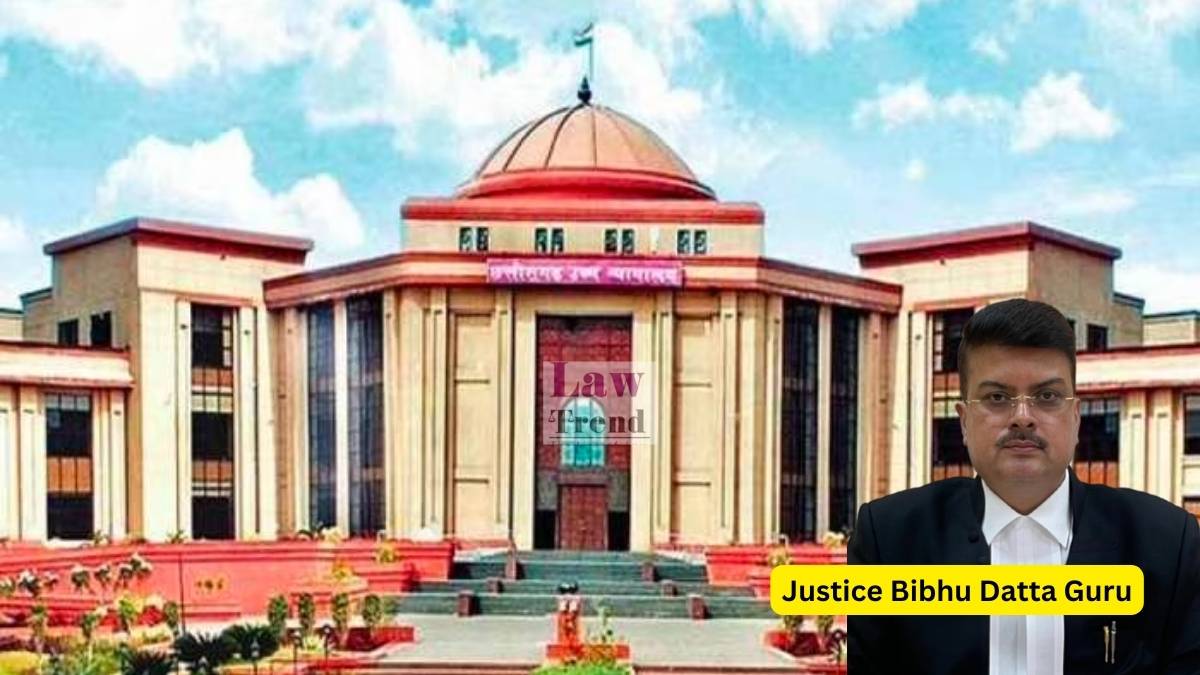

The High Court of Chhattisgarh at Bilaspur, presided over by Justice Bibhu Datta Guru, has dismissed a writ petition seeking a one-time transitional relaxation in the mandatory B.Ed. qualification for the post of Teacher (Agriculture). The Court ruled that determining eligibility criteria and qualification standards falls strictly within the domain of the rule-making authority or the State Government, and courts cannot substitute their views or waive mandatory recruitment criteria to accommodate individual candidates.

Background

The petition was filed by 65 graduate candidates, led by Vishnu Ditya Raj, who sought permission to participate in the ongoing recruitment process for Teacher (Agriculture) under the E-Cadre and T-Cadre, as advertised in August 2026. Under the recruitment rules framed in 2019, a B.Ed. degree was not prescribed as a mandatory qualification for Agriculture teachers.

However, in the case of Ashokanand Patel & Ors. vs. State of Chhattisgarh & Ors. (WPS No. 3309/2024, decided on February 5, 2025), a Division Bench of the High Court declared the exemption granted under the 2019 Rules unconstitutional and ultra vires. Following the Division Bench’s directive to align recruitment criteria with the National Council for Teacher Education (NCTE) Regulations, 2014, the State Government issued a Gazette Notification on February 13, 2026, making the B.Ed. qualification mandatory.

A short recruitment advertisement was subsequently issued on July 28, 2026, setting September 2, 2026, as the application deadline.

Arguments of the Parties

Senior Advocate Mateen Siddiqui, appearing along with Advocate Ishan Saluja for the petitioners, submitted that the petitioners were not challenging the State’s authority to prescribe the B.Ed. degree. Instead, their grievance was that the newly introduced requirement was enforced without granting any reasonable transitional period. They argued that because a B.Ed. course requires two academic years to complete, candidates eligible under the prior regime could not have obtained the degree in the short intervening window. The petitioners requested permission to appear in the examination subject to acquiring the qualification within a reasonable timeframe set by the Court or State.

READ ALSO  “शुभ मुहूर्त” नहीं है कह कर पत्नी 11 साल पति से अलग रही- हाईकोर्ट ने तलाक की अर्ज़ी मंज़ूर की

Opposing the petition, Government Advocate Vivek Verma for the State and Advocate Avinash Singh for the Chhattisgarh Staff Selection Board submitted that no candidate can claim relaxation from qualifications prescribed under statutory rules and NCTE Regulations. They highlighted that the previous exemption had been struck down by the Division Bench as unconstitutional, leaving no scope for transitional exceptions.

Court’s Analysis and Observations

Examining the matter, Justice Bibhu Datta Guru observed that the core controversy regarding B.Ed. eligibility had already been decided by the Division Bench in Ashokanand Patel & Ors. vs. State of Chhattisgarh & Ors. In that decision, the Division Bench had held:

READ ALSO  Neutral Substances Must Be Considered Alongside Narcotics to Determine Quantity Classification: Chhattisgarh High Court

“In view of by the above discussions, the impugned provisions of the Rules of 2019 and also in view of the law laid down by the Hon’ble Supreme Court as well as the various High Courts, the impugned part of the notification dated 05.03.2019 issued by the State Government of Chhattisgarh by the Rules of 2019, exempting the necessary qualification of B.Ed./D.Ed./T.E.T. for the Teachers of Agriculture subject appended in column No.8 of Annexure-1 of Rules of 2019 is hereby declared as unconstitutional and ultra vires and declared that the candidates, who possessed the B.Ed. degree are eligible for appointment on the post of Teacher (Agriculture) as per the regulations 2014 framed by the NCTE.”

The Division Bench had further directed:

“The State Government of Chhattisgarh is directed to include the requisite qualification of B.Ed. for appointment on the post of Teacher (Agriculture) and to proceed in accordance with the provisions of regulations of 2014.”

Addressing the petitioners’ plea for transitional relief, the Single Judge noted that since the prior exemption was held unconstitutional, granting judicial relaxation would amount to creating an unsupportable exception to mandatory rules.

On the scope of judicial review under Article 226 regarding employment criteria, the Court held:

“It is the well settled proposition of law that fixing eligibility criteria, minimum qualifications, and service rules belongs strictly to the rule-making authority or the State Government and the Courts cannot substitute their own views or waive mandatory job criteria to accommodate individual candidates. Writ jurisdiction under Article 226 only examines if the decision-making process is arbitrary, mala fide, or unconstitutional, rather than relaxing standard qualifications.”

Court’s Decision

Finding that the petitioners could not claim a right to participate without fulfilling the prevailing statutory rules, the High Court held that the petition was devoid of merit and dismissed it at the motion stage.

Case Details

READ ALSO  Chhattisgarh HC Expresses Discontent Over Poor Road Conditions

Case Title: Vishnu Ditya Raj and Others v. State of Chhattisgarh and Others

Case No.: WPS No. 6260 of 2026

Bench: Justice Bibhu Datta Guru

Date: 20/08/2026

Law Trend
Law Trendhttps://lawtrend.in/
Legal News Website Providing Latest Judgments of Supreme Court and High Court

Related Articles

Latest Articles

