

Courts Cannot Grant Interim Protection While Dismissing Pre-Arrest Bail; CGST Section 69 Order Must Be Communicated Before Arrest: Supreme Court
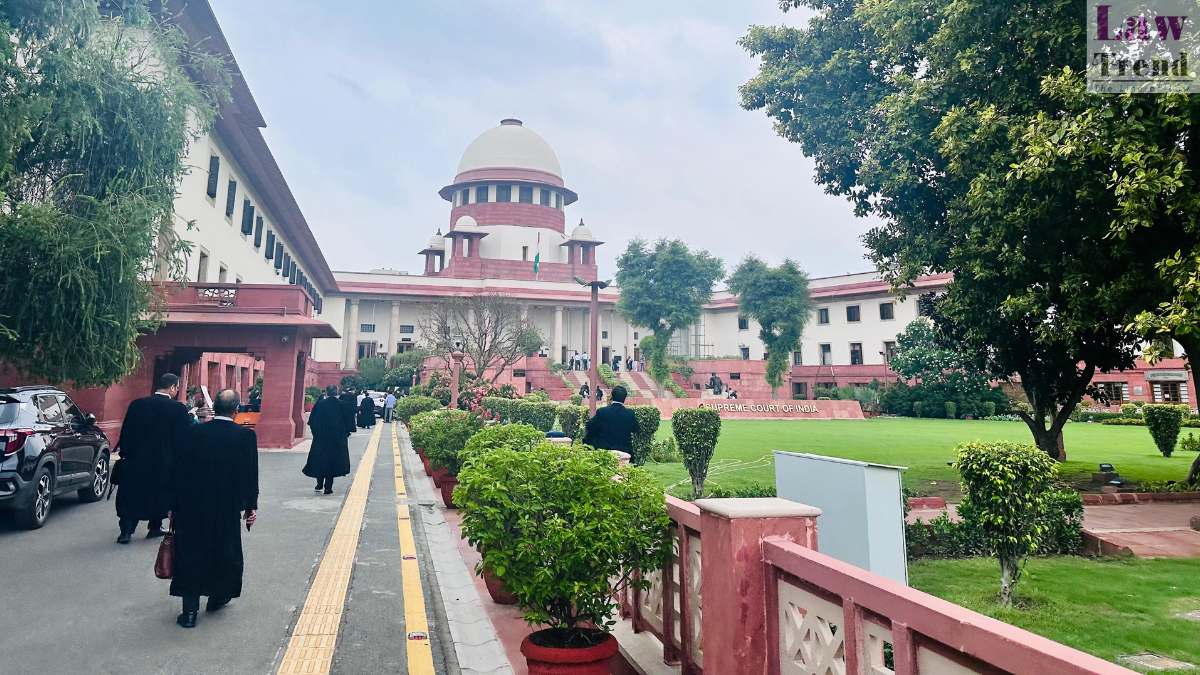

In a significant ruling on criminal jurisprudence and tax administration, the Supreme Court of India, comprising a Bench of Justice Dipankar Datta and Justice Sheel Nagu, held that courts cannot grant interim protection against arrest while dismissing a pre-arrest bail application on grounds of maintainability or otherwise. Simultaneously, the Court ruled that an arrest authorization order passed by the Commissioner under Section 69 of the Central Goods and Services Tax (CGST) Act, 2017, must be communicated to the person sought to be arrested before any arrest takes place, observing that without such communication, no arrest can be made.

Background of the Case

The case originated from an investigation conducted by the Directorate General of GST Intelligence (DGGI), Mumbai Zonal Unit, into M/s Alphaneon Techsolutions Pvt. Ltd. and its group entities. The Department was investigating alleged wrongful availing and passing of Input Tax Credit (ITC) without actual supply of goods or services, circular invoicing, and non-payment of GST on the import of services. During an inspection of the registered premises, the respondent, Sunil Biyani, was present and acknowledged the inspection.

During the probe, the Department issued three summonses under Section 70 of the CGST Act to Sunil Biyani. Instead of appearing, Biyani sought adjournments and subsequently filed an anticipatory bail application before the Sessions Court in Mumbai, which was rejected on October 14, 2025. He then approached the High Court of Judicature at Bombay seeking pre-arrest bail. Pursuant to interim directions from the High Court, Biyani appeared before the Department, and his statement was recorded.

During the High Court proceedings, the Department filed an affidavit stating that no order authorizing arrest under Section 69 of the CGST Act had been passed, as the investigation was at a nascent stage and material facts were under verification. On February 13, 2026, the High Court rejected Biyani’s anticipatory bail application, noting that in the absence of an order under Section 69, there could be no reasonable apprehension of arrest, making the application non-maintainable. However, the High Court granted a protective order directing that Biyani should not be arrested for a period of one week from the date of intimation of any order passed under Section 69 of the CGST Act.

The Union of India challenged this protective order before the Supreme Court. Biyani did not challenge the rejection of his pre-arrest bail application.

READ ALSO  Delay Condonation Application Must be Considered in the Light of the Facts and Circumstances Stated in the Application Before Rejecting the Same: Allahabad HC

Arguments of the Parties

The Union of India contended that once the High Court determined that the pre-arrest bail application was non-maintainable and dismissed it, it lacked the jurisdiction to grant interim protective relief against arrest for a future period.

On behalf of the respondent, senior counsel Mr. Agarwal argued that an order under Section 69 of the CGST Act recording “reasons to believe” is a mandatory precondition (sine qua non) for an individual to harbor a reasonable apprehension of arrest and seek anticipatory bail. He submitted that unless the Section 69 order is communicated to the person, they cannot know of its existence to challenge it or seek pre-arrest bail. He argued that extending principles of natural justice and administrative fairness requires reading the mandate of prior communication into the statute to prevent a “catch-22” situation where an accused can neither seek anticipatory bail nor challenge the arrest order prior to being taken into custody.

Court’s Analysis

The Supreme Court analyzed two primary legal questions: whether interim protection can be granted while dismissing a bail application, and whether an order under Section 69 of the CGST Act must be communicated prior to arrest.

1. On Granting Interim Relief Upon Dismissal of Bail Application

Addressing the first issue, Justice Dipankar Datta referred to the settled law laid down by a five-judge Bench in State of Orissa v. Madan Gopal Rungta (1951), which established that interim relief can only be granted in aid of and as ancillary to the main relief. If the main petition is dismissed or held non-maintainable, no interim relief can survive or be granted independently.

The Bench highlighted the application of this principle in criminal matters as articulated in Hema Mishra v. State of U.P. (2014), quoting the observations of Justice K.S.P. Radhakrishnan:

“The language of Article 226 does not permit such an action and once the Court finds no merits in the challenge, the writ petition will have to be dismissed and the question of granting further relief after dismissal of the writ, does not arise. Consequently, once a writ is dismissed, all the interim reliefs granted would also go.”

The Court also cited the concurring opinion of Justice Dr. A.K. Sikri in Hema Mishra:

“Since the grounds on which such an FIR or charge-sheet can be quashed are limited, once the writ petition challenging the validity of the FIR or charge-sheet is dismissed, the grant of relief, incidental in nature, against arrest would obviously not arise, even when a justifiable case for grant of anticipatory bail is made out.”

Applying these precedents to applications for pre-arrest bail, the Supreme Court held that whenever a court dismisses a petition seeking pre-arrest bail on grounds of maintainability or otherwise, it cannot extend or grant protection in the nature of interim relief.

2. On Mandatory Communication of Section 69 CGST Order

On the second issue, the Court accepted the respondent’s arguments regarding the necessity of communicating the arrest order under Section 69 of the CGST Act.

READ ALSO  प्रधान की मृत्यु पर सामान्य पावर ऑफ अटॉर्नी समाप्त हो जाती है, अपंजीकृत बिक्री समझौता स्वामित्व प्रदान नहीं करता है: सुप्रीम कोर्ट

The Bench referred to Radhika Agarwal v. Union of India (2025), which affirmed that mere issuance of summons under Section 70 of the CGST Act does not make a person an accused, drawing upon principles from Deepak Mahajan, Poolpandi v. CCE, and Dukhishyam Benupani v. Arun Kumar Bajoria.

However, once the Commissioner forms “reasons to believe” and passes an order under Section 69 authorizing arrest, the person becomes exposed to arrest and acquires the right to seek pre-arrest bail. Reaffirming principles from Gurbaksh Singh Sibbia v. State of Punjab (1980), Maneka Gandhi v. Union of India (1978), and Sushila Aggarwal v. State (NCT of Delhi) (2020), the Bench stressed that personal liberty under Article 21 of the Constitution must be safeguarded against unreasonable restrictions.

The Court quoted the landmark observation from Gurbaksh Singh Sibbia:

“Section 438 is a procedural provision which is concerned with the personal liberty of the individual, who is entitled to the benefit of the presumption of innocence since he is not, on the date of his application for anticipatory bail, convicted of the offence in respect of which he seeks bail. An over-generous infusion of constraints and conditions which are not to be found in Section 438 can make its provisions constitutionally vulnerable since the right to personal freedom cannot be made to depend on compliance with unreasonable restrictions. The beneficent provision contained in Section 438 must be saved, not jettisoned.”

The Bench reasoned that withholding the order and its “reasons to believe” would deprive the individual of judicial review and the constitutional right to seek pre-arrest remedies. The Court noted Rule 8 of the Central Goods and Services Tax Rules, 2017, which mandates providing an email address and mobile number upon registration, and directed that the order may be communicated electronically, alongside permissible modes under the Bharatiya Nagarik Suraksha Sanhita, 2023 (BNSS).

Decision of the Court

The Supreme Court set aside paragraph 6 of the High Court’s order which had granted one week of protective immunity post-intimation.

READ ALSO  High Court Issues Show-Cause Notice to Police Commissioner Over Alleged Non-Compliance in Case of Teacher Accused of Forcing Girls to Remove Clothes to Search for Mobile Phone

Simultaneously, the Court mandated that the Commissioner must communicate the order passed under Section 69 of the CGST Act to the respondent before taking him into custody, explicitly observing that “without such communication, question of arrest would not arise.” Upon receiving such communication, the respondent remains free to pursue available legal remedies. The Supreme Court clarified that its observations were confined strictly to the points of law raised and would not influence the ongoing investigation.

Case Title: Union of India v. Sunil Biyani

Case No.: Criminal Appeal No. ____ of 2026 (Arising out of SLP (Crl.) No. 12535 of 2026)

Bench: Justice Dipankar Datta, Justice Sheel Nagu

Date: August 12, 2026

Law Trend
Law Trendhttps://lawtrend.in/
Legal News Website Providing Latest Judgments of Supreme Court and High Court

Related Articles

Latest Articles

