

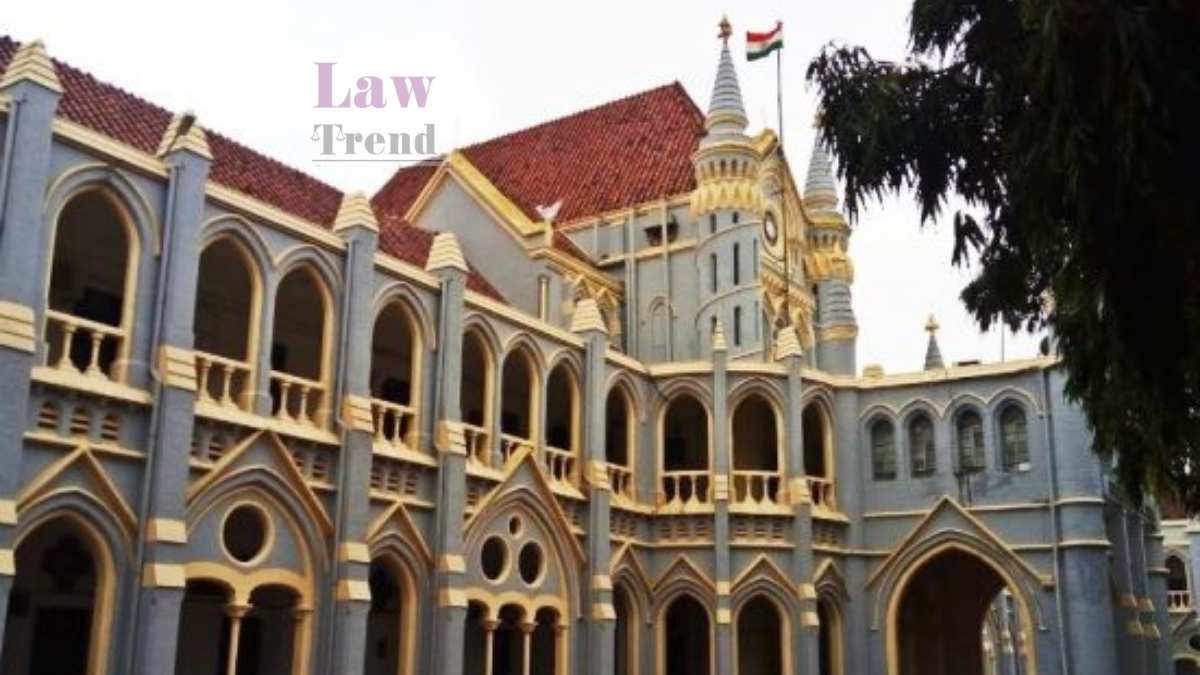
The High Court of Madhya Pradesh has allowed an application for the appointment of an arbitrator in a dispute involving the operation of CT and MRI diagnostic facilities at Hamidia Hospital, Bhopal. Justice Vivek Jain, while presiding over the matter, rejected the respondent’s contention that the agreement constituted a “works contract” under the exclusive jurisdiction of the state arbitration tribunal. The Court also dismissed objections regarding the non-fulfillment of a mandatory conciliation clause, terming it an “empty formality” in light of the serious disputes between the parties.
Background of the Case
The case, Falguni Nirman Private Limited vs. Hamidia Hospital (AC No. 131 of 2025), arose from a contract for the “setting up, operation, management, and maintenance of CT and MRI diagnostic facilities” at Hamidia Hospital, associated with Gandhi Medical College (GMC), Bhopal.
The petitioner, Falguni Nirman Private Limited, approached the High Court seeking the appointment of an arbitrator after disputes emerged concerning payments and the tenure of the contract. The petitioner maintained that the contract tenure had been extended to 10 years, whereas the respondent, Hamidia Hospital, asserted that the validity remained limited to the initial seven-year period provided in the agreement.
Arguments of the Parties
During the proceedings, Advocate Shri Arjun Bajpai, appearing for the petitioner, argued that various disputes had arisen regarding payments and the contract’s duration. He submitted that an arbitration clause existed in the agreement (Clause 10.6) which remained invocable.
Per contra, Advocate Shri Gaurav Maheshwari, representing the respondent, raised two primary jurisdictional and procedural objections. Firstly, citing the Supreme Court’s decision in M.P. Rural Road Development Authority v. L.G. Chaudhary Engineers and Contractors (2018), he argued that because the contract involved “construction and renovation,” it qualified as a “works contract” under Section 2(i) of the MP Madhyastham Adhikaran Adhiniyam, 1983. Consequently, he claimed the dispute should be adjudicated by the MP Arbitration Tribunal.
Secondly, the respondent pointed to the arbitration clause itself, which stipulated that disputes “shall be resolved initially by mutual discussion and conciliation.” Advocate Maheshwari argued the petition was premature as this pre-requisite had not been exhausted.
Advocate Bajpai countered that the “construction” mentioned in the Request for Proposal (RFP) was merely incidental for the fitment of machines in a pre-existing building. He highlighted Clause 7.15, which explicitly prohibited “structural modifications,” to argue the contract was service-oriented and not a construction project.
Court’s Analysis and Observations
Examining the definition of “works contract” under Section 2(i) of the 1983 Act, the Court noted that such contracts must essentially relate to the construction, repair, or maintenance of buildings or superstructures.
Justice Jain observed:
“Therefore essentially the works contract has to be contract for construction work of the nature as mentioned in section 2 (i). In the present case, from a perusal of the terms of agreement it is clear that the agreement is basically for setting up, operation, management, and maintenance of CT and MRI diagnostic facilities… it is not an agreement for construction or maintenance of a building.”
The Court further clarified that incidental civil work required to fit diagnostic machines into a 2,700 sq. ft. vacant building provided by the hospital did not transform the agreement into a “works contract.”
On the issue of the conciliation clause, the Court referred to Section 77 of the Arbitration and Conciliation Act and the Supreme Court’s ruling in Demerara Distilleries Private Limited v. Demerara Distilleries Limited (2015). The Court stated:
“The aforesaid clause has to be seen in perspective of Section 77 of Arbitration and Conciliation Act… any clause providing resolution of disputes by mutual discussions and mediation, etc., would be empty formality once there are serious disputes arising between the parties.”
The Court noted that the respondent had shown no willingness to conciliate in their formal replies, making a dismissal on those grounds unnecessary.
Decision
The High Court concluded that a serious dispute had indeed arisen and that it was appropriate to appoint an arbitrator.
The Court proposed the appointment of Shri Justice Rohit Arya, Former Judge, MP High Court, as the sole arbitrator. The Registrar (Judicial) was directed to seek the necessary consent, disclosure, and undertaking from the proposed arbitrator. The matter is scheduled for further orders on April 7, 2026.
Case Details:
- Case Title: Falguni Nirman Private Limited vs. Hamidia Hospital
- Case Number: AC No. 131 of 2025
- Bench: Justice Vivek Jain
- Date: March 20, 2026




