

Commercial Contract Breach Cannot Be Given Criminal Overtone Without Initial Dishonest Intent: Supreme Court Quashes FIR
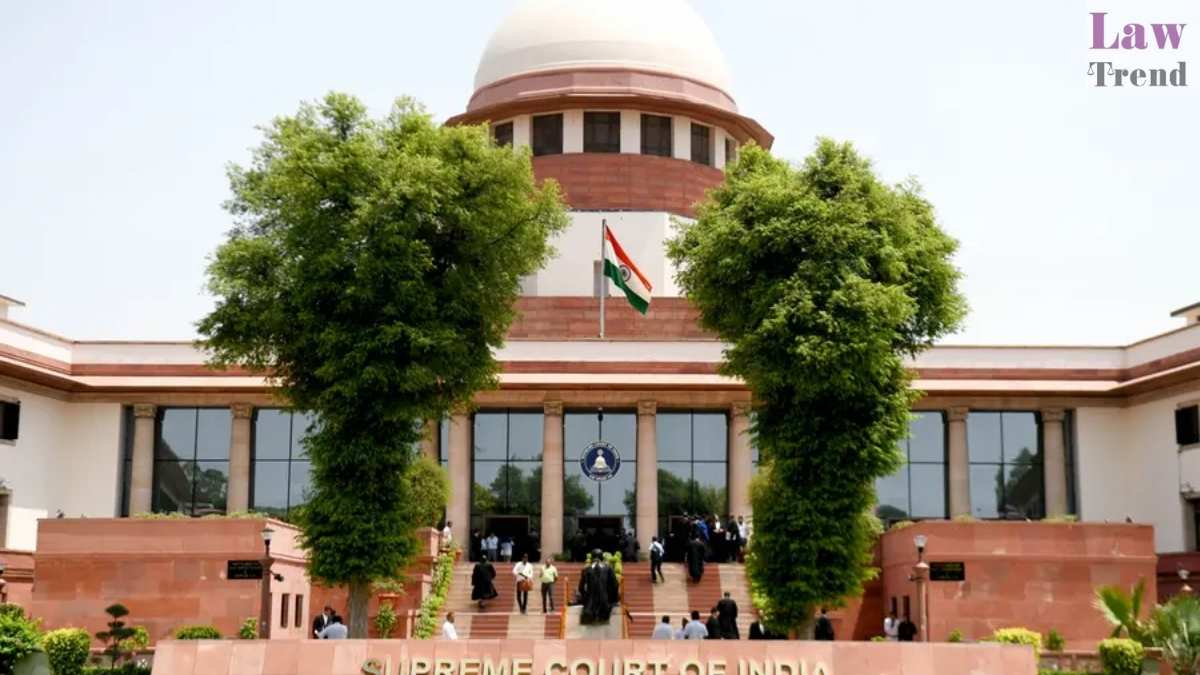

A Supreme Court bench comprising Justice Sanjay Karol and Justice Augustine George Masih has ruled that a breach of a commercial contract cannot give rise to criminal prosecution for cheating or criminal breach of trust unless dishonest intention is established right at the inception of the transaction. Setting aside a common judgment and order of the Jharkhand High Court dated February 19, 2025, the apex court quashed a First Information Report (FIR) registered against the executive officers and staff of a manufacturing firm, holding that allowing criminal proceedings to continue over a contractual dispute constitutes an abuse of the process of the court.

Background of the Case

The case arose from FIR No. Kotwali P.S. Case No. 323 of 2024, registered on November 26, 2024, at Police Station Ranchi Kotwali, District Ranchi, under Sections 316(2) (criminal breach of trust), 318(4) (cheating), and 3(5) of the Bharatiya Nyaya Sanhita, 2023 (BNS). The FIR was filed upon written information provided by Respondent No. 2, the sole proprietor of M/s D.K. Enterprises, a wholesale camphor trading firm in Ranchi.

The named accused in the FIR included the Chairman and Managing Director, Executive Director, Chief Executive Officer, Chief Operations Officer, and a clerk of M/s Oriental Aromatics Limited, a company manufacturing specialty aroma chemicals and camphor.

According to the informant, the company offered him the distributorship of ‘Saraswati’ camphor for the State of Jharkhand for a three-year period from April 1, 2024, to April 1, 2027. He transferred Rs. 52,000 as token money in December 2023. An agreement was subsequently executed on March 29, 2024, which he signed and returned on May 4, 2024. Between April 4, 2024, and June 26, 2024, the informant remitted Rs. 73,00,000 as advance payments across six transactions, against which goods worth Rs. 31,49,167 were supplied under four bills.

The informant alleged that when he questioned the company about supplying goods to others at lower rates, the company stopped supplies, demanded more money, terminated the agreement on July 8, 2024, and failed to return the balance advance amount of Rs. 41,50,833.

The appellants approached the High Court of Jharkhand at Ranchi under W.P. (Cr.) No. 1041 of 2024 and W.P. (Cr.) No. 1042 of 2024 seeking quashing of the FIR, but the High Court dismissed their petitions on February 19, 2025, leading to the present appeals before the Supreme Court.

Arguments of the Parties

Counsel for the appellants contended that the FIR, even when accepted at face value, disclosed nothing more than a commercial dispute regarding price, supply, and accounts arising out of a written contract, to which a criminal overtone had been improperly added.

READ ALSO  Day-to-Day Trial Is a Mandate, Not an Option: SC Issues Pan-India Directions to Expedite Criminal Cases

Counsel for Respondent No. 2 argued that the appellants engaged in deliberate conduct rather than a mere contractual dispute, contending that the intention to deceive was evident from the termination of a three-year agreement within a month and a half on fictitious dues without prior warning. They relied on the decisions in C.S. Prasad v. C. Satyakumar and Neeharika Infrastructure Pvt. Ltd. v. State of Maharashtra to submit that civil and criminal liability can arise from the same set of facts, an FIR need not be an encyclopedia, and a legitimate investigation into a cognizable offense ought not to be thwarted.

The Standing Counsel for the State of Jharkhand adopted the submissions of Respondent No. 2, adding that the police investigation was at a seminal stage and should be permitted to proceed.

Court’s Analysis and Key Observations

The Supreme Court examined whether the allegations in the FIR, taken at face value, disclosed the commission of the alleged offenses, and whether a civil/commercial dispute had been given an improper criminal overtone.

The Court noted that Section 318(4) of the BNS (cheating) corresponds to Section 420 of the Indian Penal Code, 1860 (IPC), while Section 316(2) of the BNS (criminal breach of trust) corresponds to Section 406 of the IPC. Reaffirming the legal standard established in Delhi Race Club (1940) Ltd. v. State of U.P., the Court observed:

In case of cheating, the intention of the accused at the time of inducement should be looked into which may be judged by a subsequent conduct, but for this, the subsequent conduct is not the sole test. Mere breach of contract cannot give rise to a criminal prosecution for cheating unless fraudulent or dishonest intention is shown right from the beginning of the transaction i.e. the time when the offence is said to have been committed. Therefore, it is this intention, which is the gist of the offence.

Referencing Hridaya Ranjan Prasad Verma v. State of Bihar, the bench reiterated that culpable intention at the time of making a promise cannot be presumed merely from a failure to keep it. Examining the FIR, the bench found no factual averment indicating dishonest intention at the inception, nor any assertion that representations were false to the knowledge of the makers or made without intention of performance.

READ ALSO  No Person Can be Permitted to Apply for Bail in Part: Allahabad HC

The Court held that promises of future benefits or contractual performance do not constitute deception unless made without any intent to fulfill them. On the contrary, the FIR recorded that the distributorship was in fact conferred, an agreement was executed, and goods worth Rs. 31,49,167 were delivered.

Regarding the termination of the contract, the bench highlighted that exercising a contractual right of termination is not an act of deception, noting that if termination is wrongful, the appropriate remedy is a claim for civil damages.

Applying the principles laid down in State of Haryana v. Bhajan Lal, specifically the first category of cases warranting quashing, the Court reiterated the test:

Where the allegations made in the first information report or the complaint, even if they are taken at their face value and accepted in their entirety do not prima facie constitute any offence or make out a case against the accused.

The bench also considered attending circumstances, as permitted under Mohammad Wajid v. State of U.P.. The Court observed that in a legal notice issued on July 23, 2024, and a subsequent letter dated July 29, 2024, sent by Respondent No. 2 following termination, no mention was made of an advance payment of Rs. 73,00,000 or an unreturned amount of Rs. 41,50,833. Instead, the grievance was restricted to price discrepancies, and Respondent No. 2 acknowledged holding goods worth Rs. 6,00,000 belonging to the company. The claim of an unreturned advance was put forward for the first time in the FIR filed months later.

Addressing Section 316(2) of the BNS, the Court explained that criminal breach of trust requires initial entrustment, where beneficial interest remains with the giver. Clarifying the nature of advance payments in commercial transactions, the Supreme Court held:

READ ALSO  Supreme Court to Review Plea on Tree Felling Regulations in Delhi

Money paid to a supplier as the price of goods, or in advance of their supply, passes to the supplier as his own; he holds it as consideration under a contract, and is neither trustee nor bailee of it. If he takes the money and does not deliver, he is in breach of his contract but has not committed a breach of trust, because there was no trust.

Furthermore, the Court noted that alleging both cheating and criminal breach of trust on the same set of facts is contradictory, as cheating involves fraudulent inducement at inception, whereas criminal breach of trust involves property coming lawfully into the hands of the accused and being dishonestly misappropriated thereafter. Addressing Neeharika Infrastructure, the Court noted that while an FIR need not be an encyclopedia, allegations must satisfy the fundamental statutory ingredients of the offenses alleged.

The Decision

The Supreme Court allowed both appeals, set aside the common judgment of the Jharkhand High Court, and quashed FIR No. Kotwali P.S. Case No. 323 of 2024 along with all consequential proceedings.

Emphasizing the boundary between civil remedies and criminal law, the Supreme Court concluded:

To permit the proceeding to continue would be to permit a dispute arising from a written commercial contract, to be pursued through the machinery of the criminal law, and that would be an abuse of the process of the court.

The Court clarified that its judgment does not express any opinion on the merits of any civil, arbitral, or other legal proceedings between the parties.

Case Title: Parag Kishore Satoskar and Others v. State of Jharkhand and Another
Case No.: Criminal Appeal No. of 2026 (Arising out of SLP (Crl.) No. 3933 of 2025 with SLP (Crl.) No. 3996 of 2025)
Bench: Justice Sanjay Karol and Justice Augustine George Masih
Date: August 12, 2026

Law Trend
Law Trendhttps://lawtrend.in/
Legal News Website Providing Latest Judgments of Supreme Court and High Court

Related Articles

Latest Articles

