

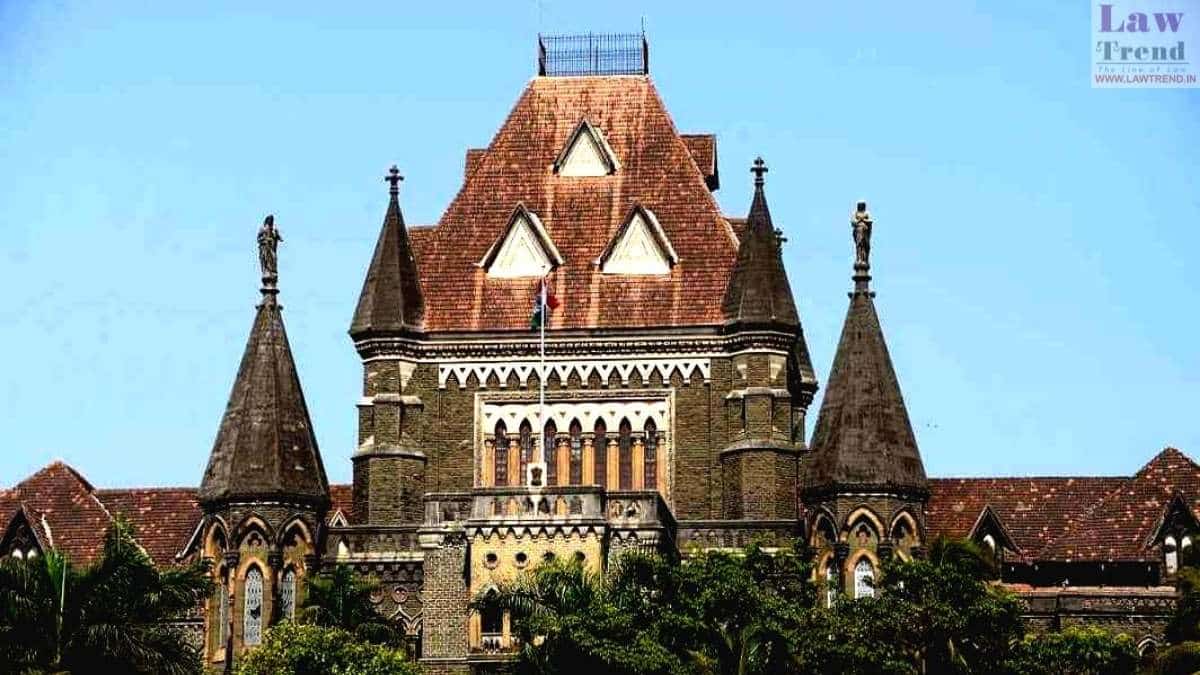
The Bombay High Court has upheld the rejection of a 10-year-old girl’s admission to a central government-run school under the rural quota, ruling that her brief schooling in a transitional local body area disqualified her from the category.
Justices Anil S. Kilor and Raj D. Wakode dismissed a petition challenging the decision of the Jawahar Navodaya Vidyalaya in Chandrapur, Maharashtra, to deny the student final admission to Class 6 for the 2026-27 academic session.
The student had been provisionally selected under the rural quota. However, school administrators withheld final admission after discovering that she had studied for a few months during Class 3 at a school in Pombhurna. Because Pombhurna is designated as a “nagar panchayat,” or transitional municipal council, the school classified it as an urban area. Under the institution’s admission criteria, candidates seeking rural quota seats must complete their entire third, fourth, and fifth grades at recognized schools located within rural areas.
Dispute Over Urban and Rural Classifications
The girl’s mother challenged the admission denial in court. Representing the petitioner, advocates D. Y. Chatap, Pranav Deshmukh, and Bodhi Ramteke argued that the creation of a nagar panchayat does not automatically convert a rural area into an urban one. They contended that while a nagar panchayat is legally a municipality, it should not be treated as an urban zone. The petitioner’s counsel pointed to the school prospectus, which states that urban areas are those specifically notified by the government, with all other locations classified as rural.
In response, Deputy Solicitor General of India Kartik N. Shukul and advocate Prutha N. Hardas, representing the school and the central government, argued that the classification of an area as a transitional or municipal zone indicates it is no longer rural. They asserted that rural areas must be explicitly defined by government notifications, and any area not so designated is considered urban.
Court Emphasizes Value of Rural Upbringing
In its July 10 ruling, the High Court agreed with the school’s classification, concluding that the student did not meet the rural quota eligibility criteria.
The bench emphasized the broader purpose of the rural reservation, referencing the Sanskrit philosopher Bhartruhari’s work “Neethishatakam,” which describes education as a secure treasure that cannot be lost. The judges observed that individuals raised in rural environments are uniquely positioned to understand firsthand challenges, such as financial hardship, poor infrastructure, deficient transport, inadequate healthcare, and agricultural dependency.
The court noted that when individuals with rural backgrounds become policymakers, they are better equipped to design and implement effective policies, ensuring that development initiatives are actively realized rather than remaining solely on paper.
Support for Underprivileged Students
The High Court highlighted that the Jawahar Navodaya Vidyalaya scheme was established under the National Policy of Education, 1986, to provide high-quality modern education to talented children, primarily from rural regions.
Because urban students generally have far greater access to superior educational facilities, qualified teachers, and coaching centers, the government fully finances these residential schools. The scheme offers eligible students free education, boarding, lodging, uniforms, and textbooks to help bridge this developmental gap.




