

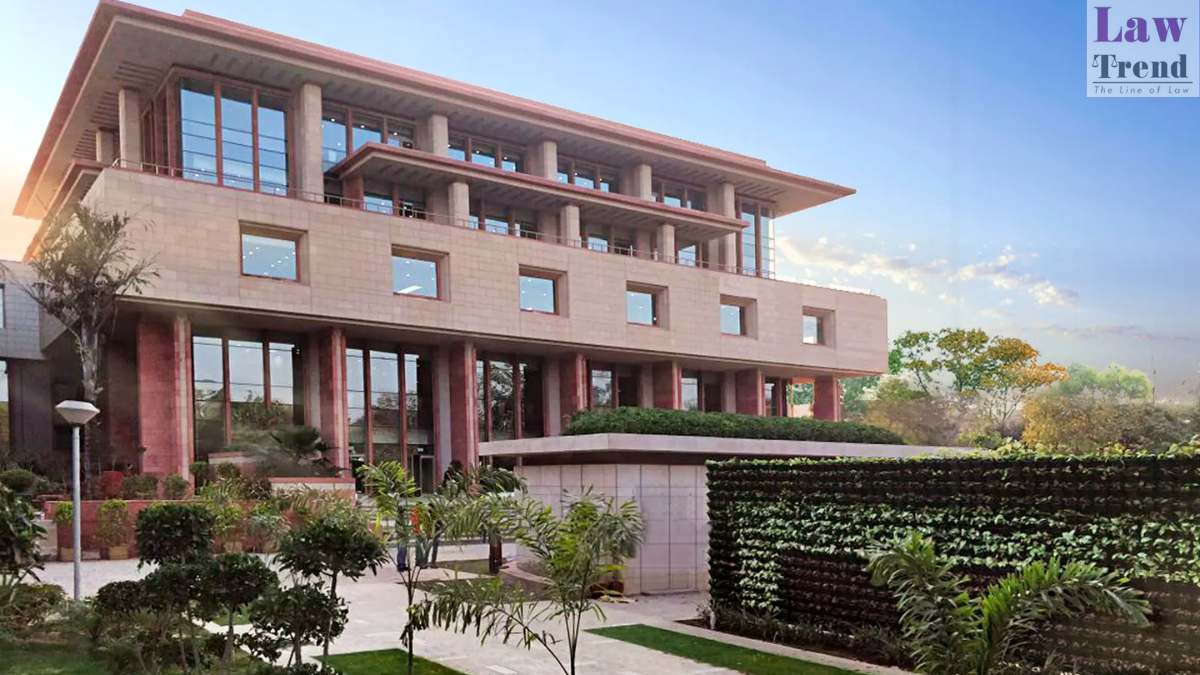
The Delhi High Court on Tuesday directed the Delhi Metro Rail Corporation (DMRC) to file its affidavit on a public interest litigation seeking that the Hindi signage of the ‘Supreme Court’ metro station be changed to ‘सर्वोच्च न्यायालय’, observing that the fear of multiple similar petitions cannot be a ground to oppose the plea.
A bench of Chief Justice D K Upadhyaya and Justice Tejas Karia was hearing a PIL filed by Umesh Sharma challenging the use of the English expression “Supreme Court” in Hindi signage at the metro station instead of its Hindi equivalent in Devanagari script.
Opposing the plea, DMRC submitted that it was not in favour of the proposed change as it would impose a financial burden on the public exchequer.
Its counsel informed the court that replacing signage would cost around ₹40–45 lakh per station.
The corporation added that the change would not be limited to physical signboards but would also require modifications in route maps, digital displays, mobile applications and other operational materials.
It further argued that altering the name of one station could trigger similar demands and litigation for other metro stations, creating a wider financial and administrative impact.
The bench, however, observed that the apprehension of multiple litigations could not be a valid ground to resist the petition and asked the DMRC to place its stand on record through an affidavit.
The petitioner contended that under the Official Languages Act and the relevant rules, signages and nameplates in Central government establishments must be in both English and Hindi, with Hindi written in Devanagari script.
He pointed out that the Hindi name of the Supreme Court is “भारत का सर्वोच्च न्यायालय” even on the court’s official website, and argued that the metro station signage should reflect the same.
The plea also relied on the example of the ‘Central Secretariat’ metro station, which uses “केंद्रीय सचिवालय” in Hindi.
The High Court listed the matter for further hearing in April.




