

The Andhra Pradesh High Court has held that the four-year limitation under Rule 9(2)(b)(ii) of the A.P. Revised Pension Rules, 1980 applies only where departmental proceedings are instituted after a government servant retires. It does not apply where the proceedings begin while the employee is still in service.
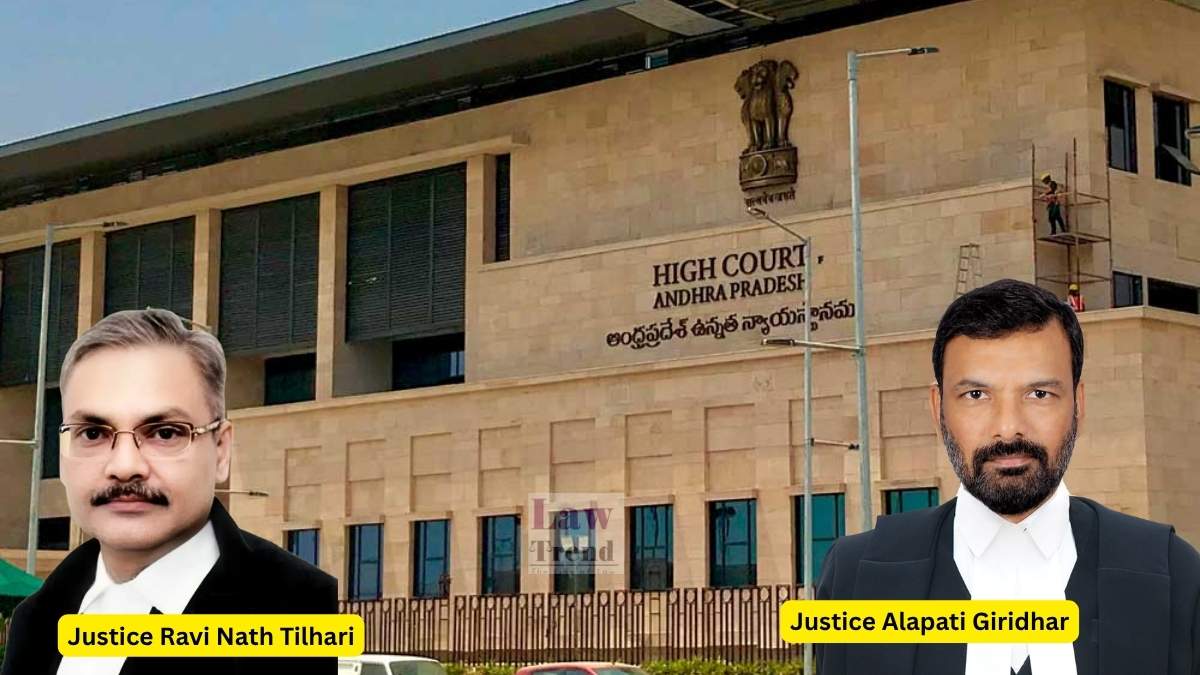
A Bench of Justice Ravi Nath Tilhari and Justice Alapati Giridhar allowed a writ appeal filed by the State and set aside a Single Judge’s order that had quashed a charge memo against a retired Hostel Welfare Officer.
Background
The writ petitioner was appointed as Hostel Welfare Officer Grade-II in the B.C. Welfare Department on 13.01.1992 and was later promoted to Grade-I. He retired on 31.05.2024. While he was posted at Amruthalur, ACB officials carried out a surprise check on 03.01.2020.
A charge memo dated 16.05.2024 was issued to him. He challenged it in a writ petition and also sought full pension, gratuity, commutation, earned leave encashment and other terminal benefits with interest.
The Single Judge allowed the petition at the admission stage. The Single Judge held that the charge memo was issued more than four years after the incident and was therefore contrary to Rule 9(2)(b)(ii). The charge memo was quashed and the State was directed to release the terminal benefits. The State then filed the writ appeal.
Arguments
Government Pleader R.S. Manidhar Pingali, appearing for the State, argued that Rule 9(2)(b)(ii) was not attracted because the charge memo was issued on 16.05.2024, before the petitioner retired on 31.05.2024. He relied on Rule 9(6), under which departmental proceedings are deemed to be instituted on the date the statement of charges is issued.
Advocate B. Ravi Chandra, appearing for the writ petitioner, submitted that the charge memo was received only on 31.05.2024. He argued that under Rule 5(1)(b) of the Pension Rules, the day of retirement is treated as a non-working day. On that basis, he said, the memo was served on a non-working day, the four-year bar applied, and the Single Judge had rightly set the memo aside.
Court’s Findings
The Bench noted that the facts were not in dispute and that “Rule 9(6) was not brought to the notice of the learned Single Judge.” Since the charge memo was issued on 16.05.2024, the Court held that the departmental proceedings were deemed to have been initiated on that date, while the petitioner was in service.
The Court relied on State of U.P. v. Shri Krishna Pandey (1996) 9 SCC 395, which dealt with a provision on the same lines and held that departmental proceedings are deemed to be instituted when the charges are issued to the employee. It also referred to Delhi Development Authority v. H.C. Khurana (1993) 3 SCC 196, where the Supreme Court held that any delay in serving a charge-sheet after it is framed and dispatched does not delay the initiation of disciplinary proceedings.
The Court called the non-working-day argument misconceived. It observed that even if the retirement day is treated as a non-working day, “He is very much in service even on last day which might be treated as a non-working day”. So even if the memo was served on 31.05.2024, it was served while the petitioner was in service.
The Bench held:
“Rule 9(2)(b)(ii) of the Rules, 1980 shall be attracted where the departmental proceedings are instituted after the retirement and not during the service period or during the re-employment of the government servant.”
It added that when proceedings are initiated during service, the question of whether the event took place four years earlier is not relevant.
Concession by Government Counsel
Before the Single Judge, the Assistant Government Pleader had conceded that Rule 9 applied and that the charge memo was liable to be quashed. Pingali submitted that no such instructions had been given and that a wrong concession on a legal issue does not bind the party. Agreeing with him, the Court observed:
“A wrong concession by counsel on a legal question can neither bind the party when it comes to a challenge in appeal nor the Court that since the concession was granted a contrary view on legal point cannot be taken.”
Outcome
The writ appeal was allowed and the Single Judge’s order was set aside. The Court directed that the necessary consequences of initiating departmental proceedings shall follow. It also directed that a copy of the judgment be served on the Advocate General. No costs were awarded.
Case Title: The State of Andhra Pradesh and another v. M.S. Chandra Sekhara Rao and 3 others
Case No.: Writ Appeal No. 1017 of 2026
Bench: Justice Ravi Nath Tilhari and Justice Alapati Giridhar
Date: 02.11.2026


