

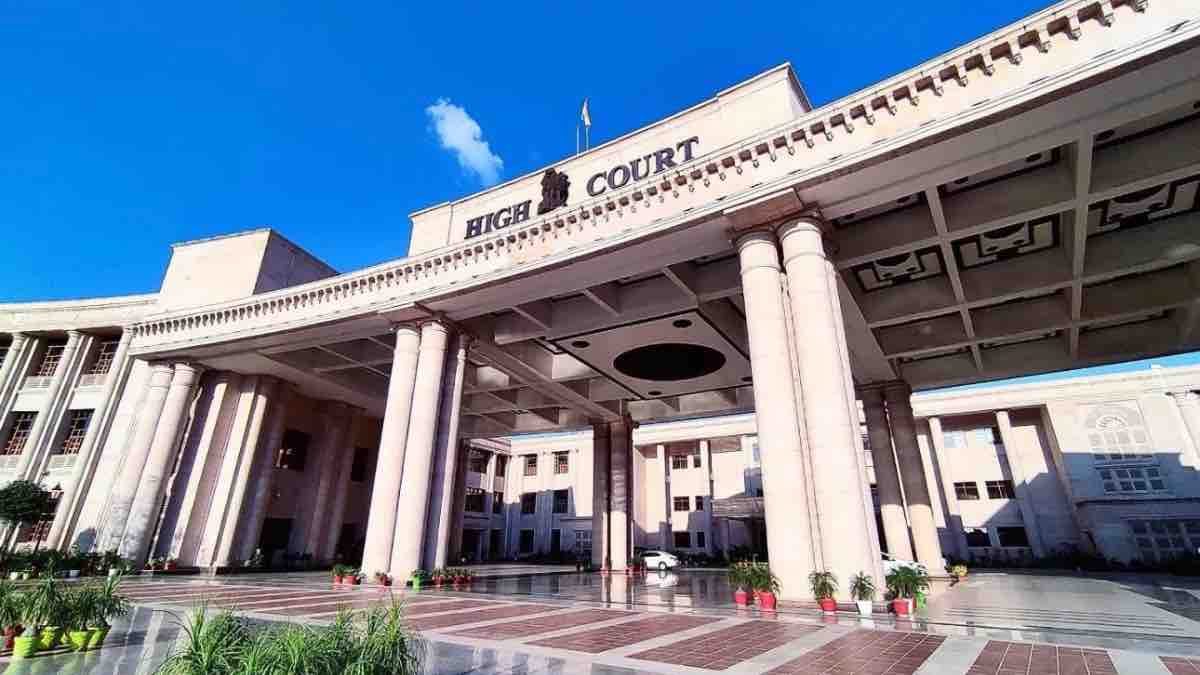
The Allahabad High Court has come down heavily on the Uttar Pradesh government for failing to comply with its previous orders in a decade-old public interest litigation concerning the illegal felling of mango trees in the state’s mango belt.
A division bench of Justices Rajan Roy and A.K. Chaudhary, hearing the matter at the Lucknow bench, expressed “serious displeasure” over the state’s continued non-responsiveness and summoned the Principal Secretary (Forest), Chief Conservator of Forests, and Divisional Forest Officer of Lucknow to appear in person on January 13.
The bench also imposed a cost of ₹40,000 on the state government for non-compliance.
The case originates from a PIL filed in 2013 by advocate Jayant Singh Tomar, raising grave concerns about illegal deforestation and the systematic destruction of mango orchards—an ecological and economic cornerstone of the region.
In January 2014, the High Court had directed the state to furnish specific information, particularly related to the preservation of mango trees and steps to curb illegal felling. However, repeated non-compliance over the years has prompted the court’s ire.
Despite a cost of ₹15,000 already imposed on the government in a previous hearing dated November 12, 2025, the bench noted during the latest proceedings that the required information still had not been submitted.
When questioned, the government’s counsel was unable to clarify whether the earlier cost had even been paid.
Senior advocate Gaurav Mehrotra, representing the petitioner, informed the court that vital issues such as geo-tagging of trees—meant to track and prevent illegal felling—were explicitly mentioned in the 2014 order. The government, however, only began geo-tagging in 2018, and there was no record of meaningful compliance before that.
The bench also summoned the Principal Secretary of the Horticulture Department, noting that no written instructions had been submitted despite the department’s relevance to the issue.
The matter will be heard next on January 13, when the summoned officials are expected to personally explain the continued lapse in implementing court directions.




