

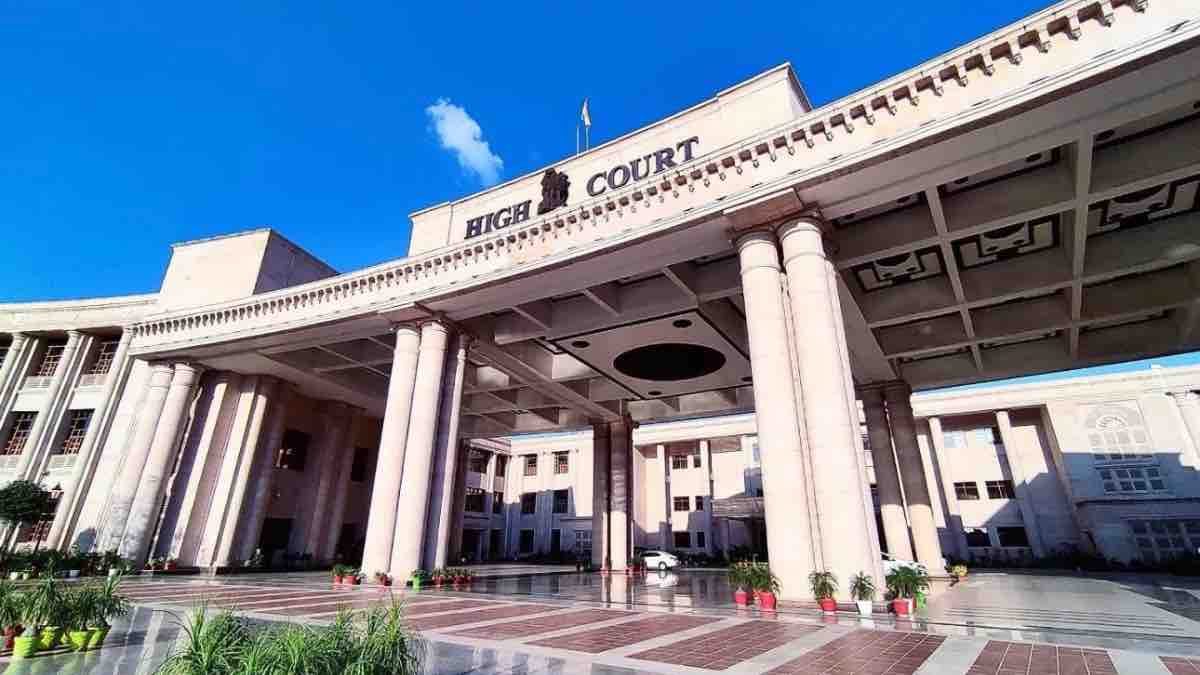
The Lucknow bench of the Allahabad High Court has directed the Uttar Pradesh government to produce official records and explain its decision to acquire land for a proposed railway overbridge at the Bharwara railway crossing in Gomtinagar Extension. Hearing a batch of petitions and public interest litigation challenging the project, a division bench comprising Justices Rajan Roy and Manjive Shukla expressed concern that state authorities initiated acquisition proceedings without properly evaluating social impact assessments or expert group recommendations.
Discrepancies In Government Filings
The court highlighted notable contradictions within state filings regarding potential public displacement. A state notification issued under Section 11 of the Right to Fair Compensation and Transparency in Land Acquisition, Rehabilitation and Resettlement Act, 2013, stated that the project would not displace any affected families. However, findings in a Social Impact Assessment report dated July 4, 2025, indicated that displacement would indeed occur. The bench instructed the additional advocate general to explain this discrepancy and demonstrate how statutory requirements were met prior to publishing the land acquisition notice.
Omission Of Technical Consultations
According to the court, the state government provided no record to demonstrate that technical agencies were consulted before making a formal determination under Section 8(2) of the 2013 Act. While both the July 2025 assessment and an independent multidisciplinary expert panel agreed that an overbridge is required to alleviate chronic traffic congestion at the Bharwara crossing, both documents noted conflicting views among departments regarding the bridge location. The expert group advised that final alignment decisions should depend on formal inputs from the Railways, the Uttar Pradesh State Bridge Corporation, and other relevant technical bodies. Additionally, the social impact report recommended considering an alternative site to minimize human displacement.
Procedural Mandates And Next Hearing
The bench emphasized that statutory land acquisition procedures are intended to ensure public infrastructure causes the minimal possible displacement and that alternative sites are thoroughly evaluated. The court noted that state records related to the decision under Section 8(2) had still not been presented, despite earlier directives. Clarifying its position, the division bench affirmed that its observations focus strictly on the legal compliance of the decision-making process and do not dispute the necessity of the overbridge itself. The court scheduled the next hearing for August 5 to examine the government’s submission and explanation.




