

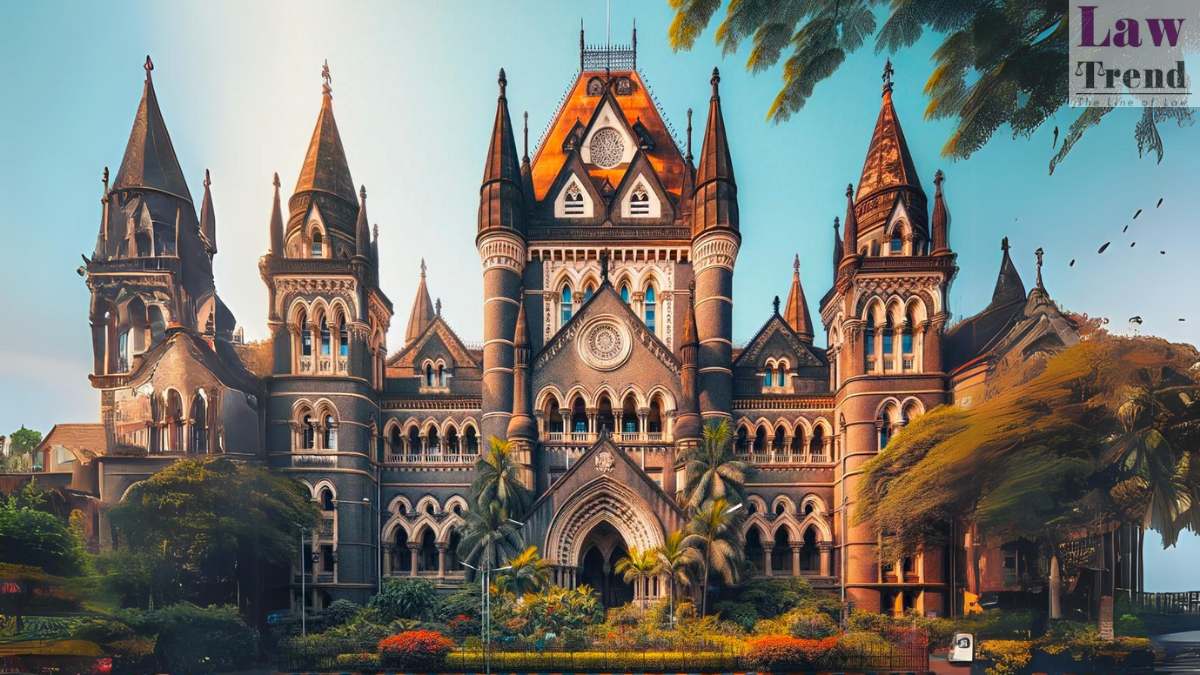
The Bombay High Court has held that expenditure incurred to influence government policy in favour of a product considered detrimental to public health cannot qualify as deductible business expenditure under Section 37(1) of the Income Tax Act, 1961, in the circumstances of the case.
A Division Bench of Justice G.S. Kulkarni and Justice Dr. Neela Gokhale, in its judgement dated November 27, 2026, dismissed three appeals filed by Sumitomo Chemical India Limited challenging the disallowance of expenditure claimed as subscription charges paid to the Endosulfan Manufacturers and Formulators Welfare Association (EMFW Association) and other trade bodies.
The Court also emphasised that merely describing expenditure as subscription charges does not establish its eligibility for deduction under the Income Tax Act.
Background
Sumitomo Chemical India Limited is the successor-in-interest of Excel Crop Care Limited, which was engaged in the manufacture and trading of agrochemicals. Endosulfan, a broad-spectrum insecticide, reportedly accounted for at least 40% of its business.
Following adverse publicity and opposition from non-governmental organisations over the harmful effects of Endosulfan, several manufacturers formed the EMFW Association to protect their collective business interests.
The company claimed deductions for subscription charges paid during Assessment Years 2009-10, 2010-11 and 2011-12.
The Assessing Officer (AO) disallowed the expenditure, finding that the contributions were intended to persuade government officials and departments to promote the use of Endosulfan.
The Commissioner of Income Tax (Appeals) subsequently accepted the company’s contention that the expenditure was incurred for protecting and preserving its business interests, though a portion of the claim was disallowed as prior-period expenditure.
However, the Income Tax Appellate Tribunal (ITAT), Mumbai, reversed the decision through a common order dated January 9, 2023, prompting the company to approach the High Court.
Arguments Before the Court
Advocate Dharan V. Gandhi, appearing for the appellant, argued that the Tribunal had substituted the statutory test of commercial expediency with its subjective assessment of the desirability of the product.
He submitted that Endosulfan was lawfully manufactured, sold and exported during the relevant assessment years and that the subsequent ban imposed by the Supreme Court in May 2011 could not retrospectively alter the nature of expenditure incurred in earlier years.
He further argued that there was no evidence establishing that the subscription payments were unlawful or prohibited.
Advocate Suresh Kumar, appearing for the Revenue, contended that the expenditure was intended to persuade government authorities to promote Endosulfan and was therefore not eligible for deduction as business expenditure.
Court’s Analysis
Assessee Must Establish Nexus Between Expenditure and Business
The High Court examined Section 37(1) of the Income Tax Act, which permits deduction of expenditure incurred wholly and exclusively for business or professional purposes, subject to statutory exceptions.
The Court noted that the appellant had failed to produce documentary evidence before the Assessing Officer establishing that the expenditure had actually been incurred.
The Bench observed:
“At the outset, the Appellant’s failure to furnish proof of the incurrence of the expenditure towards subscription itself was a sufficient enough reason to disallow any deduction of such amounts.”
Relying on Commissioner of Income Tax v. Malayalam Plantations Limited, the Court examined the scope of expenditure incurred for business purposes and emphasised the necessity of establishing a connection between the contribution and the business carried on by the assessee.
Contributions Intended to Influence Government Policy
The High Court took note of the Supreme Court’s interim order dated May 13, 2011, banning the production, use and sale of Endosulfan across India on precautionary grounds.
The Bench observed that the contributions made by members of the EMFW Association were intended to persuade government authorities to support the continued manufacture of Endosulfan and secure a change in policy.
The Court drew an analogy with corporate contributions to political parties intended to influence government policies, while clarifying that the deductibility of political donations was not directly in issue before it.
The Bench further observed:
“Against the backdrop of the Supreme Court’s observations in its ad-interim Order dated 13th May 2011, the assessee’s promotional campaign and that of other members of the Association appear to be against public policy.”
The Court also noted that no documentary evidence had been placed before the Assessing Officer establishing that the expenditure was incurred to contest or defend the proceedings before the Supreme Court.
Labelling Expenditure as Subscription Insufficient
Rejecting the appellant’s claim, the High Court held that describing the contributions as subscription charges did not make them incidental to the company’s business.
“Thus, it is clear that the expenditure purportedly labelled by the Appellant as ‘Subscription’ viewed from any perspective cannot be said to be incidental to the Appellant’s business.”
The Bench further observed that the distinction drawn by the Commissioner of Income Tax (Appeals) between the company and the association interacting with government officials was superficial.
Decision
The Bombay High Court answered the substantial question of law concerning the deductibility of subscription expenditure against the assessee.
Regarding the separate claim of ₹1,60,50,728 as prior-period expenditure, the Court agreed with the Tribunal that the issue had become academic in view of its findings on the principal question.
Accordingly, all three income tax appeals were dismissed without any order as to costs.
Case Details
Case Title: Sumitomo Chemical India Limited v. Deputy Commissioner of Income Tax
Case No.: Income Tax Appeal No. 250 of 2024 with Income Tax Appeal Nos. 632 and 631 of 2025
Bench: Justice G.S. Kulkarni and Justice Dr. Neela Gokhale
Date: November 27, 2026


