

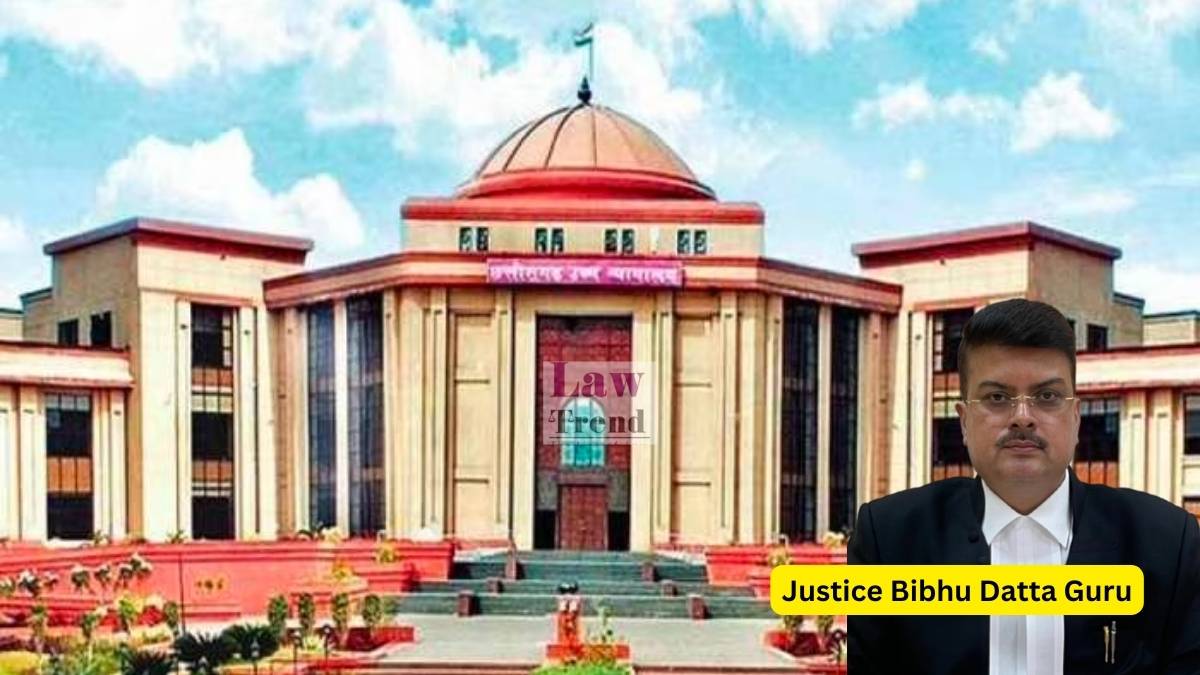
The Chhattisgarh High Court has held that an employee’s repeated representations against a service decision neither extend the period of limitation nor revive a stale claim. It dismissed a retired officer’s writ petition seeking correction of his seniority, on the ground of inordinate delay and laches.
Justice Bibhu Datta Guru dismissed the petition filed by Rajkumar Khati. He had approached the Court only after retiring, seeking a direction to decide his pending representation and correctly determine his seniority.
Background of the Seniority Dispute
The petitioner was appointed as Nutrition Food Inspector/Programme Inspector on 4 October 1990 as an outstanding sportsperson in weightlifting. He was later absorbed in the cadre of Assistant Child Development Project Officer. He was given notional promotion to the post of Child Development Project Officer with effect from 26 August 1996.
He said he was wrongly placed below his juniors in the seniority lists. He submitted representations on 31 December 2017 and 18 September 2024 seeking correction. He retired on 30 September 2026 on reaching the age of superannuation, and filed the writ petition on 8 October 2026.
Arguments Before the High Court
Advocate Praveen Dhurandhar, appearing for the petitioner, argued that the State had kept a “sphinx like silence” on the representations, which was totally unexpected from a model employer. He sought a direction to decide the representation dated 18 September 2024 and determine seniority under the applicable rules.
Additional Advocate General Gary Mukhopadhyay, appearing for the State, opposed the petition. He argued that the petitioner had approached the Court after an inordinate and unexplained delay, and that the seniority lists were issued much earlier. He said the petitioner could not be allowed to reopen seniority at such a belated stage.
Court’s Findings on Delay and Laches
The Court noted that the petitioner was claiming seniority based on a notional promotion from 1996, while the relevant seniority lists had been issued much earlier. It observed, “Merely submitting successive representations, including the representation dated 18.09.2024, would not revive a stale cause of action or extend the period of limitation.”
It said the cause of action, if any, arose when the petitioner was aggrieved by the fixation of his seniority. Later representations would not give him a fresh cause of action.
The Court said that if the petitioner was aggrieved by the seniority lists dated 14 July 2017 or 6 February 2023, he should have sought the appropriate legal remedy within a reasonable period. It added, “Entertaining such a claim after an unexplained lapse would unsettle the settled seniority positions of other employees.”
The Court relied on the Supreme Court’s decision in State of Uttaranchal and Another v. Shiv Charan Singh Bhandari and Others, (2013) 12 SCC 179. That ruling cited earlier decisions holding that filing representations alone does not save the period of limitation. The Court also referred to Union of India and Others v. C. Girija and Others, (2019) 15 SCC 633, which held that merely filing a representation does not give a fresh cause of action and that considering it cannot remove the bar of limitation or delay and laches.
Outcome
Applying these principles, the High Court dismissed the writ petition on the ground of inordinate delay and laches.
Case Title: Rajkumar Khati v. State of Chhattisgarh & Ors.
Case No.: WPS No. 8110 of 2026
Bench: Justice Bibhu Datta Guru
Date: November 17, 2026


