

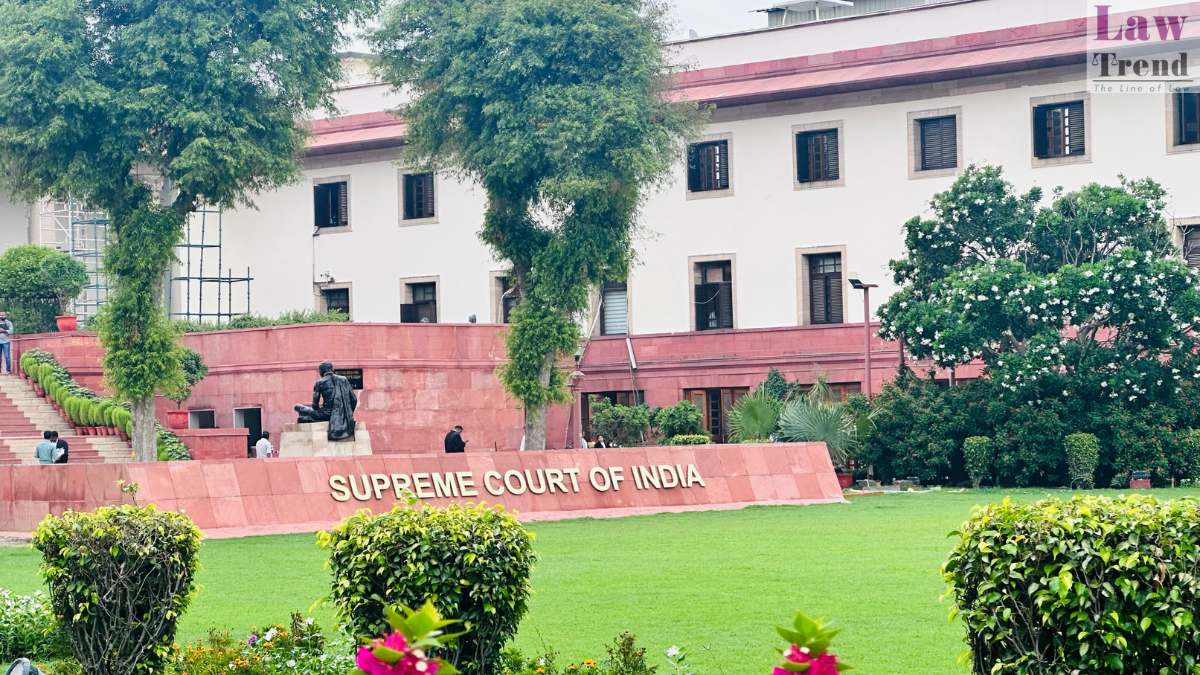
The Supreme Court has upheld the National Company Law Appellate Tribunal’s (NCLAT) decision to set aside Twin Star Technologies’ resolution plan for 13 companies of Videocon Industries Limited, ruling that an appellate tribunal can return a non-compliant insolvency plan to the Committee of Creditors (CoC) for fresh consideration.
A bench of Justices P S Narasimha and Alok Aradhe dismissed the appeals against the NCLAT’s January 5, 2022, order, which had overturned the approval granted to the resolution plan submitted by billionaire Anil Agarwal-led Twin Star Technologies.
The Court held that the Insolvency and Bankruptcy Code (IBC) permits the NCLAT to interfere with an approved resolution plan on the grounds specified under Section 61(3). Where such a plan fails to meet statutory requirements, the appellate tribunal can remit it to the CoC instead of rejecting it outright.
Creditors Free to Decide Future Course
The Supreme Court clarified that once approval of a defective resolution plan is set aside, the responsibility for determining the next course of action rests with the CoC.
The lenders must reconsider the matter using their commercial wisdom, without directions from judicial authorities on whether to examine a revised version of the existing proposal or seek fresh resolution plans.
The bench observed that neither the adjudicating authority nor the NCLAT or Supreme Court can prescribe the commercial decision that creditors should adopt.
Referring to an amendment to the IBC, the Court noted that the legislature has recognised the principle that a defective resolution plan should ordinarily be returned to creditors for rectification rather than modified or rejected.
The bench clarified that its decision was based on the law applicable at the relevant time, while the amendment reinforced the legislative approach supporting remittance to the CoC.
NCLT Cannot Modify Resolution Plan Approved by Creditors
The Supreme Court also examined the June 8, 2021, decision of the Mumbai bench of the National Company Law Tribunal (NCLT), which had approved Twin Star Technologies’ resolution plan subject to a direction concerning payments to dissenting financial creditors.
The NCLT had directed that dissenting creditors receive their liquidation value in cash upfront, before payments were made to creditors who supported the proposal.
The Supreme Court found that this direction effectively modified the resolution plan, something the NCLT had no authority to do.
Under Section 30(4) of the IBC, approval and subsequent alteration of a resolution plan fall within the CoC’s powers, subject to the prescribed voting requirements.
The bench held that the deficiency in Twin Star’s proposal could not be corrected through a direction issued by the NCLT, even in light of the submissions made by counsel representing the CoC.
Supreme Court Sets Limits on NCLAT’s Remand Powers
While recognising the NCLAT’s authority to return defective resolution plans for reconsideration, the Supreme Court laid down safeguards to prevent indiscriminate use of that power.
The bench held that remittance must serve the objectives of the IBC, particularly preserving the corporate debtor as a going concern, securing fair and reasonable recovery for creditors, and maximising asset value through a time-bound insolvency process.
The Court emphasised that liquidation is intended to remain a measure of last resort under the statutory framework.
It further clarified that the existence of a power to remit a resolution plan does not, by itself, justify its exercise. The appellate tribunal must assess whether returning the matter to creditors would advance the purposes of the IBC.
The Supreme Court concluded that the NCLAT had acted within its jurisdiction by sending the Videocon resolution plan back to the CoC.
Dispute Over ₹2,962 Crore Offer Against ₹64,637 Crore Dues
The insolvency dispute arose after a majority of Videocon’s lenders approved Twin Star Technologies’ offer of ₹2,962.02 crore against outstanding dues of ₹64,637.6 crore.
Bank of Maharashtra and IFCI Limited opposed the proposal, arguing that the amount offered was close to the liquidation value of the insolvent companies and that dissenting financial creditors could not receive less than their liquidation entitlement.
The resolution plan, which involved a haircut of approximately ₹62,000 crore for lenders, was approved by the NCLT’s Mumbai bench on June 8, 2021.
Bank of Maharashtra and IFCI subsequently challenged that approval before the NCLAT, contending that the plan failed to comply with the IBC.
On January 5, 2022, the appellate tribunal set aside the approval and directed creditors to undertake a fresh sale process for Videocon to recover their outstanding dues.
The Supreme Court has now upheld the NCLAT’s decision to set aside the resolution plan while affirming the CoC’s authority to determine the appropriate commercial course following remittance.
Separately, the Court declined to interfere with the insolvency proceedings concerning VOVL, a wholly owned subsidiary of Videocon Industries Limited. It also dismissed the plea filed by Videocon’s former promoter, Venugopal Dhoot.


