

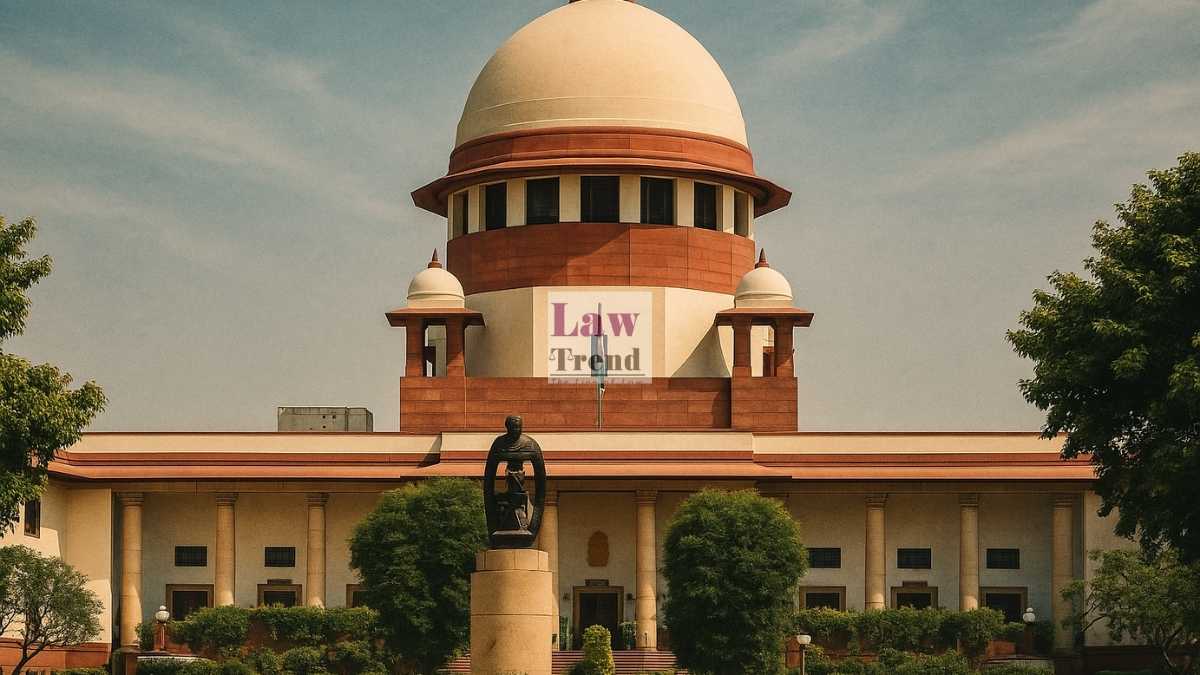
The Supreme Court has upheld the conviction and life sentence of the appellants in a 2001 double murder case from Karnataka. It held that inferences drawn from the digestive process cannot override reliable eyewitness accounts of when an incident took place. The Court dismissed the appeal and endorsed the Karnataka High Court’s decision to reverse the Trial Court’s acquittal.
A Bench of Justice K. V. Viswanathan and Justice Arun Palli found that the testimony of the two widows of the deceased, who witnessed the attack, was natural, trustworthy and corroborated by medical evidence.
Background
The deceased, brothers Mallappa and Gulappa, were attacked with axes around 1:00 AM on the night between 08.09.2001 and 09.09.2001 in Belavatgi village. According to the prosecution, the attack stemmed from a dispute after a bull belonging to Rudrappa (A-2) gored a goat owned by Nagappa (PW-25). The deceased had taken PW-25’s side in that dispute.
Doddasiddavva (PW-17), Mallappa’s wife, and Siddavva (PW-18), Gulappa’s wife, deposed that the accused held them down while their husbands were assaulted. PW-18 was also struck on the forehead with the blunt handle of an axe.
The Trial Court acquitted the accused. The High Court reversed the acquittal and convicted them under Sections 143, 148, 302, 323 and 341 read with Section 149 IPC, sentencing them to life imprisonment for murder.
Arguments
Senior Counsel Basava Prabhu S. Patil, appearing for the appellants, reiterated the contentions advanced before the courts below. He argued that PWs 17 and 18, as widows of the deceased, were interested witnesses, and relied on the doctor’s opinion that there was a four-hour gap between the two deaths.
Additional Advocate General Avishkar Singhvi, appearing for the State of Karnataka, defended the High Court’s judgment.
Supreme Court on Digestive Timings vs Ocular Evidence
The Trial Court had relied on the doctor’s (PW-19) answer to a Court question that, based on stomach contents, Gulappa died four hours after Mallappa. The Supreme Court agreed with the High Court that this “stray” answer could not be the basis for an acquittal.
Relying on Nihal Singh vs State of Punjab and Shivaji Sahabrao Bobade vs State of Maharashtra, the Court observed that “when there are acceptable eyewitnesses on record speaking clearly about the time of the incident, no conclusion can be clearly based on probabilities of digestive timings and in any event, that cannot be the sole basis to reject the oral evidence.”
Rejecting the defence argument, the Bench remarked that the attempt “to create a doubt on the prosecution case by falling back on the inconclusive digestive process is an argument which in itself, on facts, is very difficult to digest.”
Widows Are Natural Witnesses
The Court held that PWs 17 and 18 were natural witnesses who knew the accused and described the overt acts of each. It noted that the Trial Court “over emphasized on minor contradictions which have no significance whatsoever.”
On the plea that they were interested witnesses, the Court said, “It is well settled that merely because a witness is a related witness, that witness need not be an interested or a partisan witness.”
The Court further held that motive “pales into insignificance where there is direct evidence which is trustworthy,” adding that motive in this case also stood established.
Inquest Report and FIR Delay
Citing Radha Mohan Singh vs State of U.P., the Court reiterated that the scope of an inquest under Section 174 CrPC (now Section 194 BNSS) is limited to the apparent cause of death. It held that “A testimony of an eyewitness cannot be discarded on the ground that their names did not appear in the inquest report.”
The Court also endorsed the High Court’s finding that the delay in lodging the complaint was satisfactorily explained. It held that the account given by Somashekhar (PW-20), who wrote the complaint for PW-17, was a corroboration and not a contradiction.
Outcome
Holding that “No two views are possible in this case, and the only view possible is the guilt of the appellants,” the Supreme Court dismissed the appeal. The appellants were directed to surrender forthwith, failing which the Trial Court is to take steps to take them into custody.
Case Title: Shekappa And Ors. vs State of Karnataka
Case No.: Criminal Appeal No. 2102 of 2011
Bench: Justice K. V. Viswanathan and Justice Arun Palli
Date: November 3, 2026


