

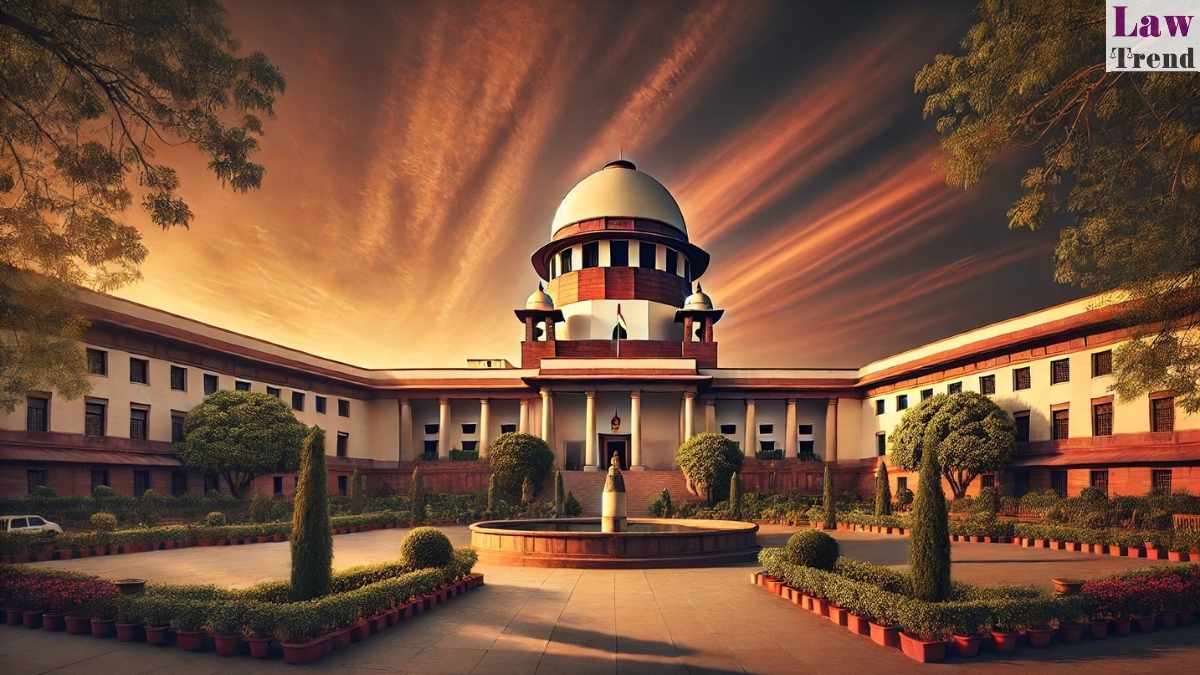
The Supreme Court has referred the dispute between the Centre and a Reliance Industries Limited (RIL)-led consortium over alleged extraction of migrated natural gas from the Krishna Godavari (KG) basin to mediation, appointing former Supreme Court judge Justice Ranjana Prakash Desai to facilitate a settlement.
A three-judge Bench comprising Chief Justice of India Surya Kant and Justices Joymalya Bagchi and Vipul M Pancholi passed the order on Friday after both parties acknowledged that their efforts to resolve the dispute through discussions had failed to produce an agreement.
The controversy concerns the government’s demand for approximately $1.5 billion, along with $174 million in interest, from RIL and its consortium partners BP Plc and Niko Resources over gas allegedly migrating from Oil and Natural Gas Corporation (ONGC) fields into RIL-operated blocks.
Former Supreme Court Judge Appointed Mediator
Attorney General R Venkataramani, representing the Centre, and Senior Advocate Kapil Sibal, appearing for the consortium, jointly requested mediation to explore a negotiated resolution.
Accepting their request, the Supreme Court appointed Justice Desai as mediator, with the assistance of two domain experts who may be suggested by the parties.
Chief Justice Surya Kant observed that Justice Desai’s extensive experience in resolving commercial disputes made her suitable for the assignment.
The Bench recorded that earlier adjournments had been granted to allow the parties to pursue settlement discussions, but those efforts had not resulted in a viable solution.
Delhi High Court Had Set Aside Arbitration Award
The dispute reached the Supreme Court after a Division Bench of the Delhi High Court overturned an arbitral award that had favoured the RIL-led consortium.
In July 2018, an arbitral tribunal rejected the Centre’s claims, finding that the production-sharing contract (PSC) did not restrict contractors from extracting and selling natural gas that had migrated from outside the contracted area.
The government challenged the award before the Delhi High Court, but a Single Judge dismissed its challenge in May 2024.
On appeal, a Division Bench reversed that decision and set aside both the Single Judge’s order and the arbitral award, holding that they were inconsistent with the settled position of law.
The consortium subsequently challenged the Division Bench’s ruling before the Supreme Court.
How the KG Basin Dispute Began
The dispute originated from a production-sharing contract executed in 2000 between the Centre and an RIL-led consortium for exploration and extraction of natural gas in the Krishna Godavari basin, off the Andhra Pradesh coast.
The agreement governed the parties’ rights and obligations, including arrangements for sharing revenue from gas production.
Commercial production began in April 2009 from assets adjoining ONGC’s Godavari petroleum and mining lease and the KG-DWN-98/2 block.
At that time, RIL held a 60 per cent interest in the relevant KG-D6 block, while BP Plc and Niko Resources held 30 per cent and 10 per cent, respectively.
In 2013, ONGC alleged that RIL had unlawfully extracted gas belonging to the state-owned company’s blocks. According to ONGC, wells drilled near the boundaries of the adjoining fields enabled natural gas to migrate into RIL’s KG-D6 block between 2009 and 2013.
ONGC claimed that the extraction resulted in unjust enrichment of RIL.
Following these allegations, the Centre demanded recovery of approximately $1.5 billion from RIL and its partners, besides $174 million in interest.
The consortium disputed the demand and invoked arbitration under the production-sharing contract.
With the dispute now referred to Justice Desai, the parties will explore the possibility of resolving their differences through mediation.


