

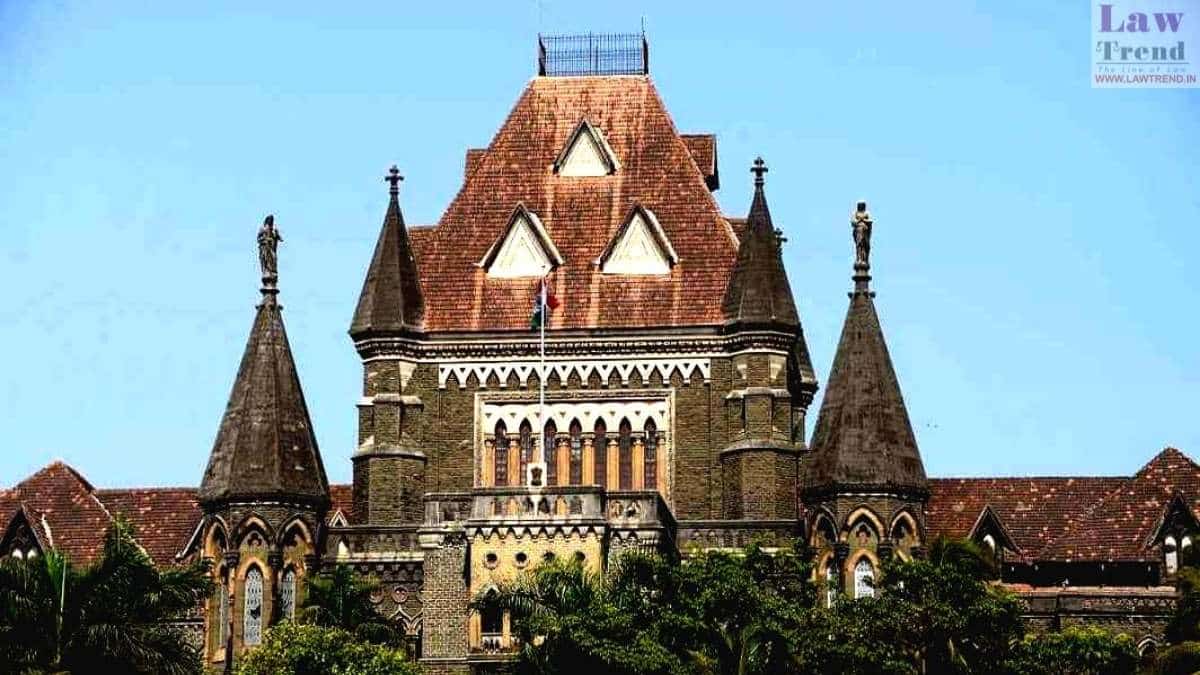
The Bombay High Court has quashed the FIR registered under Section 304A read with Section 34 of the IPC against the trustees, in-charge principal, teachers and staff of a Pune college over the drowning of 14 students at Murud beach, Raigad, in February 2016. The Court held that where the students were adults and the incident occurred at a public beach, the college staff and management cannot be held criminally liable. It added that the responsibility for safety measures at public beaches rests with the State Government.
Justice Milind N. Jadhav allowed four criminal applications filed under Section 482 of the CrPC. The Court also directed that a copy of the judgment be sent to the Chief Secretary for action on beach safety.
Background
On February 1, 2016, Abeda Inamdar Senior College of Arts, Science and Commerce, Pune, took 116 students on a picnic to Murud beach. The college is run by the Maharashtra Cosmopolitan Education Society. The First, Second and Third Year B.Sc. (Computer Science) batches travelled in three separate buses, each accompanied by two teachers and some other staff.
According to the judgment, after lunch at about 3:45 pm, all 41 Third Year students went back to the beach after taking permission from their two teachers. The teachers did not go with them and stayed back to rest. Around 20 students were swept away by the undercurrent. One student, with the help of local persons, rescued about six of them. Fourteen students, including the student who carried out the rescue, lost their lives.
After an enquiry under ADR No. 04 of 2016, FIR No. 24 of 2016 was registered at Murud Police Station on April 19, 2016, about 80 days later. It named 17 accused, comprising trustees, the in-charge principal, assistant professors, peons and a lab assistant. The complainant is the father of one of the deceased students.
Arguments
Advocate Niranjan Mundargi, along with Advocate Keral Mehta, appeared for the trustees and the in-charge principal. He argued that vicarious liability could not be foisted on the trustees and that the ingredients of Section 304A were not attracted. He said the college had obtained No Objection Certificates from parents, and he relied on State of Haryana v. Bhajan Lal.
Advocate Sidheshwar Biradar, along with Advocates Dinesh R. Shinde and Omhari B. Fawade, appeared for the faculty and staff. He argued that the teachers accompanying the First and Second Year students had returned safely with their batches and were not responsible for the Third Year students. He added that all the applicants had taken sufficient care.
APP Rajeshree V. Newton, for the State, argued that the deaths were a direct result of the applicants’ negligence. She said the applicants failed to prevent the students from venturing into the sea and failed to stay vigilant at a beach with no safety signals.
Advocate Abhishek Pungliya, for the complainant, made the following submissions:
- The college had unilaterally changed the date of the trip.
- No doctor or swimmer accompanied the 116 students.
- The staff rested at a hotel 500 metres from the beach.
- A Savitribai Phule Pune University report had found violations of UGC safety guidelines.
He urged that the matter go to full trial.
Court’s Findings
The Court found that the trustees in Application No. 493 of 2016 were not present at the picnic. It held there was no material showing negligence on their part with a direct or proximate connection to the deaths. The teachers who accompanied the First and Second Year students could not be held liable merely because they belonged to the same college or department.
On the teachers accompanying the Third Year batch, the Court said that students in their third year of B.Sc. can reasonably be expected to appreciate the consequences of their own conduct. It held that “the causa causans of the death of the 14 students was their drowning in the seawater and not due to any overt negligent act or negligence on the part of Applicants.” The Court also found the complainant’s argument about the change of date unsustainable.
Noting that it had found no precedent on vicarious liability where the victims are adults, the Court observed that “in the case of students who are major and above 18 years of age and that too in a public place and public beach, in my opinion, in the absence of mens rea it would be a case of simple accident.”
The Court relied on M.S. Grewal v. Deep Chand Sood, Jacob Mathew v. State of Punjab and Melvin Kumar v. K.S. Harisha. Applying the occupier principle from Melvin Kumar, it held that for a public beach, “it would be the State Government who would be responsible for the accident in question for not providing adequate life saving amenities, warnings, signages, life guards etc. on the public beach.”
Justice Jadhav concluded that the applicants “cannot be held criminally negligent for an unforeseeable event occurring beyond their direct control or operational purview,” and that there was no material showing gross or high degree of negligence.
Directions on Beach Safety
The Court said the State Government, through its Ministry of Tourism, should prepare a blueprint of crowded beachfronts and frame a uniform policy for signage in English and Marathi. The signage should warn visitors of the hazards and display high tide timings. The State was also directed to allocate funds for:
- lifeguards and their regular training
- watchtowers and protective grills
- demarcated safe swimming zones
- red flags during high tide
- patrol vehicles
- assistance from expert agencies
The Court noted a recent incident in which eight students from a coaching institution were swept away at a Raigad beach. It remarked, “We cannot have a knee jerk reaction after every mishap.”
Outcome
All four criminal applications were allowed, and FIR No. 24 of 2016 of Murud Police Station was quashed and set aside.
Case Title: P.A. Inamdar & Ors. v. State of Maharashtra & Anr. (with connected applications)
Case No.: Criminal Application No. 493 of 2016 with Criminal Application Nos. 568, 569 and 975 of 2016
Bench: Justice Milind N. Jadhav
Date: October 22, 2026


