

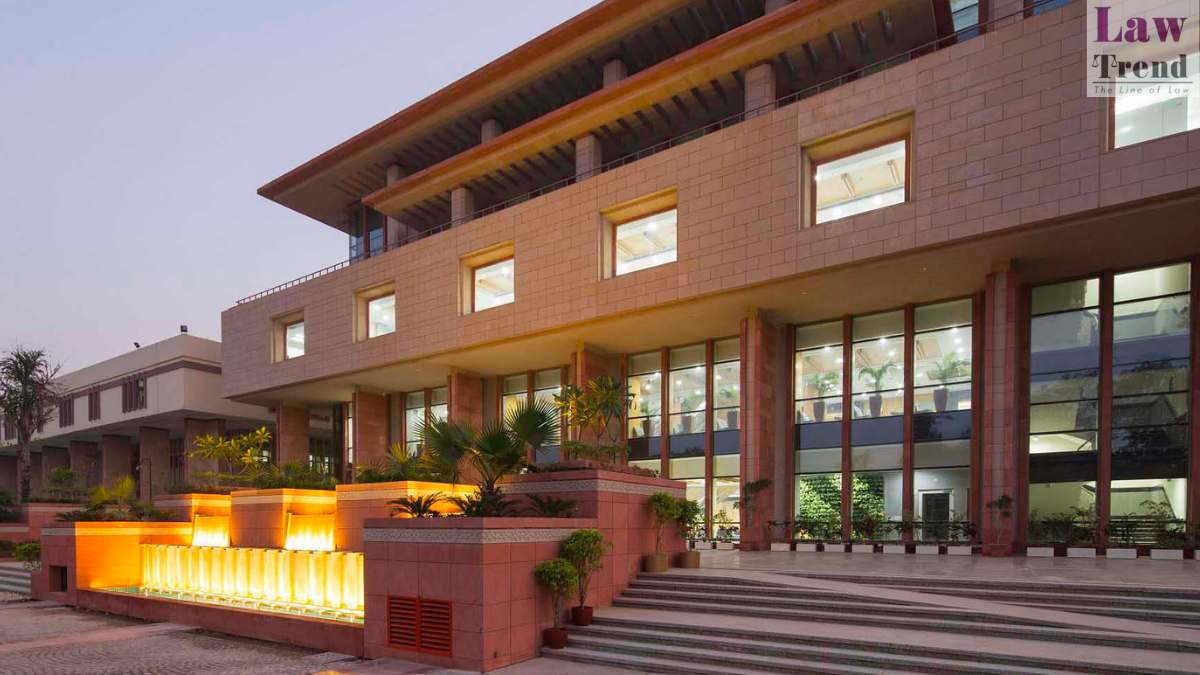
The Delhi High Court has sought the central government’s response to a petition filed by 11 members of the Delhi Gymkhana Club challenging the takeover of its 27.3-acre grounds and subsequent eviction steps initiated under public premises legislation.
Justice Amit Mahajan issued formal notices on Monday to the Union Ministry of Housing and Urban Affairs, the Deputy Land and Development Officer, the Estate Officer, and Delhi Gymkhana Club Ltd. The court directed all respondents to submit their replies and scheduled the next hearing for November 17.
Centre Opposes Stay Request
During the hearing, senior advocate Vikas Singh, appearing on behalf of the 11 petitioning club members, asked the court to put a hold on the ongoing eviction proceedings being carried out under the Public Premises (Eviction of Unauthorised Occupants) Act.
Ashish Dixit, standing counsel for the central government, opposed the plea for interim relief, contending that proceedings under the Public Premises Act cannot be stayed. Dixit also challenged the maintainability of the writ petition, arguing that the appropriate statutory course available to the petitioners is to raise their grievances directly before the estate officer.
**Defence Needs Cited for Lease Cancellation**
The legal challenge targets two separate administrative directives: an order issued on May 22 by the Land and Development Office (L&DO) that cancelled the colonial-era club’s perpetual lease, and an eviction notice served on June 29 by the estate officer.
Under the May 22 termination order, the authorities instructed the club, located at 2, Safdarjung Road, to surrender the 27.3-acre site by June 5. The L&DO cited the requirement to strengthen and secure defence infrastructure as the basis for rescinding the perpetual lease agreement.
Allegations of Systematic State Takeover
The petition, brought by Vipin Aggarwal and other members, alleges that the eviction constitutes an arbitrary and colourable exercise of authority aimed at depriving members of property and violating their fundamental rights.
The petitioners contended that the current measures are not standard actions taken by a lessor. Instead, they described the steps as the completion of an effort spanning 25 years by the government to assume full control of the institution. According to the plea, the Centre first took charge of the club’s administration by installing an entirely state-nominated General Committee—an appointment that itself remains under challenge before the High Court—and subsequently used its lessor status to terminate the lease and initiate eviction machinery.
The members noted that they were compelled to approach the court independently because the government-appointed management currently running the club was unlikely to initiate legal action against the takeover.
Parallel Legal Challenges
The petition is one of five related lawsuits currently pending before the High Court concerning the club premises.
Among the other pending actions is a suit filed by Delhi Gymkhana Club employees, including kitchen and housekeeping workers, waiters, cooks, gardeners, groundsmen, plumbers, electricians, security guards, and lifeguards. Their petition requests judicial protection for their livelihoods and invokes fundamental protections guaranteed under Articles 14, 19(1)(g), and 21 of the Constitution.




