

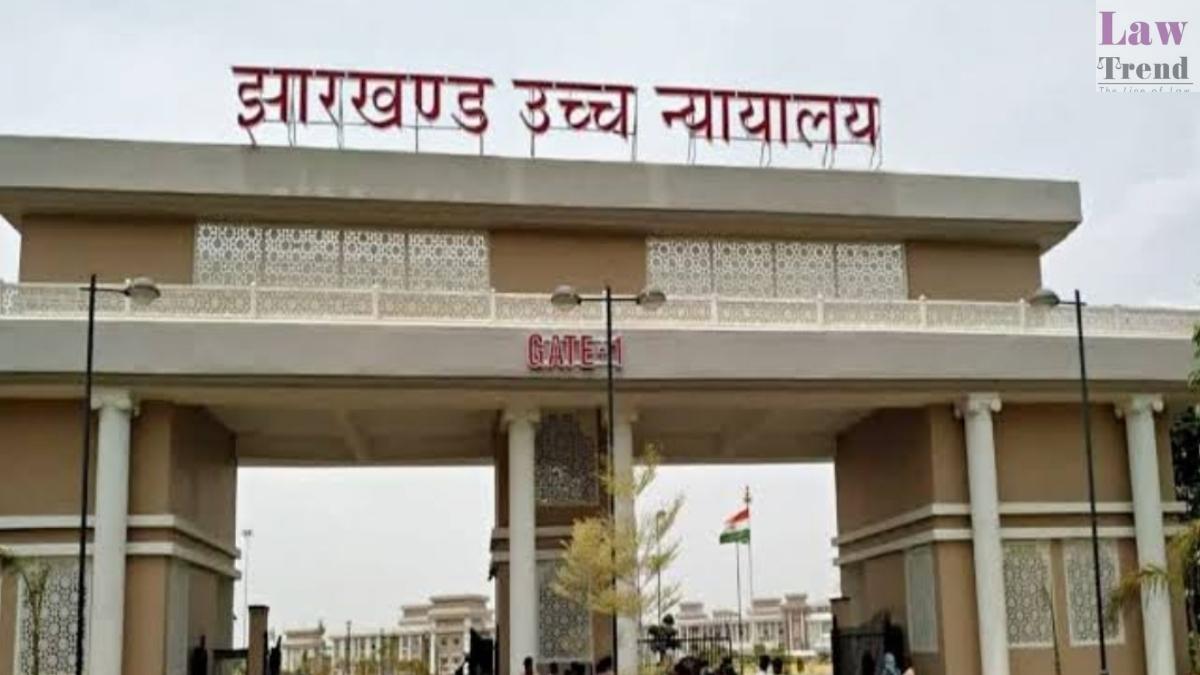
RANCHI: Emphasizing that statutory bail provisions under juvenile justice law override general criminal procedure and mandate bail as a primary rule, Justice Sanjay Kumar Dwivedi of the High Court of Jharkhand has set aside the orders of the Juvenile Justice Board and the Children’s Court, Hazaribagh, which had denied regular bail to a 17-year-old boy in connection with a clash that resulted in one death and injuries to two others. Allowing the criminal revision petition, the Court directed the release of the juvenile on bail under the guardianship of his father, observing that the courts below failed to substantiate the statutory grounds required to deny bail when the social investigation report contained nothing adverse against him.
Background of the Case
The matter arose out of Lohsinghna P.S. Case No. 01/2026 (corresponding to G.R. No. 1031 of 2026), registered for offences punishable under Sections 191(2), 191(3), 126(2), 115(2), 117(2), 118(2), 324(4), 324(6), 109(1), and 103(1) of the Bharatiya Nyaya Sanhita (BNS), 2026, pending before the Principal Magistrate, Juvenile Justice Board, Hazaribagh.
The juvenile, who had been in custody since January 12, 2026, initially faced rejection of his bail application by the Juvenile Justice Board, Hazaribagh, on February 24, 2026. His subsequent appeal was dismissed on March 26, 2026, by the Additional Sessions Judge-I Cum Special Judge, Children Court, Hazaribagh in Criminal Appeal No. 63 of 2020. The minor, represented through his father Vijay Kumar Gupta, subsequently moved the High Court in revision against the appellate order.
Submissions by the Parties
Advocates Rajesh Kumar Tiwari and Vishwanath Moon, appearing for the petitioner, submitted that the petitioner was approximately 17 years of age on the alleged date of the incident and was a meritorious student of Class XI. They argued that the solitary allegation against him was that he had broken the windshield of a Bolero car—a detail supported by eye-witness statements in paragraph 73 of the case diary and the statement of eye-witness Niranjan Yadav. Counsel highlighted that nothing adverse was recorded against him in the social investigation report. Despite this, the courts below rejected bail on the apprehension that he would be exposed to moral, physical, or psychological danger. Counsel further submitted that the petitioner’s father was ready to give an undertaking ensuring good behaviour, keeping him away from known criminals, and protecting him from any exposure to danger.
Opposing the plea, advocates Ritesh Kumar Sahu and Vijoy Kumar Sinha, appearing for the State of Jharkhand, submitted that the petitioner was an accomplice of the other accused persons in an incident where one person died and two others sustained injuries. On these grounds, the State prayed for the dismissal of the bail application.
The Court’s Analysis and Observations
Examining the statutory framework governing bail for juveniles in conflict with law, Justice Sanjay Kumar Dwivedi reiterated the overriding effect of Section 12 of the Juvenile Justice (Care and Protection of Children) Act, 2015 over the general provisions of criminal law. The Court observed:
“On perusal of Section 12 of the J.J. Act, 2015, it is crystal clear that Section 12 of the Act overrides the bail provisions as contained in the Criminal Procedure, 1973 or any other law for time being in force. It is further crystal clear that bail to the juvenile is a rule and refusal of the same is an exception and juvenile can be denied bail only on the following three grounds (i) if there appears reasonable grounds for believing that the release is likely to bring that person into association with any known criminal, or (ii) expose the said person to moral, physical or psychological danger, or (iii) the person’s release would defeat the ends of justice. Section 12 of the Act is applicable to all juveniles in conflict with law without any discrimination of any nature.”
Addressing the grounds on which bail was declined by the lower courts, the Court pointed out that while the courts below cited an apprehension that the minor would come into contact with dreaded criminals and face moral, physical, or psychological danger, the social investigation report contained no adverse material against him.
The Court further observed:
“In the absence of any material or evidence of reasonable grounds, it cannot be said that his release would defeat the ends of justice and learned courts have failed to give reasons on three contingencies for declining the bail to the revisionist. The findings recorded by the Juvenile Justice Board as well as appellate court are that the petitioner will come in contact with dreaded criminals. Thus, the order dated 26.03.2026 passed by learned Additional Sessions Judge-I Cum Special Judge, Children Court Hazaribagh in Cr.Appeal No.63 of 2020 as well as the order dated 24.02.2026 passed by Juvenile Justice Board, Hazaribagh in connection with Lohsinghna P.S. Case No.01/2026, corresponding to G.R. No.1031 of 2026, pending in the court of learned Principal Magistrate, Juvenile Justice Board, Hazaribag are not sustainable in the eye of law and hence both the said orders are, hereby, set-aside and the present criminal revision petition is allowed.”
The Decision and Conditions for Release
Setting aside both impugned orders, the High Court directed that the revisionist be released on bail on the assurance and surety of his natural guardian/father upon furnishing a personal bond with two sureties of relatives to the satisfaction of the Juvenile Justice Board, Hazaribagh.
The release was made subject to the following specific conditions:
- The natural guardian/father must furnish an undertaking that upon release, the revisionist will not be permitted to come into contact or association with any known criminal, will not be exposed to any moral, physical, or psychological danger, and that the father will ensure the minor does not repeat the offence.
- The father must furnish an undertaking that the juvenile will be encouraged to pursue his studies at the appropriate level and engage in constructive activities, rather than wasting time in unproductive and excessive recreational pursuits.
- The juvenile and his father must report to the Probation Officer on the first Monday of every calendar month, commencing on the first Monday of November 2026 (or on the following working day if the Monday falls on a holiday).
- The Probation Officer must maintain strict vigil over the juvenile’s activities and periodically submit a social investigation report to the Juvenile Justice Board, Hazaribagh.
With these directions, the High Court allowed and disposed of the criminal revision petition.
Case Details:
Case Title: XXX through his father Vijay Kumar Gupta v. The State of Jharkhand
Case No.: Cr. Revision No. 900 of 2026
Bench: Justice Sanjay Kumar Dwivedi
Date: 06.10.2026




