

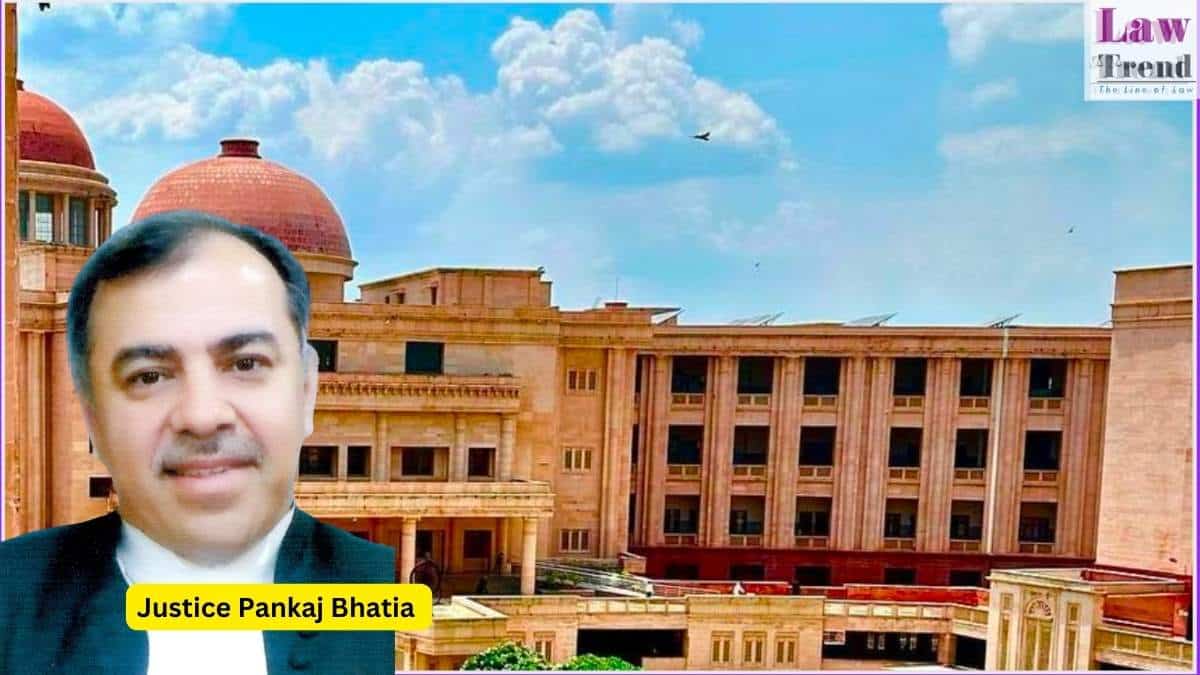
In an interim order concerning reservation benefits for defence personnel, the Lucknow Bench of the Allahabad High Court, presided over by Justice Pankaj Bhatia, has directed that fifteen ex-servicemen who left the armed forces at their own request be permitted to participate in the ongoing Physical Endurance Test for recruitment. The petitioners challenged their exclusion under Section 2(c)(iv) of the Uttar Pradesh Public Services (Reservation for Physically Handicapped, Dependents of Freedom Fighters and Ex-Servicemen) Act, 1993, and the court held that the question of statutory eligibility requires detailed consideration in light of settled Supreme Court jurisprudence.
Background of the Case
The writ petition was instituted by Manoj Kumar Pandey and fourteen other candidates who had served in the defence forces. After participating in the recruitment process, the petitioners successfully qualified the written examination and cleared document verification.
However, the respondent authorities refused to permit them to appear in the Physical Endurance Test (PET). This exclusion was predicated on the restrictive interpretation given to Section 2(c)(iv) of the Uttar Pradesh Public Services (Reservation for Physically Handicapped, Dependents of Freedom Fighters and Ex-Servicemen) Act, 1993. The statutory provision defines an “ex-serviceman” as an individual who has served in the Army, Navy, or Air Force and who was released after completing a specific prescribed tenure, “but has not been released at his own request, or dismissed or removed on account of misconduct or inefficiency, and has been granted gratuity.”
Because the petitioners had obtained release from defence services upon their own request, the authorities deemed them ineligible to claim benefits reserved for ex-servicemen.
Arguments of the Parties
Appearing for the petitioners, counsels Krishan Kanhaya Pal and Pooja Pal submitted that denying ex-servicemen who took discharge on personal request the opportunity to undergo the PET is impermissible. They argued that an identical restrictive provision fell for consideration before the Supreme Court in Sansar Chand Atri v. State of Punjab, (2002) 4 SCC 154, which interpreted Rule 2(c) of the Punjab Service Rules of 1982.
The petitioners contended that their claim stands on the exact same analogy established by the apex court. Highlighting the ongoing nature of the Physical Endurance Test, the petitioners urged for immediate interim permission to participate. They further placed reliance on an interim order passed by the Allahabad High Court in Writ A No. 16700 of 2026, dated October 6, 2026.
Opposing the petition, the learned Standing Counsel appearing for the State contended that under the explicit definition in Section 2(c)(iv), the petitioners are clearly not eligible for the benefits claimed. The State argued that the petitioners were fully aware of their limitations under the statutory rules and the employment advertisement, yet failed to approach the court earlier. Contending that the candidates approached the court at the fag end of the selection process, the State maintained that they do not deserve judicial indulgence. The State further pointed out that following document verification, the petitioners were intentionally not summoned for the Physical Endurance Test because they failed to fulfil the prescribed qualification.
The Court’s Analysis
Examining the rival submissions, Justice Pankaj Bhatia observed that while a plain reading of Rule 2(c)(iv) would suggest that the petitioners are ex-facie ineligible, the legal issue could not be viewed in isolation from binding precedent. The court observed that an analogous restriction under the Punjab Rules was interpreted by the Supreme Court in Sansar Chand Atri contrary to the stance maintained by the State.
In Sansar Chand Atri, the Supreme Court had authoritatively addressed the exclusionary condition “otherwise than at his own request,” observing:
“All the ex-defence service personnel are to be treated as a class separate from other candidates for the purpose of offer of jobs and no differentiation or discrimination can be made amongst them unless such differences are real and substantial. Testing the provisions in this context we are of the view that a person in the army who has earned pension after putting in the requisite period of service before leaving the army whether at his own request or on being released by the employer or on any ground should be treated as an ex-serviceman who has retired from the army. Such treatment is to be meted out to all such persons irrespective of whether the nomenclature used is ‘released’ or ‘discharged’ or ‘retired’. If the contention raised on behalf of the Service Commission and the State Government that since the appellant has been discharged from the army at his own request, he cannot be treated as an ex-serviceman, is accepted then it will create a class within a class without rational basis and, therefore, becomes arbitrary and discriminatory. It will also defeat the purpose for which the provision for reservation has been made.”
The Supreme Court had further held:
“The mere fact that after such long period of service he voluntarily quit the service with the consent of the employer should not place him in a disadvantageous position for claiming the benefit of reservation for ex-serviceman. Therefore, the expression ‘retirement’ should be given wider meaning in order to effectuate the objective behind the Rule.”
Taking note of these authoritative observations, the High Court held that the petitioners’ matter requires full consideration.
The Decision
As an interim measure, the High Court directed that the petitioners be permitted to undergo the Physical Endurance Test. The bench, however, added a caveat clarifying that the petitioners will not be entitled to claim any special equities solely because they participated in the test pursuant to the directions of the court.
The court noted that the substantive claim of the petitioners vis-à-vis the statutory requirements will be adjudicated after pleadings are complete. The respondent authorities were granted ten days to file their counter affidavit, with three days thereafter granted to the petitioners to submit a rejoinder affidavit.
The petition has been directed to be listed before the appropriate Bench on October 28, 2026. The Standing Counsel was instructed to communicate the order to the respondent authorities for compliance in accordance with law.
Case Title: Manoj Kumar Pandey And 14 Others Versus State Of U.P. Thru. Prin. Secy. Home U.P. Lko And 4 Others
Case No.: WRITA No. 10734 of 2026
Bench: Justice Pankaj Bhatia
Date: October 10, 2026




