

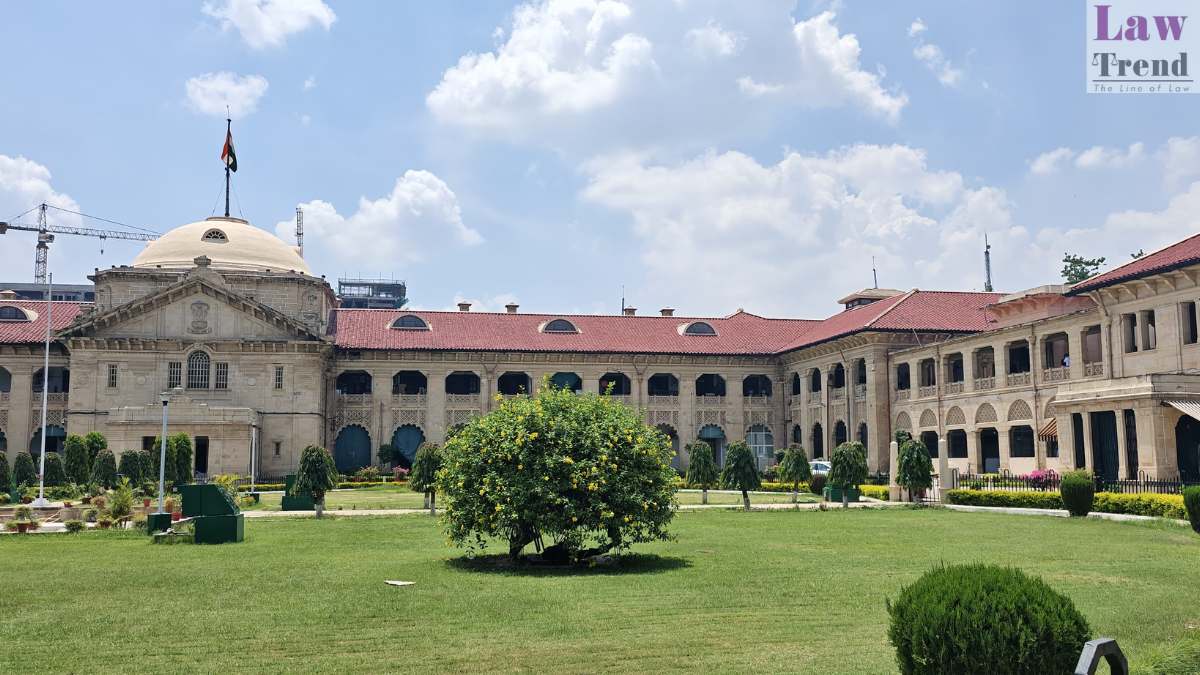
The Allahabad High Court has reserved its judgment on a habeas corpus petition filed by journalist Satyam Verma challenging his preventive detention under the National Security Act in connection with an April 2026 workers’ protest in Noida.
A division bench comprising Justice Atul Sreedharan and Justice Achal Sachdev concluded a two-day hearing on the matter on Thursday before reserving its decision. The petition challenges the May 12, 2026, detention directive issued by the Gautam Buddh Nagar District Magistrate under Sections 3(2) and 3(3) of the National Security Act, 1980.
Verma has sought the quashing of the detention order and all subsequent consequential directions, while requesting immediate release and compensation for alleged illegal confinement.
Alibi and Claims of Withheld Evidence
The core contention in the habeas plea is that the detention order rests on a factually impossible premise regarding Verma’s alleged participation in violence in Noida on April 13, 2026.
According to the petition, telecommunications data and surveillance camera footage place the journalist approximately 500 kilometres away in Lucknow at the time of the unrest. The plea states that Hasanganj Police detained Verma in the state capital at 2:14 p.m. on the same afternoon, presenting the records as conclusive proof of his absence from Noida.
The petition further alleges that the investigating officer intentionally withheld the Hasanganj police station footage and Call Detail Records from the Gautam Buddh Nagar District Magistrate, thereby vitiating the detaining authority’s subjective satisfaction required by law.
Absence From Police Reports and Evidentiary Grounds
The plea highlights that Verma’s name does not appear in any of the 11 First Information Reports relied upon by the state administration to substantiate the preventive detention.
Instead, the petition argues, the detention order is founded upon statements allegedly provided by a co-accused and witness named Mangal while in police custody.
Legal Threshold on Public Order Challenged
Challenging the legal justification for invoking preventive detention, Verma’s counsel submitted that the state’s documentation, evaluated at its highest, indicated only a localized dispute concerning minimum wage demands. The plea contends that such labour disputes fall within the parameters of routine law and order rather than public order, alleging that the National Security Act was used to suppress a spontaneous and lawful workers’ agitation.
Following the hearing, Verma’s advocate, Abhishek Dwivedi, confirmed that the bench had reserved its verdict after hearing all parties. Dwivedi declined to comment on the courtroom arguments, indicating that any public statement would be made only after the ruling is officially pronounced.




