

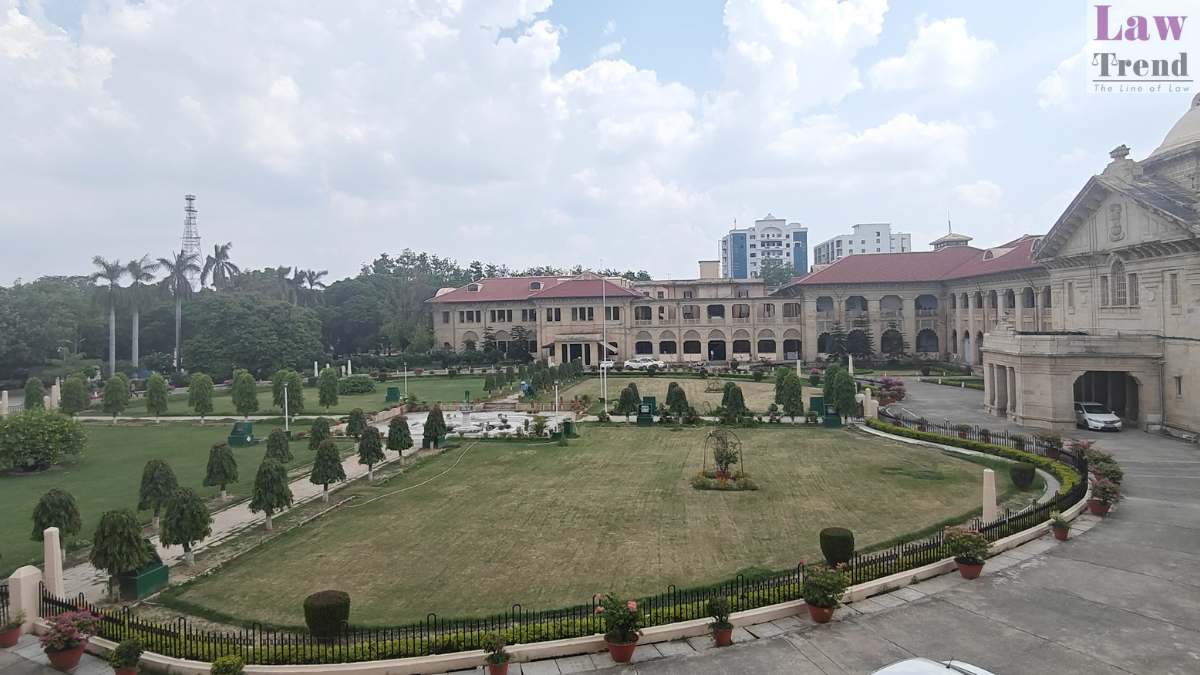
The Allahabad High Court has ruled that the Sunni Central Waqf Board cannot use its general administrative powers to order a district magistrate to add, delete, or modify names in government revenue records concerning Waqf properties.
Dismissing a petition on the matter, a division bench comprising Justice Alok Mathur and Justice Amitabh Kumar Rai at the High Court’s Lucknow seat held that land record mutations must strictly adhere to the statutory procedure established under the Uttar Pradesh Revenue Code. The bench affirmed the legal principle that general powers cannot be invoked to circumvent a specific procedure laid down by a specialized law.
Origins of the Dispute
The ruling came on a plea filed by Shams Tabrez, who sought a judicial directive compelling the Pratapgarh District Magistrate to implement a Waqf board decision in local revenue records.
According to the petitioner, the Sunni Central Waqf Board in Lucknow had issued an order on January 13, 2025, removing Qasim Nadeem from the records of Waqf Number 1339 in Pratapgarh and naming Tabrez as secretary of its managing committee. Tabrez argued that Section 28 of the Waqf Act granted the board the legal authority to direct the district magistrate to update the revenue entries accordingly.
The Uttar Pradesh state government opposed the petition, maintaining that all mutations in revenue records are exclusively governed by the mechanism outlined in Section 34 of the Uttar Pradesh Revenue Code.
Statutory Authority and Tehsildar Jurisdiction
In its assessment, the High Court drew a clear distinction between internal Waqf documentation and official land registries. The judges observed that while Section 41 of the Waqf Act permits the board to make amendments within its own Waqf register, authority over revenue records rests with the local tehsildar rather than the district magistrate.
The bench pointed out that under Section 34 of the Revenue Code, a tehsildar is legally obligated to assess claims and hear objections prior to issuing any mutation order. Because the statutory framework does not grant mutation powers to the district magistrate, the court held that the district magistrate is under no legal obligation to alter land records solely on the basis of an instruction from the Waqf board.
Petitioner Granted Liberty to Follow Revenue Route
While rejecting the plea to compel the district magistrate, the High Court clarified that Tabrez remains at liberty to seek the necessary changes by approaching the competent revenue authority under Section 34 of the Uttar Pradesh Revenue Code.




