

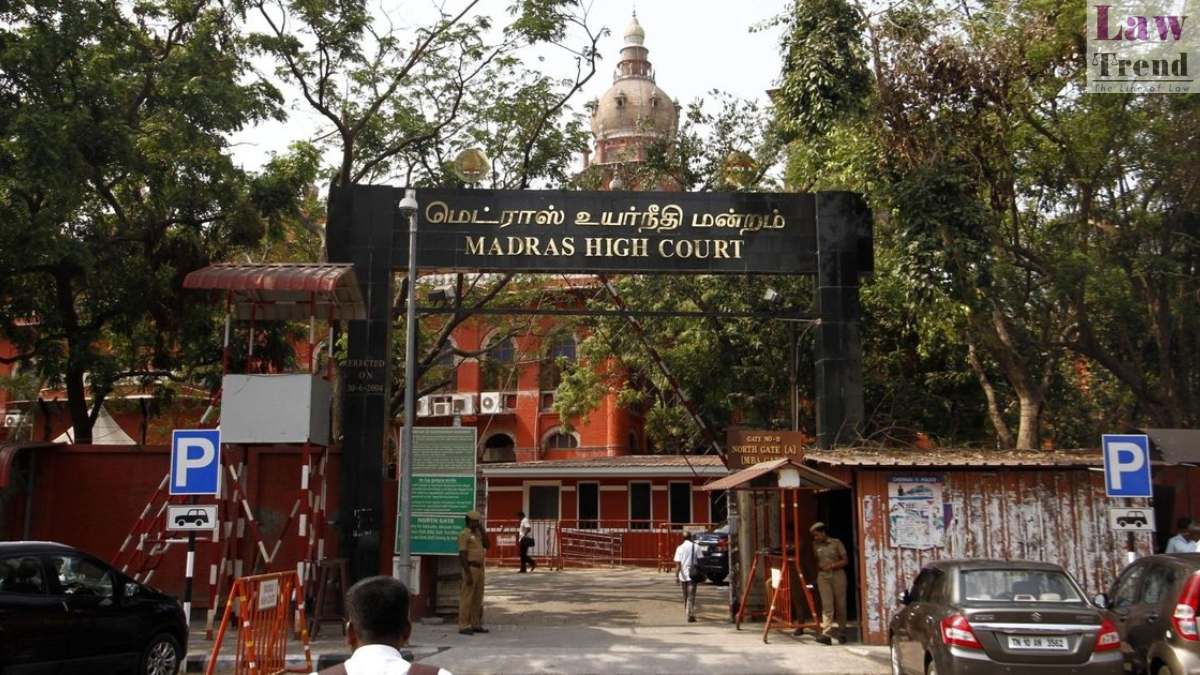
The Madras High Court has directed a trial court to take on file a woman’s suit seeking a declaration that her marriage is null and void, holding that the plaint could not be returned merely because the marriage was not performed under the Hindu Marriage Act.
Justice N Anand Venkatesh set aside an April 29 order of the district munsiff court which had declined to entertain the suit on the ground that it lacked jurisdiction since the marriage had not taken place under Hindu law.
The woman had married on June 9, 2022. According to the proceedings, both individuals chose not to identify themselves with any religion and registered their marriage under the Tamil Nadu Registration of Marriage Act, 2009.
After the marriage broke down, the woman approached the district munsiff court seeking a declaration that the marriage was null and void.
Trial Court Returned Suit Twice
The trial court first returned the plaint through an order dated July 21, 2025. The woman challenged that order before the Madras High Court.
On December 4, 2025, the High Court directed the trial court to hear her in open court and thereafter pass an appropriate order on the merits.
When she again approached the trial court, however, the plaint was returned on April 29. This time, the court said it had no jurisdiction because the marriage had not been solemnised under the Hindu Marriage Act.
The woman then filed the present revision petition before the High Court.
Justice Venkatesh observed that the petitioner’s difficulties had continued despite the earlier round of litigation, with the trial court repeatedly refusing to entertain the suit.
Family Court Law Not Restricted By Religion
The High Court referred to an earlier division bench ruling concerning a marriage between persons who had not indicated any religion and whose marriage did not fall under the Hindu Marriage Act, the Special Marriage Act or other religion-specific matrimonial laws.
That ruling had held that a party could invoke the jurisdiction of the family court to seek a declaration concerning the marriage.
The High Court noted that the Family Courts Act does not restrict its application only to people belonging to a particular religion. The earlier division bench had recognised that the law provides a forum for matrimonial disputes, including questions concerning marital status, for persons who are unable to invoke other marriage laws.
The court also referred to a Supreme Court ruling concerning matrimonial status. The Supreme Court had held that proceedings seeking a declaration regarding the validity of a marriage or matrimonial status fall within the jurisdiction of the family court, irrespective of whether the declaration sought is affirmative or negative.
Plaint Cannot Be Rejected At Filing Stage
In light of the legal position, the High Court held that the woman’s plaint should be taken on file instead of being returned merely because the marriage had not taken place according to Hindu rites and customs.
The High Court did not decide whether the marriage itself was null and void. It confined its consideration to whether the plaint could be returned at the threshold.
Accordingly, it set aside the April 29 docket order and directed the district munsiff court to take the plaint on file, assign it a number and proceed further in accordance with law.
The High Court registry was directed to return the original plaint to the woman so that she could present it again before the trial court. She was directed to re-present the plaint on or before October 12.
The revision petition was allowed with no order as to costs.




