

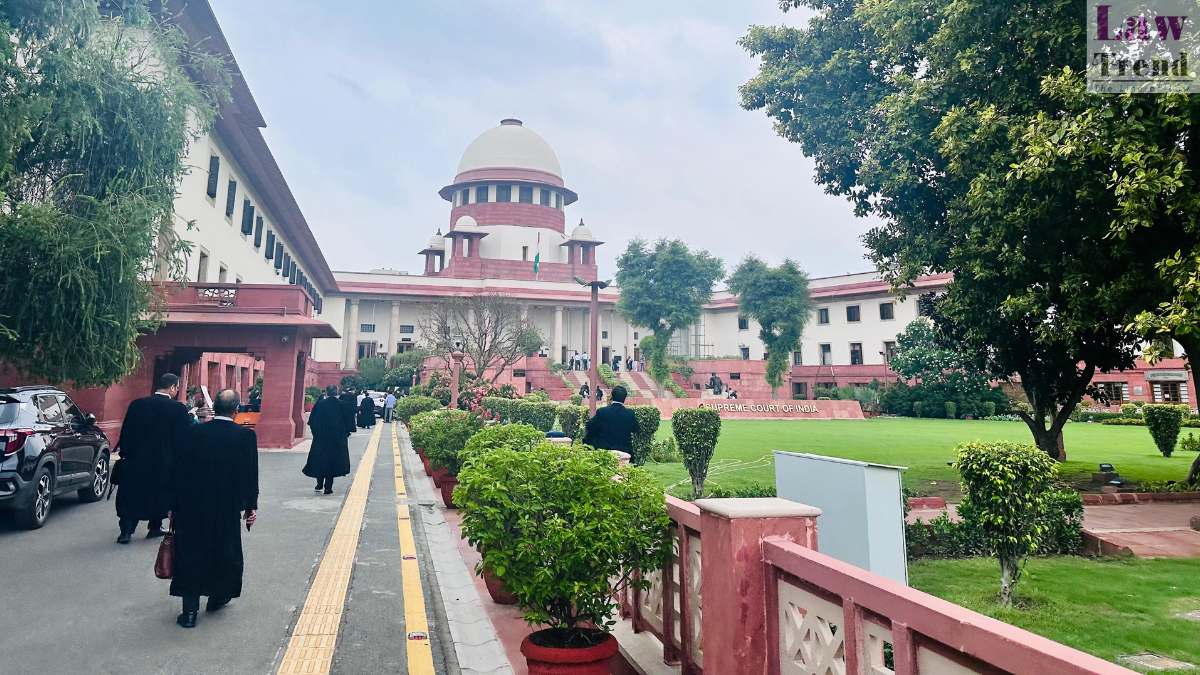
The Supreme Court on Monday directed the Union government to place on record comprehensive data regarding vacancies across statutory tribunals, focusing particularly on operational hurdles in Debt Recovery Appellate Tribunals across the country.
Emphasizing that institutional vacancies directly threaten citizens’ access to justice, a three-judge bench comprising Chief Justice Surya Kant, Justice Joymalya Bagchi, and Justice V. Mohana instructed Additional Solicitor General Aishwarya Bhati to submit the vacancy status of the appellate debt recovery bodies by September 25. The directive came during the hearing of a batch of petitions warning that several quasi-judicial forums face functional paralysis due to the pending superannuation of judicial officers and members.
Interim Relief for National Green Tribunal
Addressing immediate staffing concerns, the bench stepped in to prevent a disruption in the functioning of the National Green Tribunal. Taking note of submissions that two judicial members and one technical member of the green tribunal are set to demit office, the bench granted an interim tenure extension to the three individuals until formal appointments are concluded for their respective posts.
Regarding tribunals more broadly, the court reiterated that while individual members possess no vested legal right to demand extensions, the state must ensure these institutions do not become defunct. The bench urged the Centre to execute fresh appointments under the Tribunal Reforms Act, 2026 without administrative delay.
Selection Committee Reviewing Over Eighty Positions
During the proceedings, the law officer appearing for the Union government submitted that approximately 90 positions remain unfilled across tribunals nationwide. Of these, the Search-cum-Selection Committee is actively seized of the selection process for 81 posts. In response, Chief Justice Kant assured that efforts would be made on the administrative front to expedite the appointment pipeline.
The top court had previously suggested that the Centre consider granting one-month extensions to retiring presiding officers as a stopgap measure until regular replacements could assume office. However, Attorney General R. Venkataramani had resisted ad hoc tenure continuations, maintaining that formal recruitment mechanisms were already in motion.
Implementation of the Tribunal Reforms Act
The Union government had earlier informed the apex court on September 8 that 248 members across various tribunals met the statutory requirements for tenure renewal under Section 24 of the Tribunal Reforms Act, 2026. The Centre confirmed that their tenures are being extended, allowing eligible officials to remain in office until they complete the mandated five-year period or reach the statutory age of retirement.
The current proceedings stem from earlier protective orders issued by the Supreme Court on May 19. At that time, the bench had temporarily extended until September 8 the tenures of all tribunal chairpersons, presidents, and members whose terms were scheduled to lapse, preventing institutional deadlock while long-term staffing solutions were established.




