

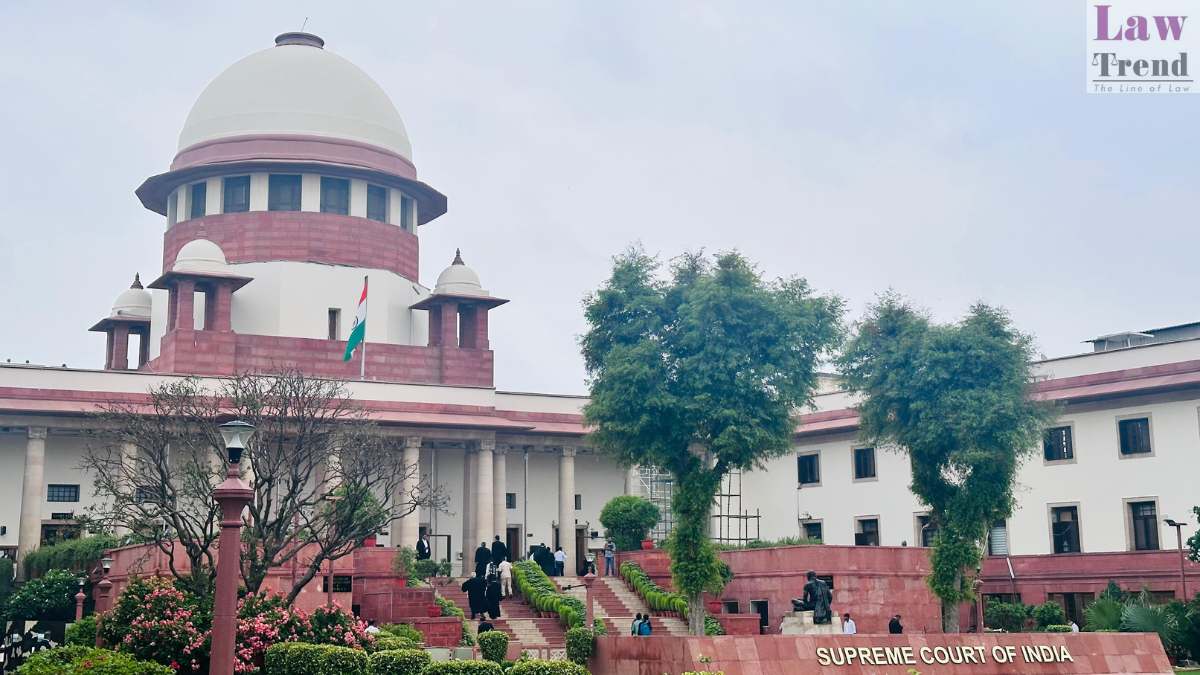
The Supreme Court has struck down Maharashtra rules that restricted the purchase of methanol and required the addition of bitterant and colourant before its sale to non-drug manufacturers, holding that the measures were manifestly arbitrary, disproportionate and violative of Articles 14 and 19(1)(g) of the Constitution. A Bench of Justice J.B. Pardiwala and Justice K. Vinod Chandran held that the regulatory framework did not effectively prevent the misuse of methanol in illicit liquor while imposing a substantial and continuing burden on legitimate industries.
The Court was considering challenges to Rules 18A and 18B of the Maharashtra Poisons Rules, 1972, inserted through the Maharashtra Poisons (Amendment) Rules, 2011. Rule 18A restricted the purchase of methanol and mandated its mixing with prescribed quantities of methylene carmine as a colourant and denatonium saccharide as a bitterant, except where methanol was purchased for drug manufacturing. Rule 18B provided for confiscation of methanol possessed without a valid Form A licence.
The Court observed that although preventing deaths from methanol-adulterated liquor was a legitimate and important objective, the particular restrictions adopted by the State failed the constitutional tests of reasonableness and proportionality.
Background
The amendments traced their origin to a 1991 liquor tragedy in Mumbai. Around 250 people had consumed spurious liquor purchased from Chhaya Bar in Andheri without knowing that they were consuming methanol, resulting in around 93 deaths. Maharashtra subsequently constituted a committee chaired by P.R. Parthasarthy, then Additional Director General of Police, to examine the causes of the tragedy and recommend preventive measures.
In 2011, Maharashtra amended the Poisons Rules and included methanol in the Schedule as a poison. Rule 18A required a seller to ascertain the intended use of methanol by verifying the purchaser’s Form A licence. It further prohibited sale to non-drug manufacturers unless every 100 litres of methanol was mixed with one gram of methylene carmine and four grams of denatonium saccharide.
Challenges to the rules were earlier brought before the Bombay High Court. The High Court ultimately upheld their validity in May 2019, leading to proceedings before the Supreme Court.
Petitioners Challenge Impact on Industrial Use
Senior Advocate Balbir Singh, appearing for the petitioners, argued that methanol was a key ingredient in products including formaldehyde, disinfectants, paraformaldehyde, decorative laminates, paints and resins. Mandatory denaturing, it was submitted, rendered methanol unsuitable for legitimate industrial applications.
The petitioners contended that the restrictions were disproportionate and arbitrary and violated both Article 14 and the right to carry on an occupation, trade or business under Article 19(1)(g). They also pointed to other regulatory regimes governing the storage and transportation of methanol, including the Petroleum Rules.
The State defended the measures as safeguards against the misuse of colourless and odourless methanol in liquor. It argued that the colourant facilitated visual identification while the bitterant made accidental or intentional consumption difficult. The State maintained that the rules regulated sale rather than prohibiting the manufacture or import of methanol.
Rule 18A Imposed Disproportionate Restriction: Supreme Court
Examining Rule 18A(1), the Supreme Court found that requiring verification of a Form A licence did not rationally accomplish the stated purpose of determining the intended use of methanol.
The Court noted that Form A was meant for persons selling or possessing poison for sale, whereas manufacturers using methanol as a raw material would ordinarily not hold such a licence. Rule 18A therefore effectively prevented industrial consumers and even Form B permit holders from procuring methanol.
The Bench observed:
“Thus, Rule 18A virtually changes the purpose of licence in Form A, puts a licensee-seller and a purchaser on the same pedestal, and renders permit in Form B nugatory.”
The Court held that the restriction failed on two counts. It was wider than what the stated object justified, and it failed to strike a balance between legitimate industrial activity and the public interest. Less drastic alternatives such as cancellation or debarment of defaulting licensees, stricter licence conditions, return of unused methanol and penal consequences for discrepancies in records had not been adequately addressed.
Mandatory Bitterant and Colourant Failed to Address Diversion and Pilferage
Turning to Rule 18A(2), the Court noted that the Parthasarthy Committee had identified several causes of liquor tragedies apart from illegal sale by licensed methanol dealers. These included diversion through unlicensed channels, pilferage, corruption in law-enforcement agencies, confusion between ethyl and methyl alcohol and the availability of methanol as a cheaper substitute for ethyl alcohol.
The judgment also recorded affidavits from industries explaining how the additives could affect downstream products. These included concerns over traces of colour or bitterant in chemicals, damage to catalysts and the inability to supply high-purity methanol for pharmaceutical and laboratory applications.
The Court said the requirement essentially achieved identification while burdening the marketability of legitimate industrial products, without addressing the central problems of diversion and pilferage.
It observed:
“This aspect of identification works like rearranging the deck chairs on the Titanic, to say that the measure addresses a surface level aspect and does not address the core issues of diversion and pilferage.”
The Court further found that the State had not demonstrated how adding the prescribed substances would definitively prevent deaths or make methanol unusable for manufacturing spurious liquor. It also noted that the State did not dispute that the colour and flavour of the denaturant could be masked.
Accordingly, the Bench concluded:
“The impugned notification is manifestly arbitrary and lacks rational nexus with the object sought to be achieved, thereby violating Article 14.”
Rules Also Failed Proportionality Test
Applying the proportionality framework discussed in K.S. Puttaswamy (Privacy-9 J.) v. Union of India, the Court accepted that preventing deaths caused by methanol-adulterated liquor was unquestionably a legitimate State objective. However, it found that the restrictions under Rule 18A and the consequential confiscation mechanism under Rule 18B were not suitable for achieving that purpose.
The Court further held that Maharashtra had failed to show that equally effective but less restrictive alternatives were unavailable. In its view, safeguards already contained in the Maharashtra Poisons Rules, if properly implemented, could better address diversion and pilferage.
The Bench noted that the burden on industries was substantial and continuing, while the benefit claimed by the State remained only a possibility. It consequently held that the impugned rules failed the proportionality test and violated the fundamental rights of non-drug manufacturers under Article 19(1)(g).
Supreme Court Suggests Stronger Measures Against Hooch Tragedies
While invalidating the rules, the Court made several suggestions for consideration by States and Union Territories to address hooch tragedies. These included stronger coordination among police, excise, transport, industries and health departments, monitoring at State borders, tighter scrutiny of licences and permits, periodic returns of excess methanol, reconciliation of stock records, suspension or cancellation of licences for violations, and dedicated tankers or containers for methanol transportation.
It also suggested tamper-evident sealing of methanol containers, specialised health-response mechanisms for liquor tragedies, more de-addiction centres, family counselling centres and public awareness campaigns.
The Court ultimately allowed the writ petitions, disposed of the civil appeal and directed the Registry to forward a copy of the judgment to all High Courts and to the Chief Secretaries of all States.
Case Details
Case Title: M/s Balaji Formalin Pvt. Ltd. & Anr. v. Union of India & Anr. and connected matters
Case No.: Writ Petition (C) No. 893 of 2019 and connected matters; Civil Appeal No. 13008 of 2026
Bench: Justice J.B. Pardiwala and Justice K. Vinod Chandran
Date: September 18, 2026




